Photographers › Portrait Studios
Portrait Studios for Beginners: The Mistakes First-Timers Make, and How to Dodge Them
Nobody is good at being photographed the first time. That is not a character flaw; it is the normal human response to a large lens, a bright light, and a stranger saying "relax." The assistant's view of a portrait studio — from beside the camera, where you watch the client's shoulders rather than the photographer's screen — teaches you something the brochures don't: the difference between a first session that produces portraits people love and one that produces an expensive shrug is almost never the photographer's talent. It is a handful of beginner mistakes, made in a predictable order, each with a cheap dodge.
This guide is for first-timers — including creators and sellers booking studio portraits for their work, who need the photographs to convert and cannot afford to learn the system by paying for it twice. Here are the mistakes, why they happen, and how to walk past them.
Mistake 1: Believing the session fee is the price
This is the big one, and it is a misunderstanding the industry does too little to prevent. At a great many portrait studios, the session fee buys the session — the planning, the photographer's time and talent, the retouching, and a viewing or ordering appointment — and does not include prints, products, or digital files, which are chosen and purchased separately afterwards. Studios that work this way often say so plainly on their pricing pages, in exactly those words. Beginners read "$100 session" or "$300 session" and budget that number. Then they meet the real price list.
The published shape of the full-service model looks like this:
| Stage | Published examples | What beginners miss |
|---|---|---|
| Session / booking fee | $100 in studio at one Corpus Christi studio; $300 at a Long Island luxury studio; $290 booking fee at a California maternity studio | It is a non-refundable retainer for time and planning — not a package |
| Minimum order | $200–$300 at one Texas studio, due on or before the session date, applied as print credit | The real floor of the total spend is the minimum, not the fee |
| Ordering appointment spend | Clients average $800–$3,000 at one Colorado studio, most around $1,800 | This is where the money is actually spent, looking at your own face at wall size |
| Digital files | $25 for a web-sized file at one studio; $75 per high-resolution file, or $700 for 15, $1,000 for 30, $1,500 for the full set at another | "Web-sized" will not print; full-resolution files are a separate, priced product |
| Collections | From $990 on top of a $300 session fee at the Long Island studio | Collections are priced in addition to the session fee, not instead of it |
None of this makes the full-service model a scam — it produces finished, framed, heirloom work, and for many clients it is the right purchase. The beginner mistake is not choosing it. The beginner mistake is discovering it, at the ordering appointment, with the photographs already taken and your budget already spent in your head. The dodge costs one question, asked before booking: "After the session fee, what will I own, and what does the rest typically cost?" A good studio answers with numbers. Also ask whether decisions must be made at the ordering appointment itself — at some studios, yes, by design — because walking into a same-day decision about a $1,800 wall piece is a situation to prepare for as a household, not to improvise as an individual.
The alternative model exists and suits many beginners better: digital-inclusive studios charge a higher session fee that bundles a stated number of finished files. The number you see is close to the number you pay. Decide which model you want before you fall in love with a portfolio, because the portfolios look identical and the invoices do not.
Mistake 2: Dressing for the mirror instead of the camera
First-timers choose an outfit that looks good in the bedroom mirror, in motion, at arm's length, in warm bathroom light. The camera sees something else: a still rectangle, at a distance, in the studio's light, against the studio's backdrop. The working guidance from portrait photographers converges:
- Solids photograph better than patterns, and words, logos, and bright graphics pull the eye straight off your face. Subtle texture — a knit, linen, denim — gives the camera something to describe; tiny checks and fine stripes can shimmer distractingly.
- Colour is a relationship, not a verdict. Dark clothing disappears against a dark backdrop; neon can bounce colour onto skin; large areas of white and pale pastel can blow out under studio light. The professional fix is not a rule but a selection: bring two or three options and let the photographer see them against the actual background, in the actual light. A five-minute test in the room beats any style guide.
- Fit and fuss matter more than fashion. A neckline or collar you adjust every thirty seconds will photograph as adjustment, not elegance. Sleeveless tops make arms photograph wider; shiny and heavy fabrics add visual weight; freshly ironed, clean, and thread-free is not vanity — wrinkles and stains that are minor in life are permanent and obvious in a portrait.
- Bring options, not an answer. Three to five tops in solid colours is a published headshot photographer's standard advice. The outfit you feel best in is, nine times out of ten, the one that photographs best — confidence is a visible material.
And the beginner's corollary: do not debut a new haircut, new glasses, or a spray tan the day before. The portrait should look like you on a good day, not like a stranger the camera met once.
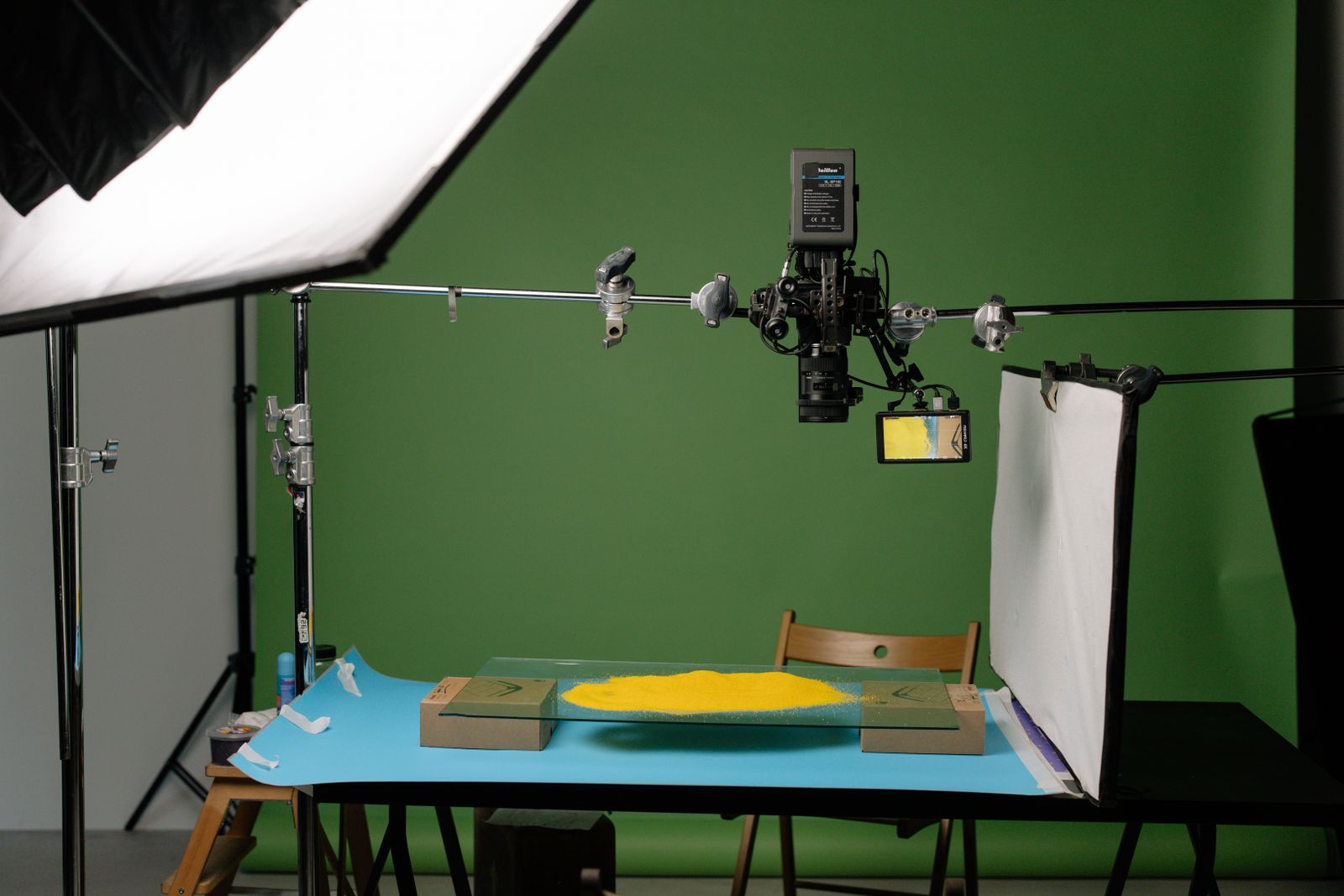
Mistake 3: Practising your face
First-timers rehearse expressions in the mirror, research their "best side," and arrive with a smile held together by effort. Photographers who write session guides actively discourage this: the more you monitor what your face is doing, the less of you the camera gets. A competent studio photographer coaches posture, angle, and expression continuously — micro-adjustments, frame by frame, often showing you the images on screen as you go — and takes enough frames that the awkward first ten minutes are simply the cost of the relaxed last twenty. Being photographed well is a directed activity, not a performance you owe anyone.
The beginner's real preparation is duller and more effective: sleep, water, and arriving with hair and makeup as you want them to appear (most studios expect you camera-ready unless hair and makeup is a booked add-on — published at around $100 per person at one studio). A sudden blemish is a retouching matter, included at most studios; exhaustion is not retouchable. If you are nervous, say so in the first minute. Every portrait photographer on earth has a procedure for nervous clients, because nearly every client is one.
Mistake 4: Booking the wrong session for the job
Beginners book "a portrait" the way they would book "a haircut," and discover the categories afterwards. A creator or seller who needs portraits that convert — a profile image, an author photo, product-page trust, press — has a different specification from a family commissioning wall art, and the mismatch wastes both:
- Say what the photographs are for. Profile and press use means you need high-resolution files, a licence or print release that covers your business use, and crops that work square and vertical as well as horizontal. Ask for those crops explicitly; they are shot differently.
- Match the session length to the ambition. A mini session is a sample, not a session. A full headshot sitting at a working studio runs about 45 to 60 minutes, with perhaps 20 minutes of actual shooting after wardrobe selection and lighting — enough for two or three looks, not six.
- One look is a photograph; three looks are a library. If these portraits must serve a website, a book jacket, and a speaking page for two years, book the session that produces variety — backgrounds, crops, expressions — rather than the cheapest sitting that produces a single hero frame.
- Update on a cycle. Working headshot guidance suggests refreshing every two to three years, or whenever your appearance changes noticeably. A portrait that no longer resembles you converts against you.
Mistake 5: Treating the ordering appointment as a formality
At full-service studios, the reveal or ordering appointment — typically a week or two after the session, once the gallery is ready — is the commercial centre of the whole experience, and beginners stroll into it unarmed. You will view your portraits large, retouched, and beautiful; collections, wall art, and albums will be priced in that room; at some studios the decisions are made that day; payment plans exist (one studio offers them on orders of $900 and up, with products delivered only after the final payment — worth knowing if the portraits are needed by a date).
The dodges are simple and entirely within your rights: decide your ceiling before you go, as a household; know the per-file and per-print prices in advance (ask at booking, when asking is free); bring the decision-makers, all of them, so nothing needs re-deciding at a second appointment that may not exist; and measure your wall if wall art is even a possibility, because "how big is 24×36, really?" is not a question to answer with your chequebook open. None of this is adversarial. Studios expect prepared clients; it is the unprepared ones who leave unhappy, and the unhappiness is rarely about the photographs.
The beginner's pre-booking checklist
This site lists 375 portrait studios, and the way to choose among them as a first-timer is to run this list before you pay anything:
- Which pricing model — session fee plus products, or files included — and what is the realistic total?
- Is there a minimum order, and when is it due?
- What do digital files cost, at what resolution, and with what usage rights?
- How long is the session, how many looks, and is hair and makeup included or an add-on?
- When is the ordering appointment, must decisions be made there, and what are the payment-plan terms?
- What should I bring — and will the photographer review wardrobe options in the room?
Ask those six, dress in solids with options in the bag, sleep the night before, and let the photographer direct. First-timers who do that stop looking like first-timers in the only place it matters: the photographs.
Sources
- Wet Silver Photography (Corpus Christi), photography pricing — a $100 in-studio session fee covers planning, the session, retouching, and an ordering appointment, and does not include prints, products, or digital files; web-sized digital images are $25 and are not suitable for printing.
- Specialty Photography (Texas), how to book your session — a $100 session fee with no prints, products, or digital images included, plus minimum order amounts of $200–$300 applied as print credit and due on or before the session date.
- Imagine That Photography (Long Island), portrait investment — a $300 session fee covering everything except the portraits themselves, with collections starting at $990 in addition, and selections made at the reveal appointment.
- Alexi Hubbell Photography (Durango), portrait pricing FAQs — ordering-appointment spending averaging $800–$3,000 (most clients around $1,800), digital files at $75 each or $1,500 for the full set, and payment plans on orders of $900 or more with products delivered after the final payment.
- Christina Baltazar Photography, portrait investment — a $290 booking fee with prints and digital images purchased separately, usually as part of a collection.
- Jamie Mastrio Photography, preparing for your portrait session — solids photograph better than bright patterns and words, large areas of white and pale pastel are risky under digital capture, and clothing should arrive freshly ironed and free of wrinkles and stains.
- Brant Smith Photography, dress for the light, not the mirror — wardrobe should be chosen against the actual backdrop and light, texture reads as depth, and clients should bring options rather than a single outfit.
- Damon Bates Photography, headshot sessions — bring three to five tops in solid colours, sessions run about 45–60 minutes with roughly 20 minutes of shooting, the photographer coaches posture and expression throughout, and headshots should be updated every two to three years.
- Photo by cottonbro studio, https://www.pexels.com/photo/5878878/
- Photo by Italo Melo, https://www.pexels.com/photo/2379004/
- Photo by Andrea Piacquadio, https://www.pexels.com/photo/774909/
More guides
- How to Find a Wedding Photographer: The Complete, Honest GuidePhotographers › Wedding Photographers
- How Much Does a Wedding Photographer Cost? Packages DecodedPhotographers › Wedding Photographers
- 10 Questions to Ask a Wedding Photographer Before You BookPhotographers › Wedding Photographers
- Wedding Photography Styles Explained: Documentary, Editorial, Traditional, Fine ArtPhotographers › Wedding Photographers
- Hiring a Wedding Photographer in California: Venue Light, Permits, and Price LevelsPhotographers › Wedding Photographers
- All Guides & ArticlesBrowse the full guides library