Photographers › Portrait Studios
Portrait Studios on a Tight Budget: Where to Save, and Where Saving Backfires
The portrait studio is the oldest business model in photography, and it still runs on a piece of misdirection so successful that most customers never notice it: the session is not the product. The session is the doorway. The product — the thing the studio's pricing is built around — is what you buy afterwards, when you are sitting in front of a screen of beautiful photographs of your own family, your own team, or your own face, and a price list that charges by the print, by the file, and by the feeling that leaving any of them behind would be a small tragedy. I assisted in commercial studios where this machinery ran kindly and well, and I have watched it run the other way. On a tight budget, the studio is neither a rip-off nor a bargain in itself; it is a pricing structure you either understand before the session or pay to learn during it. This site lists 375 portrait studios. Here is where the money actually goes, where a small budget can safely save, and where saving quietly costs more than the session did.
The two prices every studio quote contains
Almost every portrait studio price is two prices wearing one coat:
The session fee buys the photographer's time, the studio, the lighting, and the taking of the photographs. Studio sessions commonly run from around $100–$300 for a standard sitting at an accessible studio, with established names and larger productions above that. Mini sessions — short, themed, one setup, a small set of images included — run lower and are the budget format the industry has genuinely embraced.
The product price buys what you take home: prints, wall portraits, albums, and digital files. This is where studio economics live, and where an unprepared budget goes to be surprised. Individual prints at professional studios commonly run from tens of dollars for small sizes to several hundred for large wall pieces; digital files are priced anywhere from a modest per-file fee to a full-gallery buyout that can exceed the session fee several times over; packages bundle the two at every level from a few hundred dollars to several thousand.
Neither structure is dishonest. Studios that charge a low session fee and real money for products are running the classic model, openly, in a price list they will show you. Studios that charge a full session fee with files included are running the newer model, also openly. The budget disaster is not either model — it is booking under one model while assuming the other.
| Model | You pay for the session | You pay for products | Budget character |
|---|---|---|---|
| Classic studio | Low fee, sometimes very low | Prints and files priced individually, at viewing | Cheap to enter; total set by your discipline at the viewing |
| All-inclusive | Full fee up front | Files included; prints optional extras | Total known in advance; higher entry price |
| Mini session | Small flat fee | A fixed small set included; extras at list price | The controlled budget format — if the set covers your need |
Where saving is safe
Choose the mini session when it fits the need. If what you actually need is one good portrait — a headshot refresh, the annual family photograph, a graduation portrait — a mini session is not a compromise; it is the correct product, priced correctly, with a defined deliverable. The industry's mistake is customers buying minis for jobs that need a full session, then paying full-session money in add-ons. Read what the mini includes and match it honestly to the job.
Decide your product list before the session, in writing. The single most effective budget act in portrait photography costs nothing: sit down before the shoot and write what you are buying — two 8×10s for the grandparents, one wall piece for the hall, files of five favorites, nothing else — and give the list to whoever attends the viewing with you. Studios do not create the viewing-room impulse; they merely price for it. A customer with a list is immune to most of it, and studios, honestly, respect the customer with a list.
Buy files for the images you'll print repeatedly; buy prints for the ones you'll frame. Professional studio printing — the paper, the color calibration, the mounting — is genuinely better than consumer printing and worth its price for the wall piece. For the images destined for holiday cards, relatives, and reprints at three sizes, the file is the economical unit. Matching the format to the use is where a mixed order beats both the all-print and all-file extremes.
Take the weekday and the off-season. Studios, like every appointment business, have a shape to their week and their year: weekends and the pre-holiday portrait season are premium and packed; weekday mornings and the quiet months are where a studio can deal — a waived session fee with a product order, a package upgrade, a second setup included. Ask, in those slots, what flexibility exists. In peak slots, don't bother; the diary is the answer.
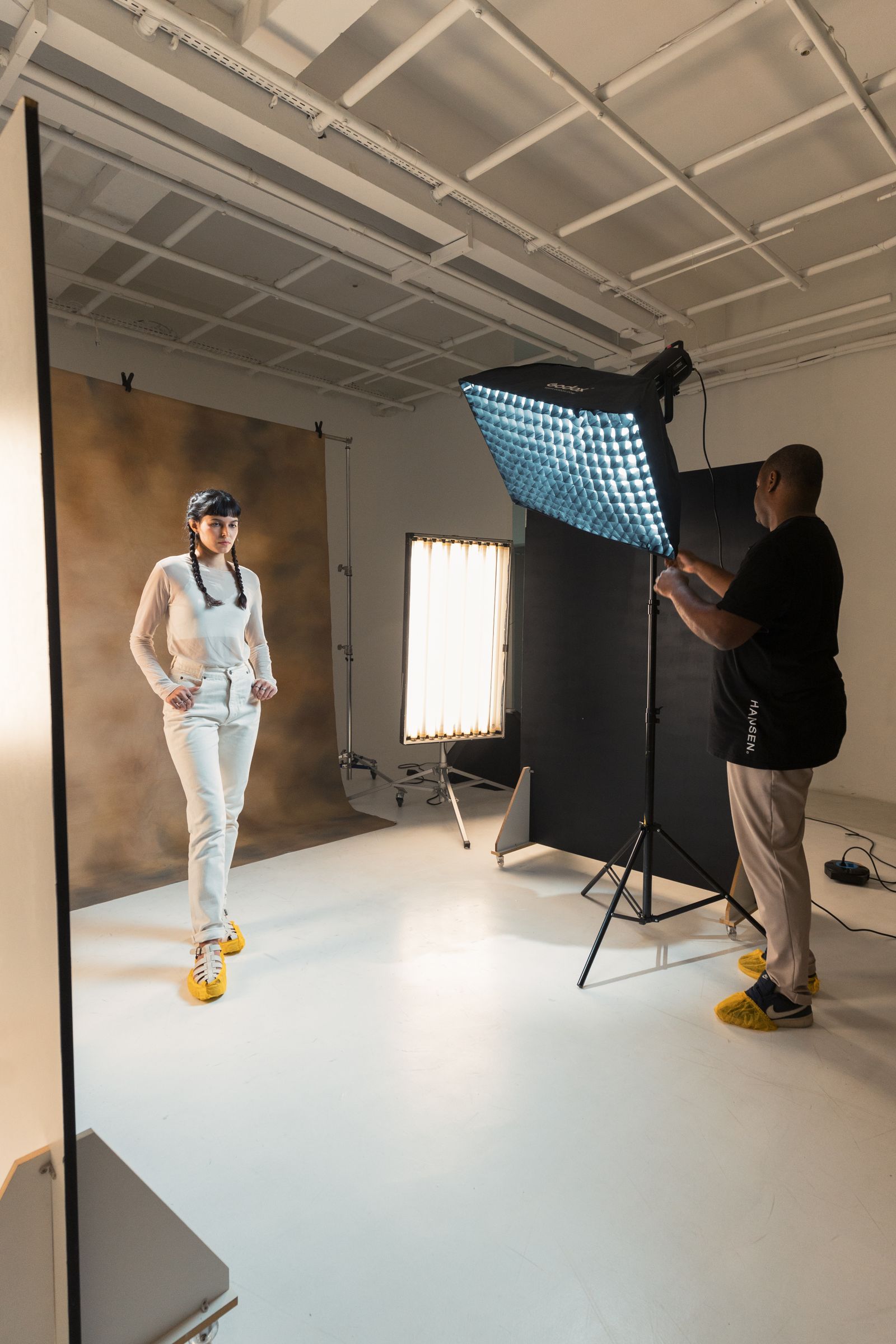
Use the studio's own sets and wardrobe guidance. Part of a session fee buys accumulated craft: the backgrounds that flatter, the clothing advice that prevents the striped-shirt disaster, the posing that makes non-models look like themselves on a good day. Following the studio's preparation guidance to the letter is free, and it raises the value of every frame you will later be asked to pay for.
Where saving backfires
The free session. A session fee waived entirely is not a gift; it is a transfer — every dollar moved into the product price list, where it is recovered at the viewing, from a customer who has now seen the photographs and is emotionally committed. Sometimes the arithmetic still works. But a customer who books "free" without reading the product list first has not saved the session fee; they have merely agreed to discover the price later, at the moment of maximum weakness. Read the list before the session, always, and the free session becomes a legitimate offer you can evaluate.
Refusing the files, then needing them. The mirror-image trap: a budget customer declines the digital files to save money, buys prints — and discovers within a year that the new job application, the family group chat, the school form and the memorial slideshow all want files, which are now priced individually, or available only by reordering, or, in the worst legacy cases, no longer available at all. For most modern uses, at least the key images should leave the studio as files. Price that into the original order, when your leverage is highest.
The cheapest studio, for a portrait that must last. A portrait is a long-lived object; a bad one is not a saving but a recurring embarrassment with a frame around it. The difference between an adequate studio portrait and a good one — light that models a face kindly, posing that doesn't age the sitter, retouching that removes the temporary and keeps the person — is the entire craft, and it is not uniformly distributed at the bottom of the price range. On a tight budget, buy less from a good studio — the mini, the smaller package — rather than more from a poor one. Quantity is the worst thing to spend a portrait budget on.
Skimping on the one print that matters. Wall portraits are where studio printing earns its keep: size, paper, and finish are visible from across a room for decades. Customers economize in the strangest direction here — many small prints of everything, none of them the picture — when the classic allocation is the reverse: files for the many, and the studio's best print, properly sized, for the one image the house will actually live with.
Ignoring the rescheduling and minimum-order fine print. Tight budgets are the ones least able to absorb a forfeited session fee because a child was ill, or a package whose "included credit" requires a minimum spend beyond it. Read the two clauses that govern failure — cancellation/rescheduling, and any minimum order attached to offers — before you book, not when you need them.

The viewing appointment: a short survival guide
The viewing is where studio budgets are decided, so treat it as a negotiation you prepare for rather than an experience you undergo. Bring your written list. Bring the other decision-maker — "I need to check with my partner" is both true and the oldest delaying line in the trade, and studios price first-viewing incentives against it; if a same-day discount is offered, know your list well enough to judge whether it is a discount on what you actually want. Ask for the full price list in writing and take it home if you need to; a studio confident in its prices survives a night's reflection. And remember the arithmetic of the room: every image is beautiful at viewing size, in viewing light, in the first hour. The ones worth buying are the ones you would still choose from your own list, at your own table, tomorrow.
The short version
Understand the model before you book: what the session costs, what the products cost, and which of the two your quote is really made of. Write your product list before the session and hold it at the viewing. Buy files for repeated use and studio prints for the wall. Take the mini when the mini fits, the weekday when it doesn't matter, and the good studio's smaller package over the poor studio's larger one. This site lists 375 portrait studios — on a tight budget, the right one is the one whose full price list you have read, in daylight, before anyone shows you a photograph of someone you love.
Sources
- Jimmy Clemmons, "Brand Photography Pricing: A Practical Guide for 2026" — session and package price bands for small-studio portrait and brand work.
- Professional Photographers of America — portrait studio business and pricing guidance on session-fee and product-sales models.
- Photographs: studio session — photo by Matheus Bertelli, https://www.pexels.com/photo/30697991/ ; studio portrait — photo by Italo Melo, https://www.pexels.com/photo/2379004/ ; photographer at work — photo by Karolina Grabowska, https://www.pexels.com/photo/6182/
More guides
- How to Find a Wedding Photographer: The Complete, Honest GuidePhotographers › Wedding Photographers
- How Much Does a Wedding Photographer Cost? Packages DecodedPhotographers › Wedding Photographers
- 10 Questions to Ask a Wedding Photographer Before You BookPhotographers › Wedding Photographers
- Wedding Photography Styles Explained: Documentary, Editorial, Traditional, Fine ArtPhotographers › Wedding Photographers
- Hiring a Wedding Photographer in California: Venue Light, Permits, and Price LevelsPhotographers › Wedding Photographers
- All Guides & ArticlesBrowse the full guides library