Photographers › Aerial Photographers
Prepaying for Aerial Photographers: Packages, Bundles and Gift Cards — When It Pays and When It Traps You
Every aerial photography business eventually asks you to pay before the drone flies. Sometimes it is a modest deposit to hold a date. Sometimes it is a bundle of visits bought in advance, a monthly documentation plan, or a gift card for a flight the recipient has not scheduled. I spent years assisting a commercial photographer, and the prepayment offers that crossed our desk sorted into two kinds: honest volume discounts from businesses with more demand than diary space, and cash-flow lifelines from businesses spending your money before they earned it. Both look identical on the pricing page. This guide works through the three prepayment forms aerial photographers actually sell — bundles, subscriptions, and gift cards — with the real numbers attached, so you can tell which kind you are being offered. This site lists 877 aerial photographers; the prepayment terms vary at least as much as the flying.
The baseline: what a deposit normally looks like
Start with the unglamorous norm, because every bigger prepayment should be measured against it. For single-session aerial packages, a 25 percent deposit to reserve the booking is a published standard — one national operator's rate card states it plainly, with private one-time customers paying on receipt and business clients billed net 15. A deposit of a quarter, against a dated booking, with the balance due around delivery, is the market's centre of gravity: enough to make the reservation real, small enough that a provider failure stings rather than wounds.
Everything beyond that — half up front, full prepayment, multi-visit bundles, annual plans — is a negotiation in which you are the lender. That is not an argument against it. Lenders get paid, in discounts. It is an argument for reading the terms like a lender.
One more baseline habit separates careful buyers from hopeful ones: the payment method. A credit card carries a dispute mechanism with a clock on it; a debit card, a wire, or a payment app mostly does not. Providers who insist on cash-equivalent payment for large prepayments are asking you to surrender your only cheap remedy at exactly the moment your exposure is largest. In my assisting years, the studios that took cards for everything were, without exception, the ones that also answered the rollover and expiry questions in writing. Payment method and paperwork quality travel together — treat either one as a sample of the other.
Bundles: the visit-pack arithmetic
The commonest aerial prepayment is the milestone or visit bundle: a set number of documentation flights bought together at a per-visit discount. One operator's published schedule shows the shape honestly — six scheduled visits at $350 a visit ($2,100 total), eight visits at $338 ($2,700), twelve visits at $325 ($3,900). The discount for commitment is real but modest: about 7 percent from the smallest bundle to the largest. Terms matter more than the headline: that schedule takes a 25 percent deposit with the balance billed in equal installments across the engagement — which is the buyer-friendly structure, because most of your money stays yours until most of the flying has happened.
Where bundles trap is in the definitions. Do unused visits expire, and when? Does a weather-cancelled flight consume a visit or reschedule free — aerial work is weather-hostage in a way studio work is not, so this clause fires constantly. Are the visits transferable between properties, which decides whether a bundle survives your project changing? And what does the bundle assume about the site: bundles are priced for a standard site, and the discovery that yours is "large commercial, quoted separately" should happen before payment, not at visit three. A bundle that answers those four questions in writing is a discount. A bundle that answers none is a hope with a total on it.
Subscriptions: where prepayment genuinely pays — and where it quietly doesn't
Recurring aerial documentation is the one segment where ongoing payment is the product, not a financing trick: construction progress, community and landscape records, seasonal property documentation. The published structures show the range:
| Prepayment form | Published example | Effective saving | The catch to check |
|---|---|---|---|
| Monthly documentation plan | $400/month per site vs $500 for a single visit (same 15–30 edited photos) | 20% per visit, every month | Rates assume 3+ sites; 1–2 sites add $100 each |
| Per-visit tiers on a plan | $200 / $350 / $550 per visit by documentation level | First visit free at one operator | Billed at the start of each month; unused visits do not roll over |
| Long-term progression plan | $2,050/month on a 3-month minimum; $1,600 on 6 months; $1,475 on 9 months | About 28% cheaper per month for the longest term | Term commitment; billed monthly in arrears at this operator — the safe structure |
| Visit bundle | 12 visits at $325 vs $350 singly | About 7% | Expiry, weather, and transfer terms decide the real value |
| Viewer/archive subscription | From $25/month | Keeps dated flight history accessible and comparable | You are renting access to your own record — what happens if you cancel? |
Two lessons fall out of the table. First, the discount curve rewards term: the progression plan's monthly price falls from $2,050 to $1,475 as the commitment stretches from three months to nine — a genuine volume discount of the kind airlines would recognize. Second, the billing direction matters more than the discount. The best-structured plan in the research bills monthly in arrears, takes no large deposit, and allows cancellation on 30 days' written notice: the provider carries the risk, and the discount survives anyway. The worst structure bills at the start of each month with unused visits not rolling over — you pay for flights that weather, delays, or the provider's own diary can erase, and the "saving" against single visits evaporates the first month a visit is lost. Before signing any plan, ask the rollover question out loud. Its answer is the plan.
There is also a subtler value in recurring work that no discount captures: consistency. A subscription flown from saved waypoints produces a dated, comparable record — the same angles every visit — which is the entire point of progress documentation and the reason one avoided site trip a month can cover a plan's cost for a manager. Prepaying for that is buying a system. Prepaying for one-off marketing flights is buying a loan. Know which purchase you are making.

Gift cards: the law protects the card, not the company
Aerial photography gift cards — a flight for the new homeowner, a listing package for the agent in your life — sit under real consumer law, and the law's shape is worth knowing exactly. Under the federal Credit CARD Act of 2009, money on a gift card or gift certificate cannot expire for at least five years from purchase or last reload, and inactivity or dormancy fees can only be charged after a full year of inactivity, at most once a month, with terms disclosed on the card itself. Roughly 38 states go further and ban gift-card expiration outright. So the card in the drawer is safer than most people fear.
The exceptions are where the traps live. Promotional cards — the "free $50 flight credit with any booking" kind — are excluded from the five-year rule entirely and can expire in a year or less. Paper certificates have their own quirks. And the protection that does not exist is the one buyers assume: if the business closes, the card can become worthless. The Federal Trade Commission's guidance is blunt — a company that files for bankruptcy may honor its gift cards, or may not; you become one more unsecured creditor holding a plastic claim. For a national chain that is a theoretical risk. For a one-pilot aerial business — and most aerial businesses are one pilot, one aircraft, one insurance policy — it is the central fact of the gift-card purchase. The five-year legal life of the card will very likely exceed the planning horizon of the smallest operators. Buy gift cards from aerial businesses with years of trading behind them, in amounts you would survive losing, and treat a spectacular gift-card discount from a brand-new operator as what it is: the market pricing the risk for you.
If the provider closes: your actual position
Generalize the gift-card problem, because it applies to every prepaid bundle and plan. Money paid for flights not yet flown is, in almost every structure, an unsecured loan to a small business. If the business closes, your remedies are the slow ones: a chargeback if you paid by credit card within the dispute window, a claim in the bankruptcy if there is one, a complaint to the state consumer protection office. None of them flies the drone. The practical defences are all before payment: pay by credit card rather than debit or transfer, keep prepaid exposure proportional to the provider's age and scale, prefer installments and arrears billing over lump sums, get expiry and rollover terms in writing, and schedule the first flight soon — a bundle whose first visit happens next week has less time to go wrong than one starting next season.
The verdict
Prepay aerial photography when the discount is priced like a discount — single digits to about 25 percent — when the billing runs in installments or arrears, when unused value rolls over or survives in writing, and when the provider's history is longer than the commitment you are making. Refuse, or renegotiate, when full payment is demanded far ahead of flying, when unused visits evaporate monthly, when a gift card's discount looks like a going-out-of-business sale wearing a bow, or when any of the four bundle questions — expiry, weather, transferability, site assumptions — cannot get a written answer. The drone will fly for whoever pays. The professional question is whether your money should land before it does.
Sources
- ZigZag Aerial, published 2026 drone photography pricing — single-session packages from $275 to $850 with a 25 percent deposit reserving packages; milestone bundles at six visits for $2,100 ($350 per visit), eight for $2,700 ($338), and twelve for $3,900 ($325) with a 25 percent deposit and the balance in equal installments; progression plans at $2,050 per month on a three-month minimum, $1,600 on six months, and $1,475 on nine months, billed monthly in arrears with no large deposit and cancellation on 30 days' written notice.
- AUG Imaging, Miami construction documentation pricing — a single documentation visit at $500 versus monthly stills at $400 per site per month and stills plus film at $700, with the monthly rates applying at three or more active sites and $100 added per site for one or two.
- Miles Visual Media, construction monitoring pricing — per-visit tiers at $200, $350, and $550 with the first visit free, monthly packages billed at the start of each month, and unused visits that do not roll over.
- Professional Drone Solutions, Florida drone pricing — progress documentation from $200 per flight at two to four flights a month, landscape and community plans and flight-history viewer subscriptions from $25 per month, and the observation that one avoided site trip a month can cover a recurring plan.
- Federal Trade Commission, buying, giving, and using gift cards — gift card funds cannot expire for at least five years from purchase or last reload under the Credit CARD Act rules, inactivity fees only after one year of inactivity and at most once a month, and the warning that a card may lose value if the issuing company files for bankruptcy or goes out of business.
- LegalClarity and Regulation E guidance on gift card law — the five-year federal floor in 15 U.S.C. § 1693l-1, roughly 38 states banning gift card expiration entirely, and promotional cards excluded from the federal protections.
Photo credits
- Hand launching a drone at sunrise — photo by Juan Gomez, https://www.pexels.com/photo/3070563/
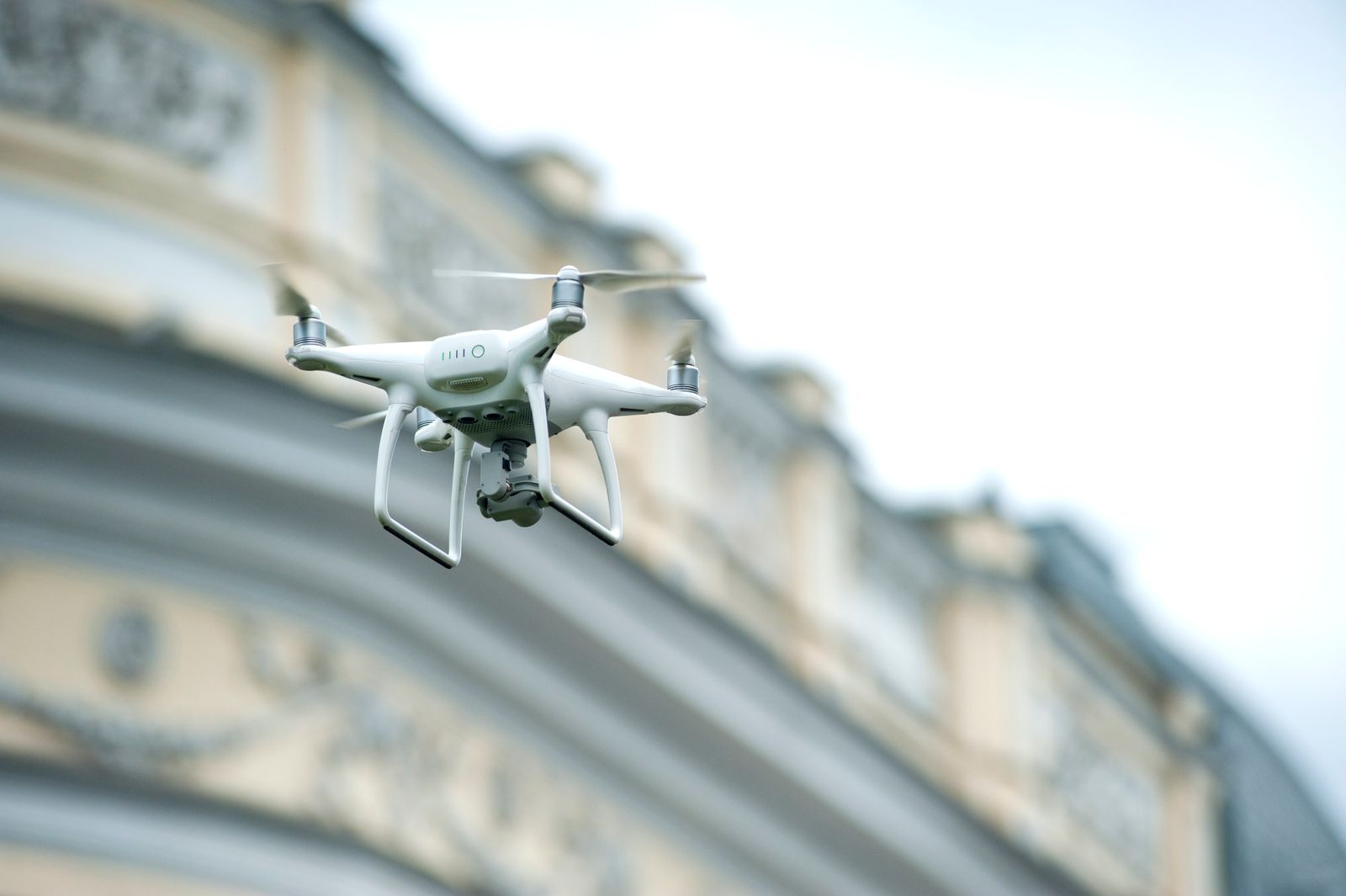
- Drone hovering near a classic building — photo by Atlantic Ambience, https://www.pexels.com/photo/1093232/
More guides
- How to Find a Wedding Photographer: The Complete, Honest GuidePhotographers › Wedding Photographers
- How Much Does a Wedding Photographer Cost? Packages DecodedPhotographers › Wedding Photographers
- 10 Questions to Ask a Wedding Photographer Before You BookPhotographers › Wedding Photographers
- Wedding Photography Styles Explained: Documentary, Editorial, Traditional, Fine ArtPhotographers › Wedding Photographers
- Hiring a Wedding Photographer in California: Venue Light, Permits, and Price LevelsPhotographers › Wedding Photographers
- All Guides & ArticlesBrowse the full guides library