Photographers › Professional Photographers
Professional vs. Amateur Photographer: What the Price Difference Actually Buys
Every editor I know has the same story. The budget was tight, a talented amateur quoted a third of the professional rate, the sample images looked lovely, and on the day — a flat tyre, a full memory card, a camera that failed in the rain, light nobody had scouted — the job quietly fell apart. Not always. Amateurs are sometimes superb, and some of the best pictures I have ever commissioned came from people at the start of their careers. But the price gap between a professional and an amateur is rarely a gap in talent alone. It is mostly a gap in what happens around the pictures: the insurance, the backup kit, the contract, the file discipline, and the obligation to deliver when conditions are bad.
That is the honest way to read a quote. You are not only buying photographs. You are buying a probability — that usable, well-made images will exist, on time, in the format you need, whatever the day throws at the person making them. This guide breaks down where the money actually goes, when the cheaper quote is a perfectly rational choice, and how to tell a professional operation from a professional-looking one.
The numbers, without the romance
Start with what the market charges. Marketplace data collected by Thumbtack puts the national average for a portrait session at about $277, headshots at about $304, and commercial photography at about $440, with a typical commercial range of roughly $299 to $645. The Knot's Real Weddings Study, drawn from couples who married in 2025, puts the average wedding photographer at about $3,000. Pricing guides that survey working professionals generally place them at $100 to $300 an hour, with beginners and students well below that.
Now set that against what photographers earn. The Bureau of Labor Statistics' Occupational Employment and Wage Statistics put the median US photographer at $44,660 a year, or $21.47 an hour, in May 2025 — and that figure counts photographers on payroll, not freelancers. The gap between a $164 average quoted hour on a marketplace and a $21.47 median wage is not profiteering. It is arithmetic. A freelancer's billed hour has to carry the unbilled hours around it — editing, client calls, travel, marketing, accounting — plus equipment, software, insurance, and self-employment tax. ShootProof and Professional Photographers of America benchmarking has long made the same point from the other direction: only a fraction of what a studio bills ends up as the photographer's pay.
So when an amateur quotes $75 for work a professional prices at $400, the amateur is not necessarily undercutting. They are often simply not carrying the costs the professional is carrying — because nobody has yet required them to.
Insurance: the deliverable you hope never to see
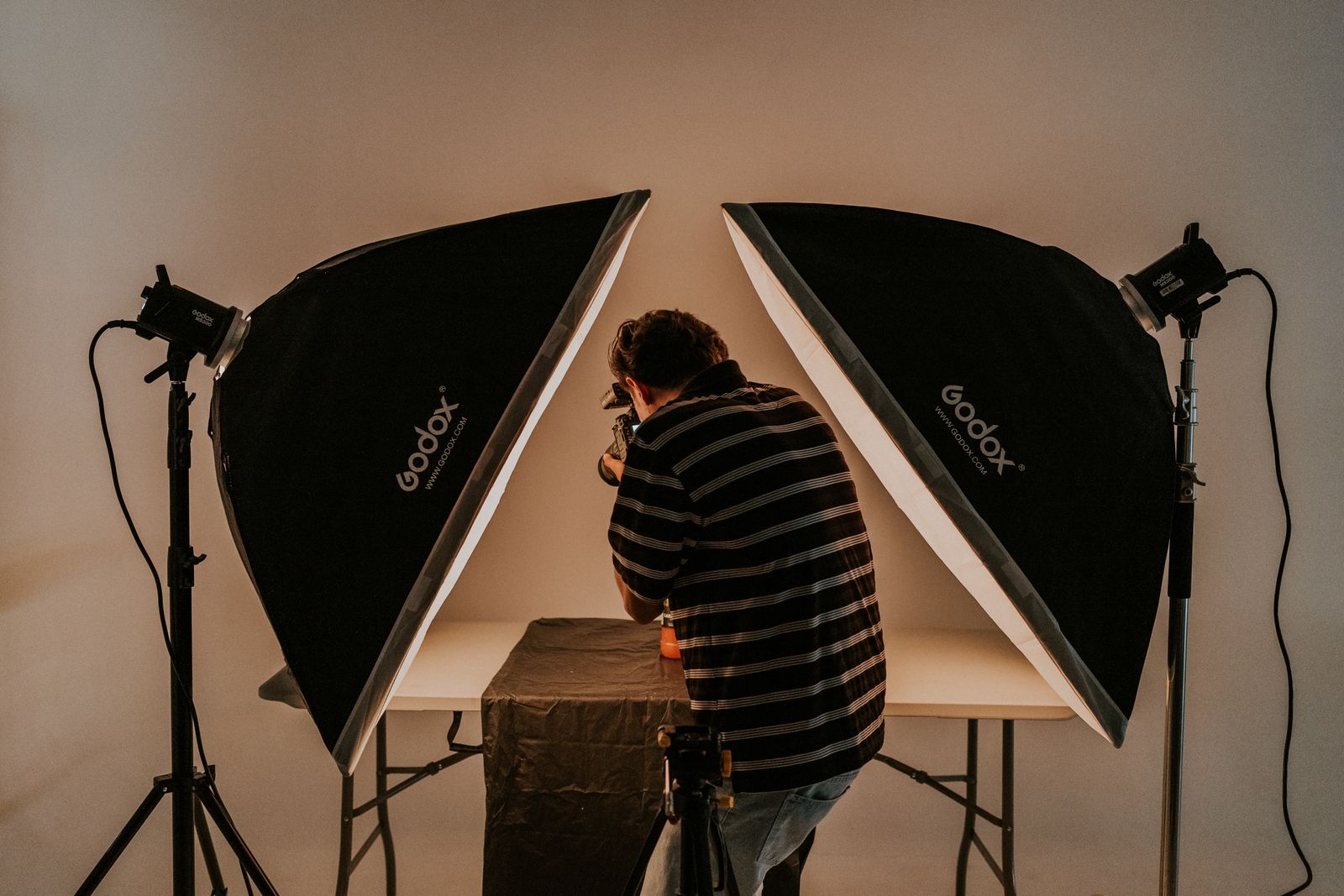
A professional carries liability insurance because venues, businesses, and increasingly private clients require it, and because cameras, lights, and cables share space with guests, employees, stock, and property. If a light stand goes over onto a guest, a product, or a polished floor, the insured photographer's policy is what answers. An amateur, however careful, usually answers personally — or does not answer at all, leaving the client in an argument nobody budgeted for.
Many venues will only permit photographers with liability cover to work on the premises at all. That is not bureaucracy for its own sake; it is the venue transferring a risk it does not want to own. Ask any photographer you are seriously considering for a certificate of insurance, and expect a professional to produce one without surprise or offence. It is a routine document in a routine business. Reluctance, confusion, or a promise to "sort something out" is information.
Equipment insurance matters to you for a different reason. A working kit — two camera bodies, several lenses, lighting — represents thousands of dollars that the professional cannot afford to have out of action. Insured gear gets repaired or replaced fast. Uninsured gear that breaks can end a small operation, and with it, your delivery date.
Backup equipment, and the second camera body test
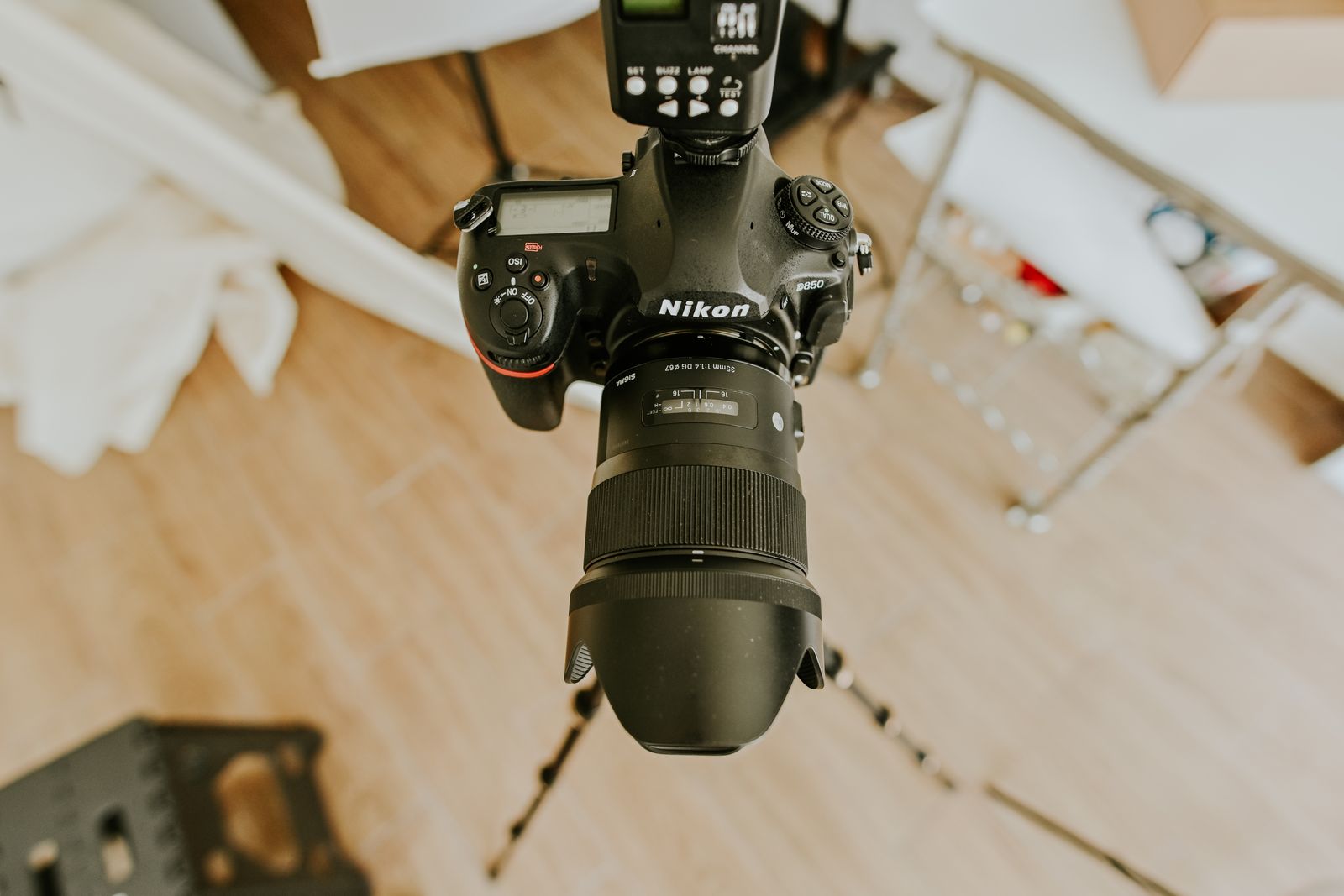
Ask one question and you will learn more than an hour of portfolio talk will teach you: "What happens if your camera dies halfway through?" A professional answers in specifics — a second body in the bag, a third in the car, lenses that overlap, spare batteries and cards, flashes that can substitute for each other. An amateur often answers in hope.
This is not snobbery about owning things. Bodies fail, shutters reach the end of their rated lives, cards corrupt, and guests knock cameras off tables. On an unrepeatable job — a wedding, an event, a product launch, a day when a whole team has been assembled at your expense — a single point of failure is the risk you are actually pricing. Dual-card recording, where the camera writes every frame to two memory cards at once, is the file-level version of the same discipline: one card can fail without taking the job with it.
The same logic extends after the shoot. Professionals describe, when asked, a backup routine: cards copied the same day, a second copy on a separate drive, a third copy off-site or in cloud storage. Amateurs are more likely to keep the only copy on the card, in the camera bag, until they get round to it. Most of the horror stories clients tell editors are not about bad pictures. They are about pictures that no longer exist.
The contract is a product, too
A professional's quote comes with a written agreement that names the date, the hours, the deliverables, the delivery window, the payment schedule, what happens if either side cancels, and who may use the images, for what, and for how long. That document protects the photographer, certainly. It also protects you, because it converts a friendly understanding into something you can point to when memories diverge.
Pay particular attention to four clauses. First, delivery: how many images, in what form, by when — a date, not a mood. Second, substitution: if the photographer is ill or injured, who shoots instead, and can you refuse the substitute and recover your money? Third, cancellation and postponement: what you lose, and when, stated in numbers. Fourth, rights: whether you are receiving files for a defined use or something broader, and what extra use would cost. A photographer who will not put these in writing is asking you to carry risks they will not carry themselves.
Amateur arrangements are often a message thread and a handshake. For a low-stakes job, that may be proportionate. For a job with a fixed date, other vendors depending on it, or money you cannot spend twice, the absence of a contract is not a saving. It is the risk, unpriced.
Consistency on a bad day
Here is the distinction editors care about most, and clients see least. An amateur's portfolio shows what they can do on a good day, with a cooperative subject, in light they chose, with time to wait. A professional's value is a floor, not a ceiling: what they can deliver at 9 p.m. in a yellow-lit hall, with a subject who is tired, a schedule that has slipped an hour, and no possibility of doing it again tomorrow.
That floor is built from unglamorous repetitions. Professionals have usually shot the same kinds of jobs dozens or hundreds of times, and it shows in the frames clients rarely praise but always need: the group photograph where everyone is visible and nobody is blinking, the product shot where the label is sharp and the colour is true, the speaker who is in focus even though the stage lighting was designed for atmosphere, not cameras. Consistency also means a whole set that belongs together — matched colour, matched exposure, no ten beautiful frames hiding forty unusable ones. When you review a candidate, ask for one complete job, not a greatest-hits selection, and judge the weakest third of it. That is the level you are most likely to buy.
Editing, files, and the work after the shutter
A professional price includes selection, colour correction, retouching to an agreed level, and export in the sizes and formats the job needs — print-ready files, web files, or both, with a gallery or delivery system that will still work when you come back to it. It also includes keeping the raw files for a stated period, so a lost download is an inconvenience, not a catastrophe.
With a cheaper quote, establish exactly where the work stops. Unedited files straight from the camera are not a finished product, however good the photographer is, because modern cameras are designed to hand over material that expects processing. If editing is included, to what level — global correction, or retouching of individual frames? How many revisions? These are not pedantic questions. They are the difference between a price for photographs and a price for pressing a button in your presence.
When the amateur is the right hire
None of this makes the professional the correct answer to every brief, and a good editor will say so plainly. Choose the talented amateur, the student, or the friend with a serious camera when the job can be repeated, when the stakes of a thin result are low, when you have time to reshoot, or when experimentation is itself the point. A test shoot for a new product idea, informal portraits for a personal project, a second angle alongside a professional who is carrying the essential coverage — these are sensible places to save money and give someone developing their craft a real opportunity.
Choose the professional when the moment happens once, when other people's money or schedules depend on the result, when a venue or insurer requires cover, when the images carry legal, commercial, or reputational weight, or when you need a defined right to use the pictures afterwards. In short: the more the job resembles an obligation, the more you should hire the person who treats it as one.
| Question to ask | What a professional answer sounds like |
|---|---|
| What happens if your camera or card fails? | A named second body, dual-card recording, and a same-day backup routine |
| Can I see your insurance certificate? | Yes — sent as a document, without hesitation |
| What exactly will I receive, and by when? | A number of edited files, in named formats, by a date in the contract |
| Who can use the images, and for what? | A licence described in plain terms, with extra uses priced |
| What if you are ill on the day? | A named substitute arrangement, or a refund clause, in writing |
How to check, in half an hour
You do not need industry knowledge to vet this. You need three documents and one complete gallery. Ask for the insurance certificate, a sample contract, and a full set from a single ordinary job in conditions like yours. Read the contract's delivery, cancellation, substitution, and rights clauses. Scroll the whole gallery, especially its dull middle. Then ask the failure question about equipment and files, and listen for specifics.
This site's directory is a useful scale check for how deep the professional bench is: it lists 18,399 photographers in its Professional Photographers subcategory, within a much larger photography directory. Numbers that large mean you do not have to settle for a quote you cannot verify. Shortlist by specialty, do the half-hour check, and compare like with like — hours, editing, files, rights, and cover — rather than headline price against headline price.
The bottom line
The price difference between a professional and an amateur buys remarkably little that shows up in a single beautiful frame. Talented amateurs make beautiful frames every day. What it buys is everything that makes beautiful frames likely, repeatable, insured, backed up, contracted, and delivered — the invisible deliverables around the pictures. If your job can survive without them, save the money with a clear conscience. If it cannot, the cheaper quote is not cheaper. It is just the bill, presented later, in a currency you would rather not pay in.
Sources
- Thumbtack, photographer pricing data — portrait sessions averaging about $277, headshots about $304, and commercial photography about $440. https://www.thumbtack.com/p/photographer-prices
- The Knot, Real Weddings Study (couples married in 2025) — average wedding photographer spend of about $3,000, via pricing summaries at https://picstack.com/blog/photography-pricing
- U.S. Bureau of Labor Statistics, Occupational Employment and Wage Statistics, May 2025 — median photographer wage of $44,660 a year / $21.47 an hour. https://www.bls.gov/oes/
- PHLEARN, "How Much to Charge for Photography in 2026" — professional rate ranges of $100–$300 an hour and the distinction between billed and paid hours. https://phlearn.com/magazine/definitive-guide-pricing-your-photography-design-work/
- Photo by Amar Preciado, https://www.pexels.com/photo/17094508/
- Photo by Amar Preciado, https://www.pexels.com/photo/8389706/
More guides
- How to Find a Wedding Photographer: The Complete, Honest GuidePhotographers › Wedding Photographers
- How Much Does a Wedding Photographer Cost? Packages DecodedPhotographers › Wedding Photographers
- 10 Questions to Ask a Wedding Photographer Before You BookPhotographers › Wedding Photographers
- Wedding Photography Styles Explained: Documentary, Editorial, Traditional, Fine ArtPhotographers › Wedding Photographers
- Hiring a Wedding Photographer in California: Venue Light, Permits, and Price LevelsPhotographers › Wedding Photographers
- All Guides & ArticlesBrowse the full guides library