Photographers › Studios
Renting a Photo Studio by the Hour: What to Check Before You Book
Renting a studio by the hour looks like the simplest transaction in photography: pick a room, pick a time, pay the rate. The room in the photographs is bright, the backdrop is seamless, and a pair of strobes stand ready like furniture. Then shoot day arrives, and the real studio introduces itself — the ceiling is eight feet high, the one circuit that reaches the set also runs the air conditioner, the freight elevator needs a key nobody mentioned, and your four-hour booking, which you counted as four hours of shooting, turns out to include the hour you spent carrying cases up two flights of stairs.
None of this makes hourly rental a bad deal. It is usually a very good one: you get a controlled space, real power, and a backdrop you don't have to store, for less than the cost of the seamless paper you'd burn through owning the place. Peerspace, the largest hourly-rental marketplace, reports average photo-studio rates of about $78 an hour in New York and $77 in Los Angeles, with most bookings running three to four hours. But the rate is the least informative number on the listing. What decides whether your day works is a list of physical and contractual details that are all checkable in advance — if you know to ask. This guide is that list.
Start with the ceiling, not the square footage
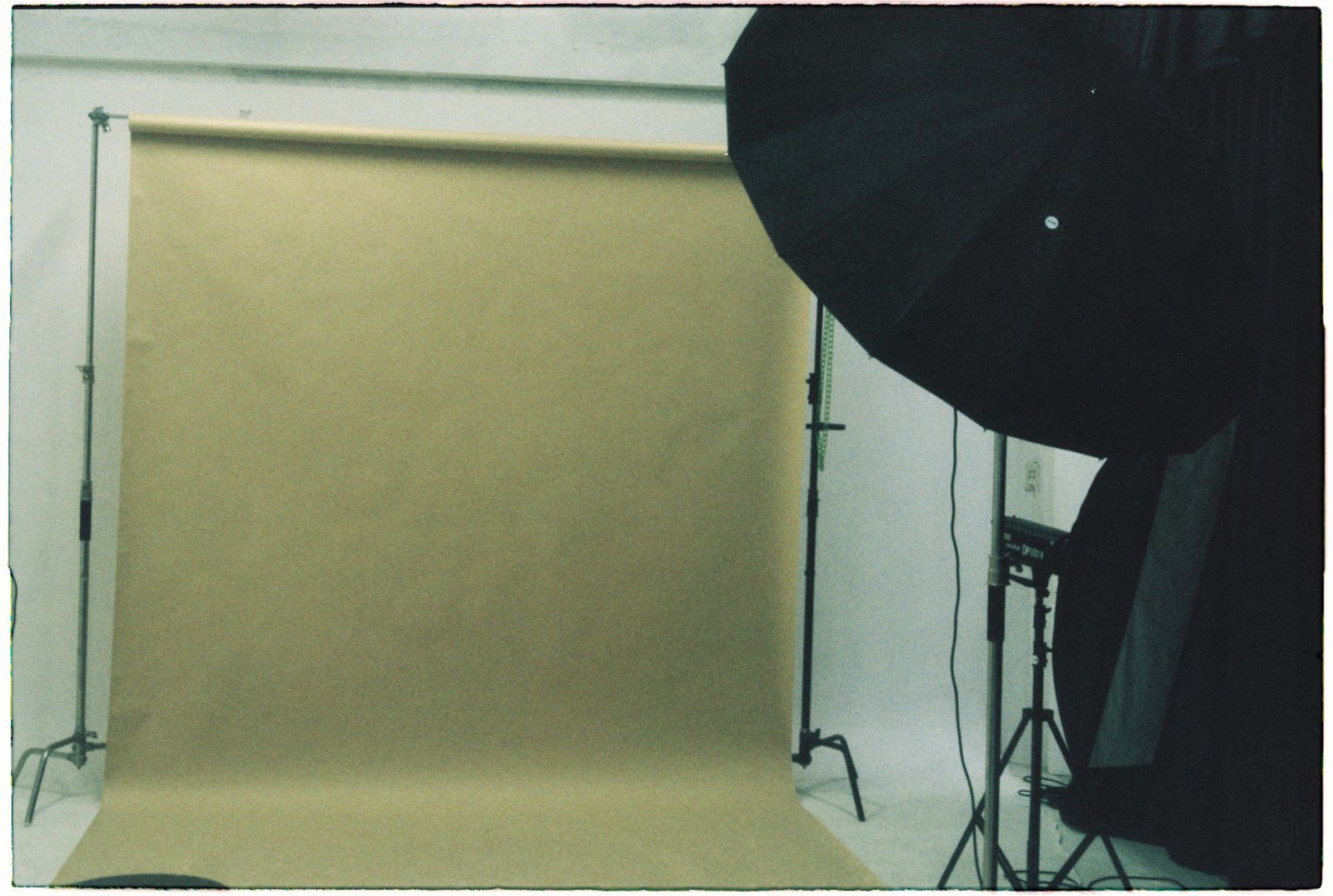
Listings lead with square feet because square feet sound generous. Ceiling height is the dimension that actually governs what you can shoot. A studio with 8-foot ceilings rules out overhead lighting entirely — there is nowhere for a boom to go — and makes full-length fashion awkward, because your key light ends up at the subject's eye level whether you wanted that or not. Working studio guides put the practical minimums at about 10 feet for portrait and headshot work, and 12 to 14 feet for fashion, commercial, or any setup with standing subjects and overhead strobes.
Ask for the exact ceiling height, and where it is measured. Converted industrial space often has a high ceiling crossed by beams, ducts, or a sprinkler line at nine feet, and the lowest obstruction is the number that matters if you plan to boom a light or hang a backdrop. The same logic applies to the shooting depth: a full-length portrait on a long lens needs distance between camera, subject, and backdrop, and a wide-but-shallow room can have plenty of square feet and no usable axis. Get the room's dimensions, not just its area, and sketch your set against them before you pay.
If the studio has a cyclorama — the curved wall-to-floor sweep that produces the infinite-white look — ask when it was last painted and what condition you are expected to leave it in. A cyc is a consumable surface. Scuffs and floor marks show on camera, repainting is a real cost, and studios handle it differently: some repaint between bookings, some charge a repainting fee if you leave it marked, and some hand you a beautiful listing photo of a cyc that currently has a season of heel marks on it. Photograph it when you arrive, whatever the answer.
Power: ask about amps, not outlets
Every studio listing says "power available," which is true in the sense that walls have outlets. The question that matters is how many circuits serve the shooting area, at what amperage, and what else shares them. A standard residential circuit is 15 amps; a proper production setup runs on dedicated 20-amp or 30-amp circuits. Strobes are forgiving — they sip power and recycle — but continuous lights, hair and makeup stations, a steamer, a laptop-and-monitor tethering station, and the building's HVAC all draw steadily, and they add up. The failure mode is not exotic: a breaker trips mid-shoot, the lights die, and you lose twenty minutes finding a panel that may be locked in someone else's space.
Ask three specific questions. How many circuits can I use, and where is the panel? Are the circuits shared with other rooms or with the air conditioning? And can I get the amperage confirmed in writing? Studios that serve working professionals answer these without blinking, because their regulars ask every time. While you are on infrastructure: if you shoot video, ask whether the HVAC can be switched off during takes and what the room sounds like — traffic, a compressor, the unit next door. If you tether, ask the Wi-Fi speed. If the windows are the point of the space, ask which direction they face and when the light peaks and dies; a north-facing daylight studio and a west-facing one are different products at 4 p.m.
Load-in: the hour you didn't book
More studio days are lost to access than to equipment. Your booking starts when the clock says it starts, and at most hourly studios that clock includes load-in, setup, pack-out, and reset. Peerspace's own renter guidance makes the point bluntly: book the full production window, not just the time you want to be actively shooting, because first-time renters chronically underestimate load-in and setup — and that is what produces rushed endings and overtime charges.
So walk the route your gear will take, on paper at least. Which door do we use? Is there an elevator, and does it need a reservation or a key? How early can we arrive, and is there somewhere legal to leave a vehicle while unloading, or will the driver be circling the block with your lights in the back? Where do crew and clients park, and how many vehicles can the location realistically handle? A studio on the third floor of a walk-up is a fine studio — for a one-light portrait kit. It is a different proposition for a product shoot with a rolling cart of grip, and the time to learn that is before the deposit, not on the stairs.
What the rate includes — and the fees hiding beside it
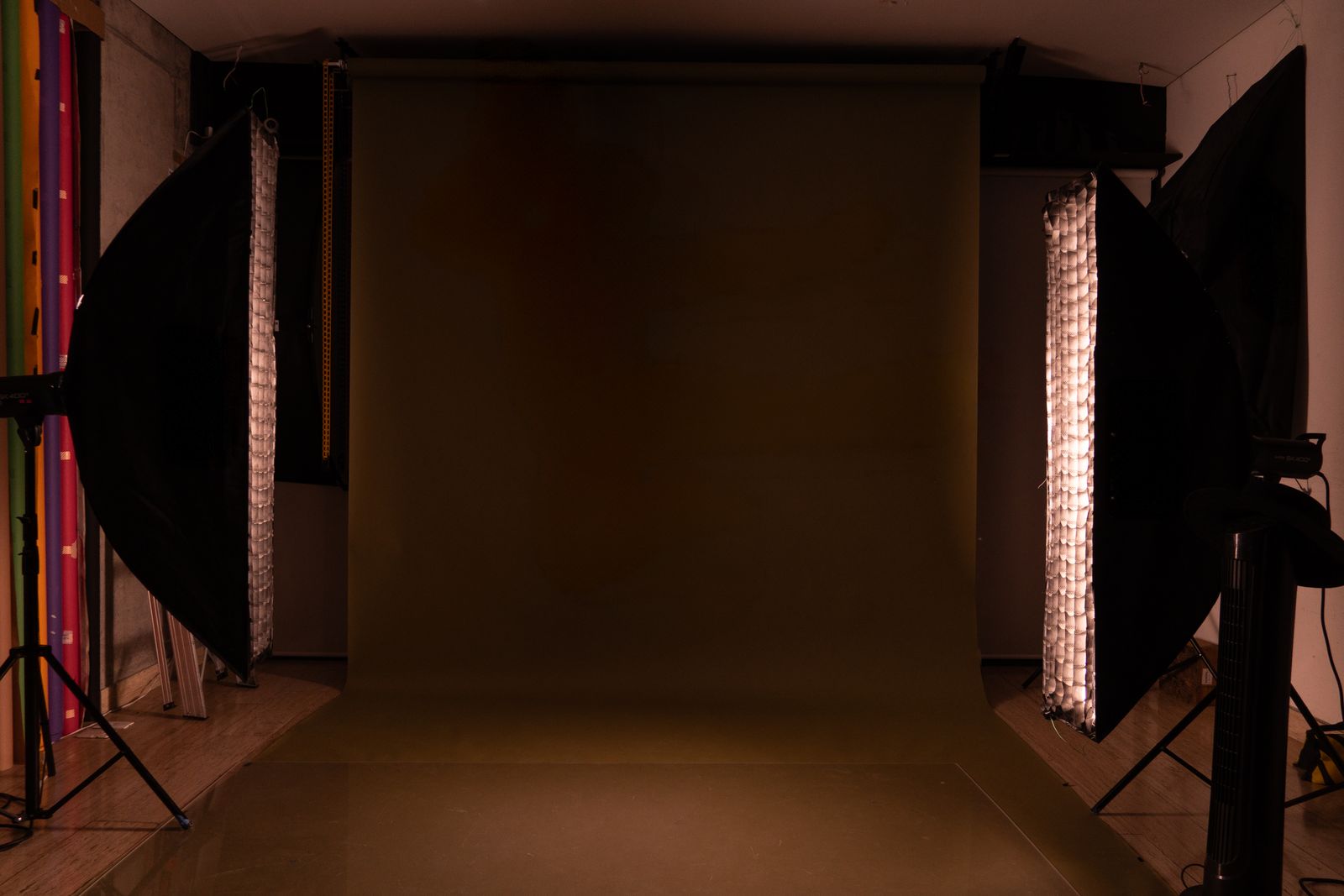
The hourly rate buys the room. Everything else is negotiable, itemized, or extra, and the extras are where budgets quietly double. The honest way to compare two studios is the all-in total for your exact booking: rate × hours, plus gear, plus per-person fees, plus cleaning, taxes, and platform fees. One Los Angeles studio's published rate card makes the arithmetic concrete: $150 an hour for the space, lighting and grip as a $25-an-hour add-on, and an hourly guest fee once the group reaches five people. Neither figure is unreasonable. Both are invisible if you only read the headline rate.
The recurring charges to surface before you book:
| Charge | How it usually works | The question to ask |
|---|---|---|
| Overtime | Billed per 15 minutes or per full hour, often at a premium rate; some bookings are hard stops because another renter follows | "What happens at minute one past my end time — and can I extend at all?" |
| Setup and pack-out | Counted inside your booked hours at most hourly studios | "Does my clock include load-in and reset?" |
| Gear | Lights, grip, backdrops, and modifiers included at some studios, rented per item or per hour at others | "Which exact lights and modifiers are guaranteed with my booking — brand and model?" |
| Extra guests | A per-person or per-hour fee above a set head count (commonly 5–10 people) | "How many people are included, and what does person eleven cost?" |
| Cleaning and damage | Cleaning fee, refundable deposit, cyc repainting, seamless paper consumed by the roll or the foot | "What state must the cyc and floor be in when I leave, and what does paper cost?" |
| Insurance | Many professional studios require a certificate of insurance (COI), sometimes with specific limits and additional-insured wording | "Do you require a COI, at what limits, and how far ahead do you need it?" |
Two more clauses deserve a sentence each. Cancellation: deposits on hourly rentals range from fully refundable to gone the moment you book; get the reschedule terms in writing, because clients move shoot days constantly. Restrictions: ask directly about the things studios ban — haze and fog machines, confetti and glitter, candles and open flame, water, sand, animals, painting the cyc, taping to walls. Every one of those bans exists because a previous renter's great idea became the studio's repair bill, and every one of them will end your shoot early if you discover it on site.
When hourly stops being the right way to buy
Hourly rental is priced for flexibility, and you pay for that flexibility by the hour. Three situations change the arithmetic. The first is the long day: most studios sell half-day and full-day rates that undercut the hourly rate substantially — a room at $80 an hour is often $500 for a ten-hour day — so once your production window passes six or seven hours, ask for the day rate before you book eight hourly slots. The second is recurrence. If you shoot studio work every week, many independent studios offer memberships or standing blocks: a set number of hours a month at a reduced rate, sometimes with storage for your backdrop stands and a standing COI on file. The third is the regular-client relationship itself. A studio that knows your work, your crew size, and your load-in routine will often hold dates informally, waive the small fees it charges strangers, and let you run fifteen minutes long without a meter running — none of which appears on any rate card, and all of which is worth more than a $10 hourly discount across town.
The reverse also holds: if a studio will not discuss day rates, will not confirm its circuit amperage in writing, and answers the cyc question with "it's fine," you have learned what the room is worth regardless of its hourly price.
The five-minute scout that saves the day
If the shoot matters, visit before you book — or, failing that, send the host a message with the questions above and judge the answers. You are checking four things. The space itself: ceiling, circuits, cyc condition, a working outlet count, the load-in route walked at your pace with your longest case in mind. The light: window direction and what the room looks like at your booked hour, not at the hour the listing photos were taken. The support: is there a makeup station, a steamer, a private place to change, a bathroom your client can use without crossing the set? And the paperwork: COI requirements, the overtime rule, the cancellation terms, all confirmed in writing.
This directory lists more than 750 photography studios for hire alongside its portrait and commercial specialists, and the range runs from a spare room with a paper backdrop to full production stages. The rate will tell you which end of that range you are in. The questions in this guide will tell you whether the room — the actual room, with its actual ceiling, circuits, stairs, and contract — can do the job you are booking it for. Ask them before you pay, and the studio in the listing photos is the studio you will get.
Sources
- Peerspace, photo studio rental data (booking data through November 2026) — New York photo studios average $78/hour and Los Angeles $77/hour; most bookings run 3–4 hours. https://www.peerspace.com/venues/new-york--ny/photo-studio and https://www.peerspace.com/venues/los-angeles--ca/photo-studio
- Peerspace, Phoenix photo studio FAQ — the first-time renter checklist: all-in cost, overtime and hard stops, cyc wall condition, power and ceiling height, access and load-in. https://www.peerspace.com/venues/phoenix--az/photo-studio
- Ken Jones NYC, "Studio Rental Questions to Ask Before You Book in NYC" — ceiling-height minimums (10 ft portraits; 12–14 ft fashion/commercial), 15-amp vs 20/30-amp circuits, COI requirements, overtime billing. https://www.kenjonesnyc.com/studio-rental-questions-to-ask/
- GMA Creative House, "How to Rent a Photo Studio in Los Angeles" — all-in cost formula; example rate card ($150/hr space, $25/hr lighting and grip, guest fees from five people); setup and pack-out inside booked hours. https://www.gmacreative.com/blog/how-to-rent-a-photo-studio-in-los-angeles
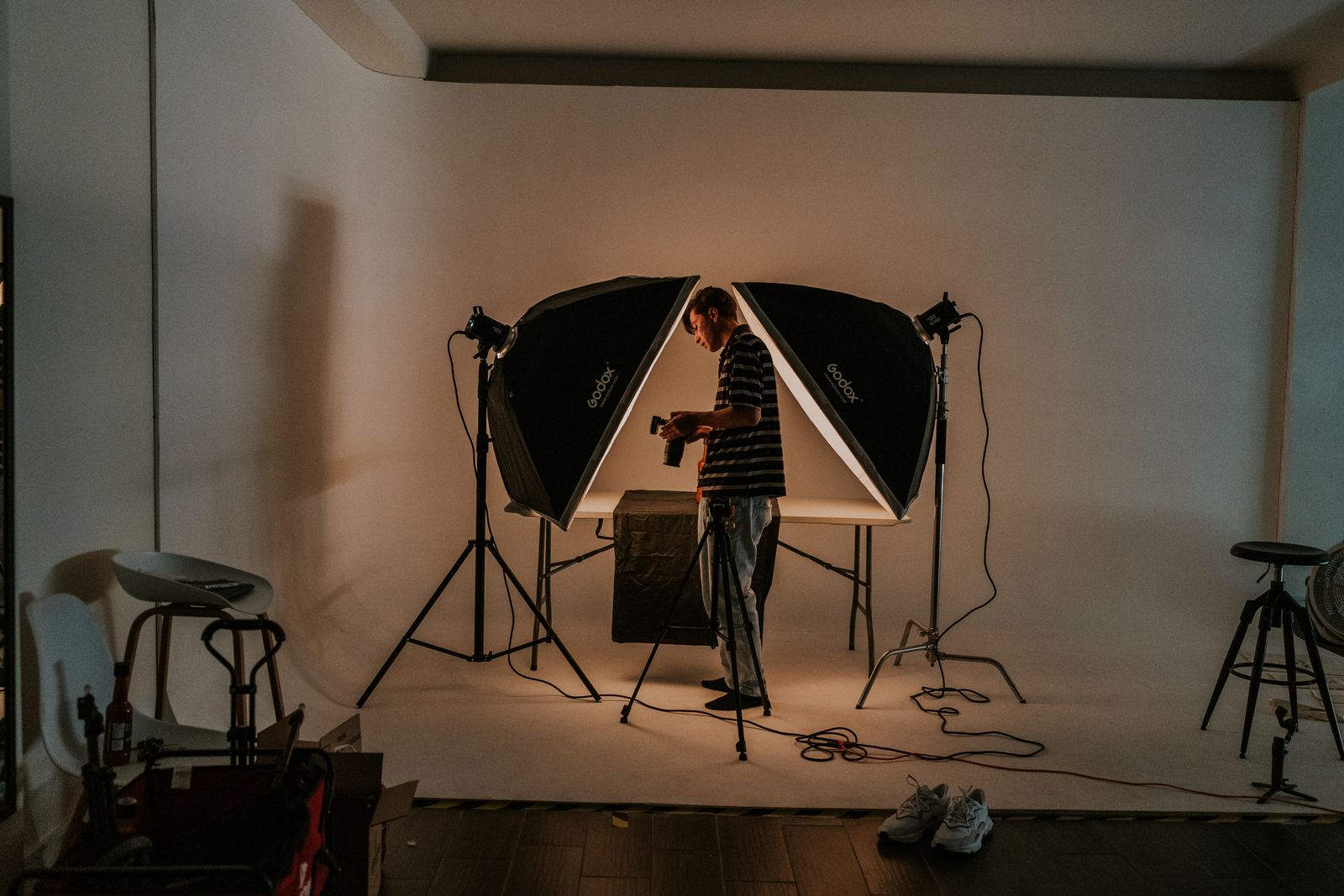
Photographs: empty studio with backdrop and lighting, photo by Kunno Jayson, https://www.pexels.com/photo/studio-ready-for-a-photoshoot-6989087/ ; modern studio setup with mocha backdrop, photo by Israyosoy S., https://www.pexels.com/photo/professional-photography-studio-setup-with-lighting-30332804/ ; photographer between studio lights, photo by Amar Preciado, https://www.pexels.com/photo/a-photographer-holding-a-camera-standing-between-the-lights-in-a-studio-17094504/
More guides
- How to Find a Wedding Photographer: The Complete, Honest GuidePhotographers › Wedding Photographers
- How Much Does a Wedding Photographer Cost? Packages DecodedPhotographers › Wedding Photographers
- 10 Questions to Ask a Wedding Photographer Before You BookPhotographers › Wedding Photographers
- Wedding Photography Styles Explained: Documentary, Editorial, Traditional, Fine ArtPhotographers › Wedding Photographers
- Hiring a Wedding Photographer in California: Venue Light, Permits, and Price LevelsPhotographers › Wedding Photographers
- All Guides & ArticlesBrowse the full guides library