Photographers › Cameras & Camera Supplies
Second Opinions in Cameras and Camera Supplies: When to Get One and How to Use It
Managing a portrait studio teaches you an uncomfortable symmetry: customers should get second opinions on your quotes, and you should get them on your suppliers’. Cameras and camera supplies concentrate more money into smaller, more technical objects than almost anything else a photographer buys, and the person quoting you — for a repair, a used body, a lens — almost always knows more about the object than you do. A second opinion is how you close that gap. It is also, done badly, how you insult a good technician, pay two diagnostic fees for one answer, and end up more confused than you started.
This guide is the working version: when a second opinion is worth its cost, when it is a waste of money, how to obtain one without burning the bridge you may still need to cross, and how to compare two answers that do not agree. This site lists 465 cameras and camera supplies businesses and 571 photographic equipment service and repair businesses — the second opinion you need almost certainly exists. The skill is in asking for it properly.
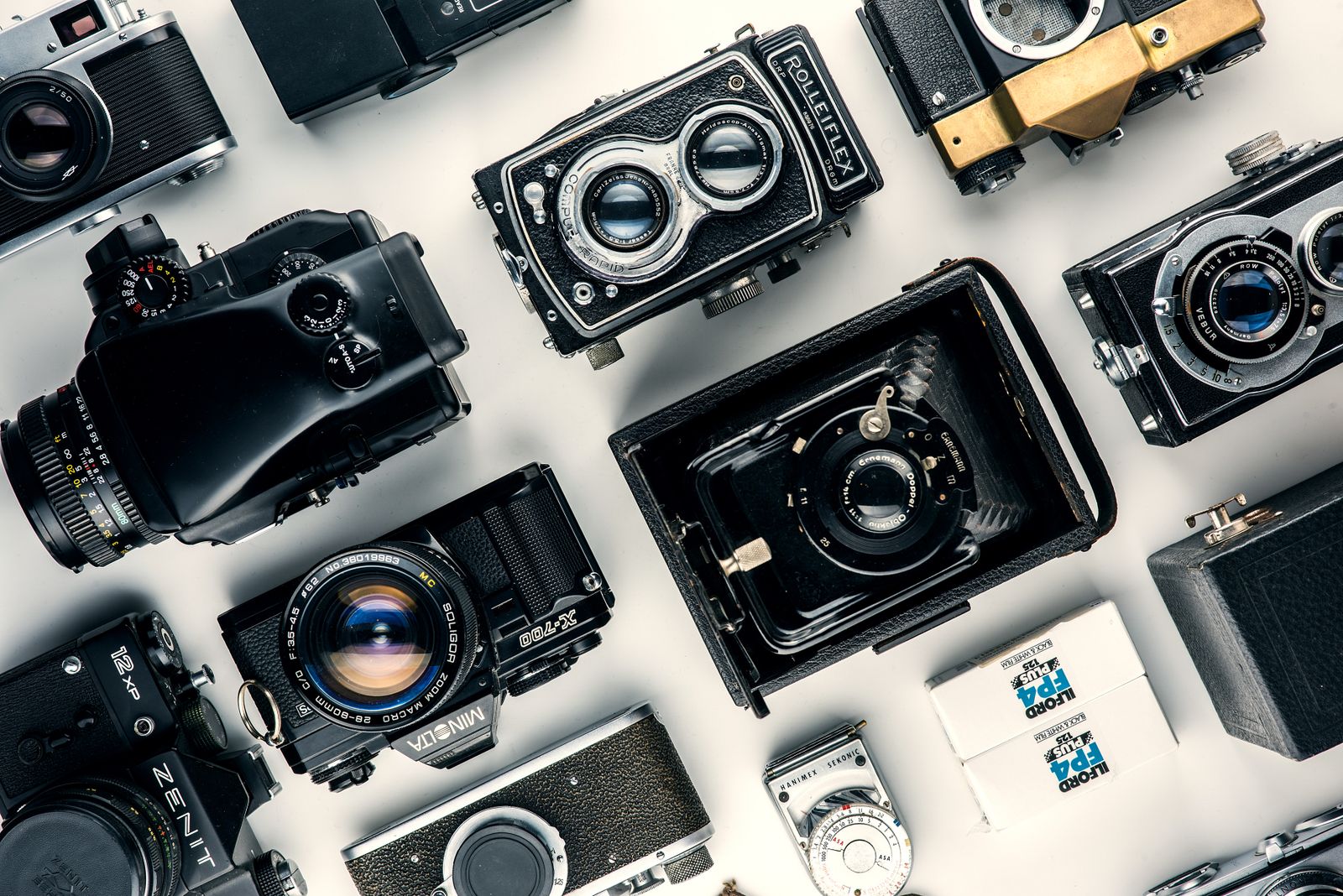
Where second opinions live in this trade
A second opinion in cameras takes three distinct forms, and they are not interchangeable.
The second repair estimate. A technician opens the camera, diagnoses the fault, and quotes the fix. This costs a bench or estimate fee — typically $24 to $85 across published US repair price lists — which is sometimes credited against the repair if you proceed, and sometimes not. That single detail, credited or not, decides whether a second estimate is cheap diligence or a sunk cost, so it is the first question to ask any shop, including the first one.
The second valuation. For used gear — buying, selling, insuring, or settling what a kit is worth — the opinion is a grade and a price. Large used dealers publish their grading systems precisely so their valuations can be checked: KEH, the biggest US used dealer, grades on a scale from New through Like New, Excellent Plus, Excellent, and Bargain down to Ugly and As Is, and states plainly that its grades describe cosmetic condition, not function, with working order guaranteed unless a listing says otherwise. A 180-day warranty covers its grades from Like New down to Bargain. Those published definitions turn one dealer’s “excellent” from an adjective into a checkable claim.
The second pair of eyes before a major purchase. A working photographer, a rental house counter, or a camera-store technician who does not sell the item in question looks at your intended purchase — a used lens with a hint of haze, a body with a high shutter count — and tells you what they see. This opinion is often free or costs a clean-and-check at $25 to $58, the cheapest inspection in the trade: an external and accessible-internal clean, a function test, and a shutter-speed check. For a purchase in the hundreds or thousands, it is the best-value second opinion that exists.
When it is worth paying for
The arithmetic is not subtle. Get a second opinion when the cost of being wrong dwarfs the cost of asking — and in this trade, asking usually costs under $85.
Any repair quote over about $200. Published repair ranges are wide because shops genuinely sit all across them: a full overhaul runs $278 to $378, a CLA — clean, lubricate, adjust, the standard mechanical-camera service — runs $125 to $325, fungus removal $78 to $228, a lens CLA $125 to $165. One repair guide states the rule outright: two quotes are worth getting on anything over $200. On a $300 overhaul, the spread between two honest shops can exceed the second bench fee several times over.
Any quote that approaches the camera’s replacement value. The useful test is what an equivalent working camera costs today — not what you paid, not the launch price. A $400 shutter replacement in a body worth $2,000 used is an obvious repair; the same quote on a body worth $350 used is a replacement decision wearing a repair quote’s clothes. A second shop will sometimes tell you the camera is not worth fixing — and a technician who talks himself out of work is the most credible witness in this entire guide.
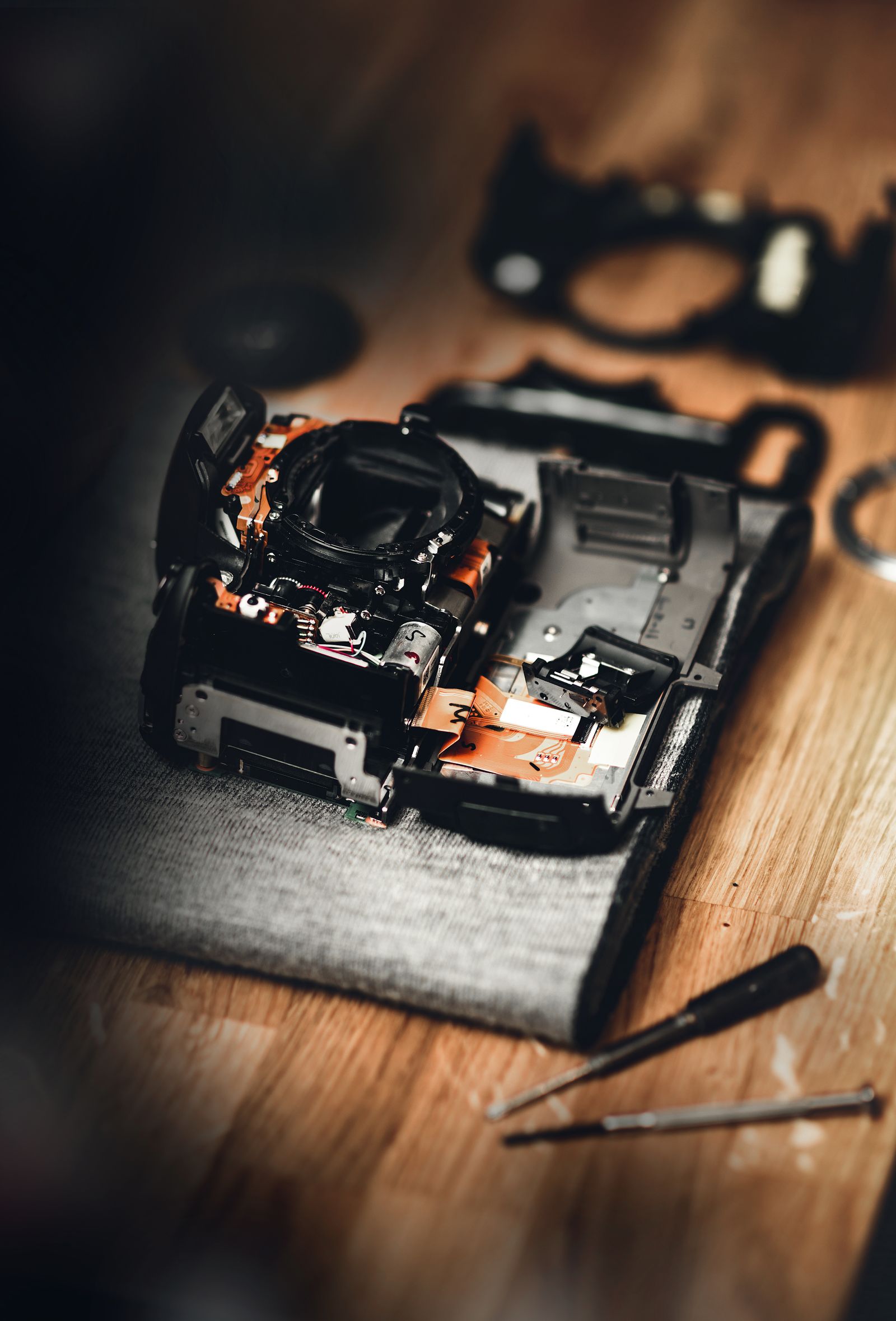
Any diagnosis you cannot verify. “The main board is gone,” “the shutter is at the end of its life,” “there is fungus in the internal elements” — each of these is a claim you cannot check with your own eyes, attached to a price. Fungus is the classic case: it can be a cleanable surface problem at the low end of that $78 to $228 range, or it can have etched the coatings, in which case no cleaning restores the lens and the honest advice is to walk away. Two diagnoses that agree on an invisible fault are worth paying for. Two that disagree have just saved you from the more expensive one being wrong.
Any used purchase where condition is the price. Shutter count is the odometer: most bodies are rated for 100,000 to 500,000 actuations, a count at 80 to 90 percent of the rating is generally considered high, and under 50,000 is low mileage. A seller’s “lightly used” and a technician’s shutter-count reading are different kinds of statement. Pay for the second kind whenever the discount for wear is the reason you are buying.
Anything headed for insurance, a claim, or a dispute. A written second valuation, from a dealer with published grades, is evidence. A verbal first opinion is not.
When to skip it
Second opinions have costs beyond their fees, and a studio manager learns the other side of the ledger too. Skip the second opinion on small, standardized work — a sensor clean, light seals at $80 to $120, a clean-and-check itself — where the published ranges are tight and the job is the same everywhere. Skip it when the first quote sits comfortably inside the published range for the job and the shop will credit its bench fee toward the work; you would be paying $85 to confirm a $128 tune-up. Skip it, above all, when what you are shopping for is not information but a lower number you have already decided on — technicians can tell, and the third shop you visit will quote you the price of a customer who has visited two shops before it. And never commission a second opinion by authorizing the first repair “to see how it goes”: opening a camera changes its condition, voids the clean comparison, and can hand the second technician a different, worse problem than the one you described.
How to ask without burning the bridge
The fear is real: the technician in your town may be the only one within a hundred miles, and you may need them for the next twenty years. The good news is that professionals expect second opinions on large quotes the way surgeons do — what offends is not the asking, it is the handling. Four practices keep the bridge intact.
Be transparent, briefly. “This is a large quote for me, so I’m getting one comparison before I decide — I’ll come back to you either way” is a complete and respectable explanation. It signals a serious customer, not a suspicious one.
Never carry one shop’s number into another shop as a target. “Can you beat $278?” converts a diagnosis into an auction, and the second technician now has an incentive to find a cheaper fault rather than the true one. Ask for an independent diagnosis and quote, and compare afterward. An opinion that was produced without seeing the first number is the only kind worth having.
Pay the bench fee without arguing, and get the diagnosis in writing. The fee buys the technician’s time and the written finding — fault, parts needed, labor, and whether the fee is credited. Written diagnoses are what make two opinions comparable; two verbal quotes are just two numbers.
Close the loop. Tell the shop you did not choose that you went the other way, and thank them for the diagnosis. Studios and repair shops remember this courtesy disproportionately, because almost nobody does it. The bridge you may need is usually preserved by a thirty-second phone call, not by never asking.
Comparing two answers that disagree
Lay the two written quotes side by side and compare in this order. Diagnosis first: if the faults named are different, you do not have a pricing problem, you have a knowledge problem — the cheaper quote may be fixing a symptom, or the dearer one may be fixing a fault the first shop missed, and a third data point (often the manufacturer’s service center, or the clean-and-check evidence) is worth its fee precisely here. Scope second: one shop’s CLA and another’s are only the same product if both mean a full strip, clean, re-lubrication, and recalibration; a “service” that is really a tune-up at around $128 will always underquote a true overhaul, and should. Parts third: included, extra, new, or salvaged — a quote can win on labor and lose on a parts line you did not read. Warranty and turnaround last: a repair guaranteed for a stated period, done in two weeks, can be worth more than a cheaper one with neither promised. The right choice is the quote whose diagnosis you believe, at a scope you understand — the lowest number wins only when all four rows match.
The studio rule, to take away
In my studio we kept it to one line: second opinions on anything over $200, anything invisible, and anything we would have to insure — first opinions, trusted, on everything else. Translated for a buyer: pay the bench fee when the quote is large, the fault is hidden, or the condition is the price; ask for the diagnosis in writing; never auction one shop’s number at another’s counter; and always, always close the loop. This site lists 571 equipment service and repair businesses and 465 camera and supplies dealers. Somewhere in those two lists is the second voice that keeps the first one honest — including, on the good days, when it confirms the first voice was right all along.
Sources
- CameraStores.net, Camera Repair Costs guide — bench and estimate fees of $24–$85, clean-and-check at $25–$58, CLA at $125–$325, full overhaul at $278–$378, and the rule that two quotes are worth getting on anything over $200.
- CameraStores.net, Camera Repair in Miami and New York — published ranges for fungus removal, light seals, and lens CLA, and whether bench fees are credited.
- Clean Camera, How Much Does It Cost to Repair an Old Camera — digital shutter replacement at $200–$500 and the wider repair cost ladder.
- Aesthetics of Photography, Second-Hand Photo Gear: Grades, Guarantees, Checks — KEH’s eight grades as cosmetic rather than functional, its 180-day warranty from Like New to Bargain, and shutter-count guidance from Adorama.
- PhotoWorkout, Best Places to Buy Used Camera Lenses — shutter ratings of 100,000–500,000 actuations, under 50,000 as low mileage, and the standard checks for used gear.
Photo credits: Assorted cameras — photo by Alex Andrews, https://www.pexels.com/photo/assorted-black-and-gray-cameras-1983038/ . Camera lenses — photo by Nguyen Huy, https://www.pexels.com/photo/19079982/ . Disassembled camera — photo by Alex Andrews, https://www.pexels.com/photo/821642/ .
More guides
- How to Find a Wedding Photographer: The Complete, Honest GuidePhotographers › Wedding Photographers
- How Much Does a Wedding Photographer Cost? Packages DecodedPhotographers › Wedding Photographers
- 10 Questions to Ask a Wedding Photographer Before You BookPhotographers › Wedding Photographers
- Wedding Photography Styles Explained: Documentary, Editorial, Traditional, Fine ArtPhotographers › Wedding Photographers
- Hiring a Wedding Photographer in California: Venue Light, Permits, and Price LevelsPhotographers › Wedding Photographers
- All Guides & ArticlesBrowse the full guides library