Photographers › Stock Photographers
Stock Photographers for Small Businesses: What Changes When It Is Not Personal
The first time a business uses a photograph, nothing about it feels like a legal act. A founder pulls an image for the website, a manager drops one into a pitch deck, a freelancer builds a flyer around a picture that "came with the template." For personal use, the consequences of getting the rights wrong are usually a shrug. For a business, the same habits become line items: license fees, indemnity limits, takedown demands and, at the sharp end, settlement letters for images nobody remembers choosing.
That is the real subject of stock photography for small businesses. "Stock photographers" means two suppliers at once — the agencies that license existing images, and the working photographers who shoot custom libraries in a stock style for brands — and a business has to manage both differently than a consumer does. Volumes are higher, contracts actually bind, the tax and bookkeeping treatment changes, and the service level you should expect (and demand) is a business service level. Here is what changes, item by item.
Volume changes the buying model
A consumer buys a photograph. A business buys a flow. The moment your company publishes weekly — a website, two social accounts, a newsletter, sales decks, packaging — single-image buying stops making sense, and the agencies' pricing is built to move you onto subscriptions. Current published plans make the arithmetic plain. Shutterstock's image plans run $29 a month for 10 downloads on an annual contract, $99 for 50, $169 for 350 and $199 for 750 — $2.90 per image at the bottom of the ladder and about $0.27 at the top, if you use them all. Adobe Stock's entry plan is $29.99 a month for 10 assets on an annual commitment; iStock's Basic plan mirrors it at $29 for 10. On-demand buying still exists for the occasional image: prepaid packs and single downloads run roughly $2 to $15 per standard image, and premium individual images can reach into the hundreds.
Two business disciplines follow. First, track utilization the way you track any subscription: a 50-image plan used for 12 images costs over $8 an image, worse than the 10-image plan you outgrew in your head. Second, know what happens to unused downloads and to the license when you cancel. Adobe Stock and Shutterstock licenses for downloaded assets are perpetual — the images you licensed stay licensed — while some unlimited-download services license assets for projects made during the subscription, a distinction that matters the day you let the plan lapse and keep running the campaign.
One more volume trap catches small teams out: the comp. Designers lay out campaigns with watermarked preview images, intending to license the finals. If a comp survives into a published page, a social post or a printed proof that leaves the building, the business has published an unlicensed image with a watermark half-cropped out of the layout — the single most common source of the demand letters described below. The rule for any business workflow is mechanical: no image enters a publishable file until its license is bought and its receipt is filed. Comps are for screens in the studio, and they die there.
Contracts: the license is the product
A consumer clicks "agree." A business should read, because the standard license has edges that cut exactly where businesses operate:
- Print and impression caps. Standard licenses commonly cap reproduction — 500,000 impressions is the familiar figure on Shutterstock's standard tier. A successful ad campaign, a big print run or packaging at scale can cross a cap without anyone noticing.
- Merchandise is excluded. Using an image as the main value of something you sell — the design on a shirt, mug or poster — is outside standard licenses almost everywhere. That requires the extended or enhanced tier: roughly $50 to $100 per image at published rates, against a few dollars for standard.
- Editorial is not commercial. News and editorial collections — the celebrity, the stadium, the historic event — are licensed for editorial contexts, not for advertising your product. A business that drops an editorial image into an ad has bought the wrong right at any price.
- Seats and sharing. A license usually belongs to one user or entity. The image your designer downloaded is licensed to their account, not automatically to your company, your franchisees or your successor business.
- Indemnification has a number. Standard licenses carry legal protection commonly capped at $10,000; Shutterstock's enhanced tier raises it to $250,000. For a hero image on a national campaign, that difference is a business decision, not a footnote.
| Buying route | Typical cost | What a business must watch |
|---|---|---|
| Subscription (10–750 images/mo) | $29–$199/month | Utilization, rollover, license survival after cancellation |
| On-demand packs / singles | ~$2–$15 per standard image | Per-image cost at low volume; premium images far higher |
| Extended / enhanced license | ~$50–$100 per image | Merchandise rights, lifted caps, higher indemnity |
| Rights-managed (e.g. Getty) | From ~$180 per image, priced per use | Exact use, term, territory and medium are the license |
| Custom library shoot | A photographer's day rate plus production | You own the brief; get the rights in writing |
When the library runs out: hiring the photographer
Every growing business hits the wall stock cannot climb: your product, your premises, your people. Stock has no photograph of your bakery's actual counter, your crew's actual faces, your machine doing the thing it does. That is where the other kind of stock photographer enters — the professional who shoots a custom library in a clean, stock-like style that your marketing can draw on for years. This site lists 314 stock photographers and 5,719 commercial and industrial photographers; the overlap is where custom-library specialists live.
Commissioning changes the rights conversation completely. Instead of renting a license, you are contracting for creation, and everything is negotiable: exclusivity, term, territory, whether the photographer may resell similar frames to agencies (ask — a frame of your premises turning up in a stock library, licensable by your competitor, is a surprise worth preventing in the contract), and whether raw files are delivered. Get model releases from every employee and customer photographed, signed for commercial use; the photographer should run that paperwork as part of the shoot. And treat the deliverable as an asset register: a spreadsheet of files, releases and rights, stored with the images, so that in three years a new marketing manager knows what the business owns.
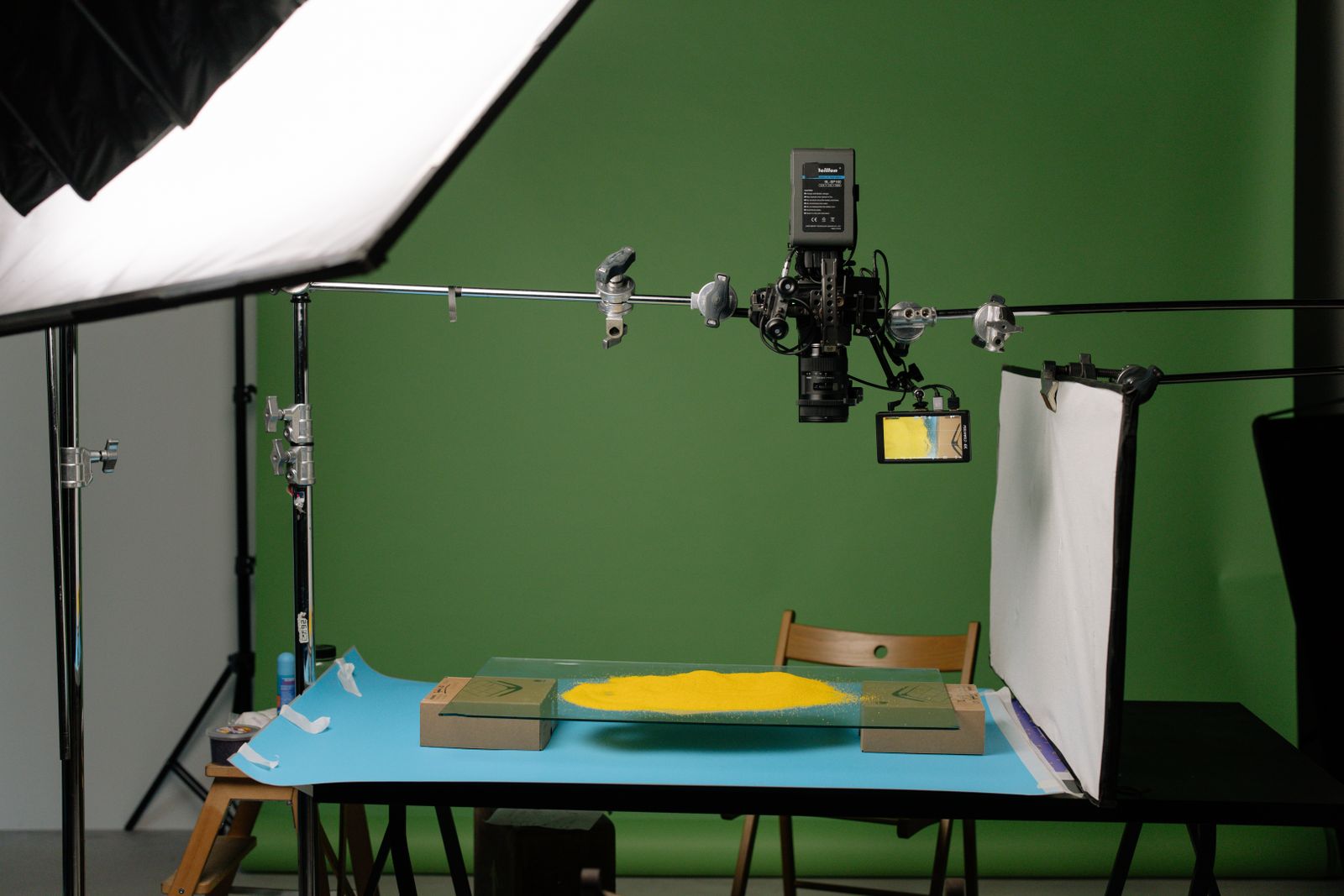
The risk side: demand letters are a business cost
Businesses, unlike hobbyists, are worth writing to. Stock agencies monitor the web with image-recognition tools that find their photographs cropped, renamed and resized, and unlicensed use draws settlement demands regardless of intent — infringement does not require that you knew. Documented small-business cases put typical demands in the hundreds to low thousands of dollars per image: $520 in one campground case, $780 in another where the image's own catalog price was $240. The pattern is consistent: the letter arrives addressed to the business displaying the image, even when a designer or employee chose it; removing the image stops the bleeding but does not erase the past use; and paying the demand settles the claim without granting any license to keep using the picture.
The defenses are procedural, and they are cheap compared with the alternative. Buy images on a company account, never a personal one. Keep the license invoice and the download record with the image file. Require every freelancer and agency you hire to hand over license proof for every asset they deliver, and put that duty in their contract — the demand letter will come to you, not to them. Audit the website once a year for images nobody can document. A business that can produce a receipt for every photograph it publishes has converted a legal exposure into a filing task.
Tax and bookkeeping: licenses are purchases
Personal users never think about this part; businesses must. Stock subscriptions and license fees are ordinary business expenses — marketing or content costs — and should be booked as such, with the invoice retained, rather than disappearing into a founder's personal card. Two wrinkles deserve a bookkeeper's eye. First, sales and use tax on digital goods varies by state: some states tax downloaded images and subscriptions, others do not, and a subscription billed without tax in a state that taxes digital products can leave the business owing use tax — ask your accountant once, rather than discovering it in an audit. Second, a custom library shoot is a capital-flavored purchase: a multi-year brand asset, contracted and invoiced, with the photographer's W-9 and payment records filed like any other vendor's. The photographers are businesses too; expect invoices, tax forms and payment terms, and offer the professionalism you would want from your own customers.
Service levels: what to expect when it is business
Finally, the service relationship itself changes. A business account should come with business terms: a named support route, license documentation on demand, team seats or a shared download pool at team pricing, and — at agency scale — an account manager who can clear an unusual use (a broadcast spot, an out-of-home campaign, a resale product) before you commit to it. From a commissioned photographer, expect a written estimate, a call sheet, releases handled, delivery in web and print resolutions, and a backup of the shoot retained for an agreed period. If a supplier's service level is a chatbot and a shrug, that is information: the time to learn how a licensor behaves is before the campaign, not inside a dispute about it.
The summary for a small business is short. Treat photographs as licensed inputs, like software. Buy the flow on subscription, read the caps before the campaign scales, commission the images only you can own, keep the receipts with the files, and make every contractor prove their licenses. Do those five things and stock photography becomes what it should be for a business: a solved problem, bought by the month, that never sends you a letter.
Sources
- SoftwareCompare, Best Stock Photo Sites for Business — Shutterstock, Adobe Stock and iStock plan pricing checked against the vendors' own pages, and standard-versus-extended license limits.
- RankingRight, Best Stock Photo Sites — per-asset costs and indemnification levels on standard and enhanced licenses.
- Unanswered.io, How Much Does a Stock Photo Cost? — on-demand, pack and enhanced-license price ranges.
- Pelland Advertising, When There Is a Copyright, Copying Is Wrong — a documented Getty Images settlement demand of $520 to a small business.
- Strella Social Media, Getty Images Strong Arms Unsuspecting Small Businesses — a $780 demand against a $240 catalog price.
Photo credits
- Studio product setup — photo by cottonbro studio, https://www.pexels.com/photo/5878878/
- Sneaker product shoot — photo by J. S. J. S., https://www.pexels.com/photo/18190257/
More guides
- How to Find a Wedding Photographer: The Complete, Honest GuidePhotographers › Wedding Photographers
- How Much Does a Wedding Photographer Cost? Packages DecodedPhotographers › Wedding Photographers
- 10 Questions to Ask a Wedding Photographer Before You BookPhotographers › Wedding Photographers
- Wedding Photography Styles Explained: Documentary, Editorial, Traditional, Fine ArtPhotographers › Wedding Photographers
- Hiring a Wedding Photographer in California: Venue Light, Permits, and Price LevelsPhotographers › Wedding Photographers
- All Guides & ArticlesBrowse the full guides library