Photographers › Studios
Studios for Small Businesses: What Changes When It Is Not Personal
A photography studio looks the same whether the client is a grandmother or a growing brand: same cyclorama wall, same lights, same photographer. The work inside it changes completely. A personal client buys photographs. A small business buys assets — images that will sell products, recruit staff, illustrate ads, and be reused for years by people who were not in the room. I assisted on commercial studio work for years, and the differences that surprise small businesses are never about the camera. They are about volume, licensing, paperwork and who the photographs legally belong to. This guide walks through each, with the prices the market actually charges.
This site lists 769 studios and 5,719 commercial and industrial photographers. The bench is deep. Knowing which questions separate a business engagement from a consumer one is how you use it well.
Difference one: you are buying usage, not pictures
In personal work, the transaction is simple: you pay, you get photographs, you print and share them. In commercial work, the photographer owns the copyright from the moment the shutter fires, and what your business receives is a licence — permission to use the images in defined ways. Professional pricing is built on that licence:
- A single product image with basic commercial web and social use runs about $350–$600 in one working photographer's published pricing; the same image licensed for national advertising runs $1,500–$3,000.
- Simple white-background packshots are commonly priced per image — one South Florida product photographer charges $90 per image with a 10-image minimum; high-volume services advertise white-background work from $15–$50 per image, with styled lifestyle images at $89–$300 and up.
- Campaign work is priced as a creative fee (half-day or full-day) plus the usage licence, with the licence scoped by media, territory and time — web and social for one year is a different purchase from unlimited use including print and paid ads.
The consumer instinct — "we paid for the shoot, so we own the photos" — is the single most expensive misunderstanding in small-business photography. It surfaces a year later, when the image that performed best goes onto a billboard, a package, or a paid campaign that the licence never covered, and the photographer quite reasonably invoices for the expanded use. The fix is free and happens at booking: list every use you can foresee (website, marketplaces, social, paid ads, packaging, PR, trade shows), agree the term and territory, and get the licence in the contract, in words. Buying broader usage up front is always cheaper than extending it afterwards, because at booking you are a prospect and afterwards you are a captive.
Difference two: volume changes the arithmetic — and the workflow
A family session produces dozens of frames and a gallery of favourites. A product catalogue produces hundreds of SKUs, each needing the same angle, the same light, the same colour accuracy, delivered in marketplace-ready sizes. Studios price and organise for that:
| Model | Published ranges | Suits |
|---|---|---|
| Per image | White-background $15–$90; styled/lifestyle $89–$400 | Catalogues and e-commerce, where every SKU gets the same treatment |
| Per hour | About $75–$400 | Short, open-ended project work |
| Half / full day | Half days roughly $500–$3,500; full days roughly $500–$4,450 depending on market and crew | Campaigns, lookbooks, team headshot days |
| Studio rental only (you bring the photographer) | Small studios $35–$95/hour in mid-tier cities; $75–$150/hour in New York or Los Angeles; full days $850–$2,200 for medium major-market studios; large production spaces $3,500–$15,000/day | Businesses with an in-house or freelance photographer who needs a professional room |
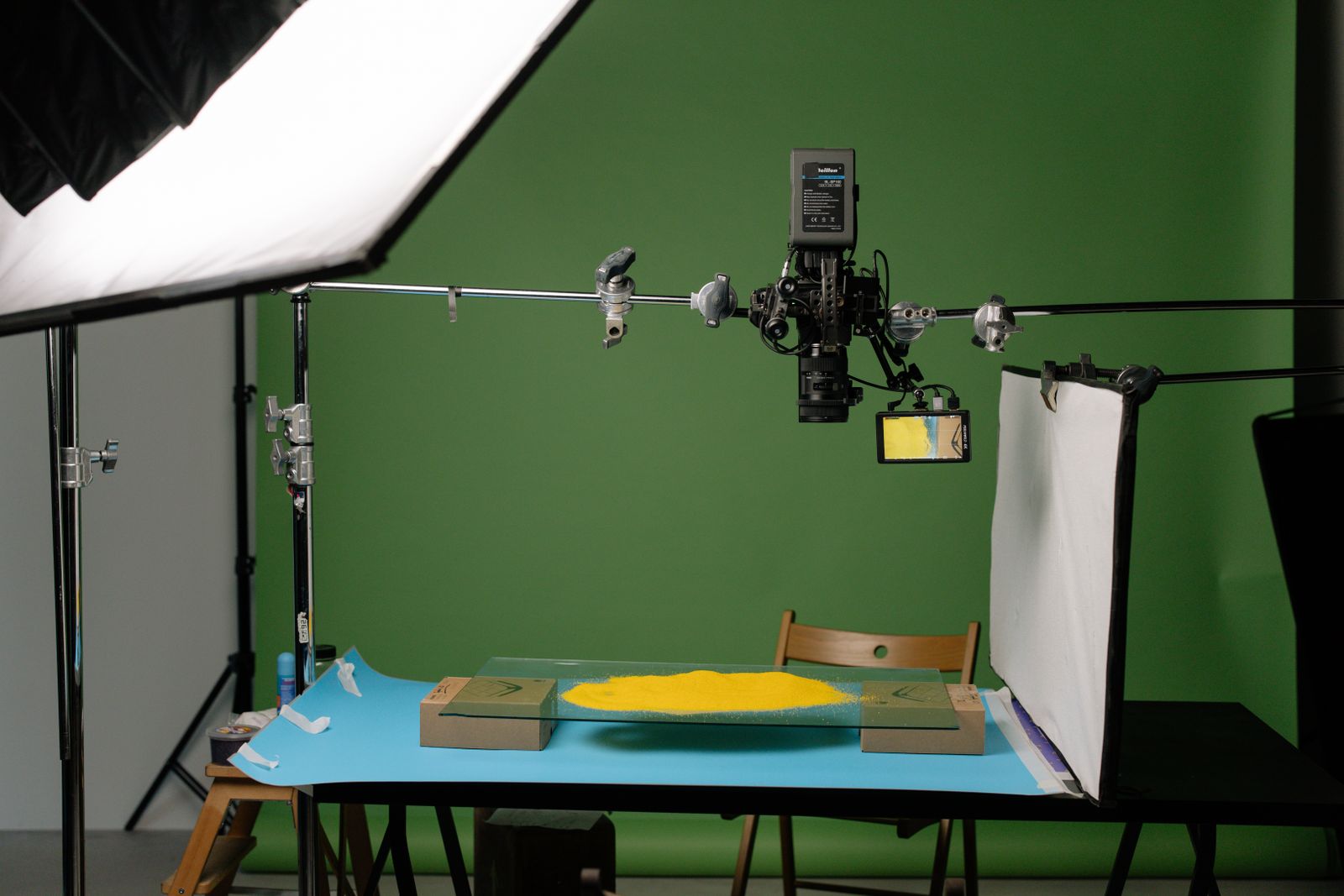
Volume also buys discounts — published guides describe per-image discounts starting around 10–15 images and deepening to 25–40% beyond 50 — and it demands a workflow personal clients never see: a shot list agreed in advance, samples shipped and logged, tethered review on the day (the image appears on a monitor as it is shot, so the client approves angles before the set is struck), colour targets for consistency across batches, and file naming that matches your SKU system rather than the photographer's. If a studio cannot describe that workflow, it is a portrait studio renting you its room, whatever its website says.
Retouching is its own line: standard clean-up may be baked into a per-image price, but published add-on rates run $50–$150 per image, and rush delivery under 72 hours legitimately adds a 25–50% premium. On a 200-SKU catalogue, those two lines can exceed the shoot fee. Agree what "standard retouching" means, in writing, before the first sample ships.
Difference three: the paperwork is the product
Three documents that barely exist in personal work become central:
The licence / contract. Beyond usage (above), a business contract should cover: deliverables (how many finished images, in what formats and sizes — web, print, marketplace crops), delivery schedule and rush terms, revision rounds, payment schedule (businesses should expect a deposit and staged payments on larger jobs, not the consumer pattern of full payment at the session), cancellation and reschedule terms, and who bears the cost of reshoots if samples arrive damaged or wrong.
Model releases. The moment an identifiable person appears in an image used to promote or sell — your staff, a hired model, a customer — commercial use generally requires a signed model release from that person. Editorial use (news, education) generally does not; advertising does. This includes your own employees: a team headshot on the website is one thing, the same face on a paid ad is a use their release should cover, and a release signed at the shoot is worth a hundred awkward emails after someone leaves the company.
Property releases. Recognisable private property — a distinctive interior, a location you do not own, artwork visible in frame — may need the owner's permission for commercial use. Studios handle this for their own space; location shoots are your conversation to have before the crew arrives.
Keep the releases with the images, permanently. A licence dispute or a platform's rights check three years from now will ask for paperwork, not memories.
Difference four: the tax and accounts layer
Business photography runs through your books, not your household budget, and three things follow:
- It is a business purchase. The shoot, the licence and the prints are bought for the business's trade — marketing and selling — so they belong in the business accounts with proper invoices, itemised well enough to show what was bought (shoot fees, licensing, retouching, studio rental) rather than a single unexplained total. Itemisation matters beyond tidiness: as the state guides in this series show, how a photography invoice splits product from service can change its sales-tax treatment, and your accountant will thank you for paperwork that answers questions before they are asked.
- The 1099 question. If your business pays a freelance photographer — a sole proprietor, partnership or unincorporated LLC — $600 or more in a year for services, you generally must report it on Form 1099-NEC, collecting their W-9 up front rather than in a January panic. Payments to corporations are generally excepted, and payments made by credit card or third-party platforms are reported by the processor instead — but the default assumption for a directly paid freelance studio photographer is: get the W-9 at booking.
- Deposits and terms are negotiable business-to-business. Net terms, staged payments tied to delivery milestones, and kill fees for cancelled campaigns are normal commercial conversation. Consumer studios may not offer them; commercial operators expect to discuss them.
Difference five: service levels and what "professional" buys
A business client should expect — and specify — service levels a personal client never thinks about: a pre-shoot production call; a named contact on the day; tethered or same-day proofs for approval; delivery in agreed formats on an agreed date with a stated remedy if it slips; an archive policy (how long the studio keeps your files, and what re-delivery costs — your own archive remains your responsibility, in two places, as with any digital asset); and consistency guarantees for repeat work, so next season's catalogue matches this season's. Studios that serve businesses price this reliability in. The cheapest quote in the pile is usually cheap because one of those lines is missing, and the missing line is always the one your launch date needed.
Renting a room versus hiring a studio
Finally, the fork many small businesses miss: "studio" can mean a service (photographer, crew, equipment, workflow) or a space. Renting space alone — the Denver example in the research charges $100/hour with a two-hour minimum, $475 for a five-hour half day and $895 for a ten-hour day, gear and protocols extra — makes sense when you already have a photographer and need a cyclorama wall, ceiling height and controlled light. Hiring the service makes sense when you need the outcome guaranteed. Compare like with like: a rental quote excludes the photographer, the assistant, the retouching and the licence, and a service quote includes some or all of them. The gap between the two numbers is not profit. It is the work.
A small business's booking checklist
- List every intended use and term; get the licence scoped to it, in the contract.
- Agree the shot list, SKU file-naming and delivery formats before samples ship.
- Define "standard retouching" and the rush rate, in writing.
- Collect signed model releases for every identifiable person, staff included; clear property for locations.
- Get the W-9 at booking if the photographer is an unincorporated freelancer you'll pay $600 or more.
- Itemise the invoice: shoot, licence, retouching, rental, product.
- Archive the delivered files and the paperwork together, in two places.
Do those seven things and the studio stops being a prettier version of a family session and becomes what your business actually needs: a supplier of licensed, consistent, reusable assets, bought on terms you can prove. This site lists 769 studios — bring them a business brief, and the good ones will answer like businesses.
Sources
- Lars Miller Media, How to Price Product Photography — establishes packshots at $90 per image with a 10-image minimum, styled images at $400 per final image, and campaign pricing as a day-rate creative fee plus a usage licence scoped by media and term.
- Lars Miller Media, Product Photography Pricing Guide — establishes per-image licensing ranges ($350–$600 for basic web/social use; $1,500–$3,000 with national advertising rights), day rates of $1,200–$3,500, retouching at $50–$150 per image, rush premiums of 25–50%, and volume discounts reaching 25–40% beyond 50 images.
- Welpix, Product Photography Prices 2026 — establishes white-background images at $15–$50, lifestyle at $89–$300+, and full US studio days between $1,125 and $4,450, with setup fees and minimums affecting small orders.
- Freeform House, Photography Studio Rental Rates Explained — establishes small-studio rental at $35–$95/hour in mid-tier cities and $75–$150/hour in New York/Los Angeles, medium major-market studios at $850–$2,200/day, and large production studios at $3,500–$15,000/day.
- photospace Denver, Studio Rental Pricing — establishes rental-only pricing of $100/hour (2-hour minimum), $475 per 5-hour half day and $895 per 10-hour day, with gear charged separately from the venue rate.
- Terms.law, Image & Photography Licensing Agreement guide — establishes that licensing retains the photographer's copyright while granting defined use, and that model releases are required for commercial use of identifiable individuals while editorial use generally does not require them.
- HSM University, Model, Property and Location Releases — establishes that a release is a contract whose scope is defined by its words, that it does not transfer copyright, and that property releases cover recognisable private property featured in commercial images.
- BoomTax, Do I Need to File 1099s for Photographers? — establishes that businesses paying an unincorporated photographer $600 or more in a year for services must generally file Form 1099-NEC, with exceptions for corporations and card/platform payments.
Photographs: studio product setup — photo by cottonbro studio, https://www.pexels.com/photo/5878878/ ; studio interior with backdrops — photo by Ron Lach, https://www.pexels.com/photo/8857043/ ; studio lighting setup — photo by Lisett Kruusimäe, https://www.pexels.com/photo/20419522/
More guides
- How to Find a Wedding Photographer: The Complete, Honest GuidePhotographers › Wedding Photographers
- How Much Does a Wedding Photographer Cost? Packages DecodedPhotographers › Wedding Photographers
- 10 Questions to Ask a Wedding Photographer Before You BookPhotographers › Wedding Photographers
- Wedding Photography Styles Explained: Documentary, Editorial, Traditional, Fine ArtPhotographers › Wedding Photographers
- Hiring a Wedding Photographer in California: Venue Light, Permits, and Price LevelsPhotographers › Wedding Photographers
- All Guides & ArticlesBrowse the full guides library