Photographers › Studios
Studios Red Flags: The Warning Signs Most People Walk Straight Past
"Studio" is the most reassuring word in photography. It suggests premises, permanence, a business that will still be there next month. That is precisely why the worst experiences in this industry so often begin in one. I book photographers and spaces for events for a living, and the pattern in the complaints I read — and the Better Business Bureau files on portrait studios are a remarkably consistent literature — is never that the photography was terrible. It is that the deal was not the deal: a free session that cost $2,000, a price list that did not exist until the sales appointment, a deposit that quietly became a non-refundable "credit," an hourly rental rate that doubled once the lights were switched on.
Whether you are booking a portrait studio for your family or renting a studio by the hour for your own shoot, the red flags are the same family. Here they are, in the order you will meet them — with what to do the moment one appears.
Red flag 1: You "won" something
The most documented funnel in portrait photography starts with a prize: a free session and a free print, won through a social media contest you do not remember entering, a charity drawing, a bridal show, a pet-store promotion. BBB complaint files describe the same arc again and again. One Portsmouth, New Hampshire studio's reviewers describe winning a free session and a 14-inch canvas, then leaving $2,000 poorer after a high-pressure sales appointment — including a financing plan described as about $30 a month that was actually closer to $100, with a hard hit to the customer's credit. A Jacksonville studio's complainant described winning a "free gift," then facing nearly $2,000 of upselling, with the photographs withheld until about 75 percent of the upsell was paid — a condition they say was never disclosed before the session. A Massachusetts studio's complainant won a free pet session and a $1,000 "gift," paid a $300 refundable deposit, and discovered prices for the first time at the ordering appointment: wall art starting at $1,000, digital images $100 each.
None of this means every promotion is a trap — studios legitimately run portfolio-building and charity sessions. The flag is not the prize. The flag is what the prize is for: if the business model is a free shoot monetized by a mandatory-feeling sales appointment afterwards, the session was never the product. You are.
The moment it appears: before you book the "free" session, ask two questions in writing — "What is the full price list for prints and digital files?" and "Am I required to attend a sales appointment to receive the free item?" A legitimate promotion survives both questions. A funnel answers neither.
Red flag 2: There is no price list — anywhere
In the Pasco, Washington BBB complaint that has become almost a template for the genre, a client asked for an à la carte price sheet repeatedly, by phone and email, before her session. The studio said it did not have access to one. Prices were revealed for the first time at the viewing session the day after the shoot: the cheapest option was $1,500, for five images delivered as screenshots inside a proprietary app — no digital files, no prints — and her combined prize credit and deposit did not cover it. She reports being told that if she did not buy on that call, her photographs would be permanently deleted.
A studio that will not show you prices before the shoot is telling you its prices cannot survive comparison — or daylight. Professional studios that sell prints publish or provide their product pricing, because their customers budget for it. "We'll go over all that at your viewing" is not an answer; it is the business model clearing its throat.
The moment it appears: no price list, no booking. Say it in those words, by email, and keep the reply. If they send the list, you have lost nothing. If they will not, you have learned everything.
Red flag 3: The delete threat, and its cousins
"If you don't order today, the files are deleted." Variants include: we don't keep files due to storage; the ordering discount expires when this appointment ends; the images cannot be re-shown. In an era when storage costs a studio pennies per session, a deletion deadline is not a technical constraint. It is a pressure device, aimed at the one moment when you are most emotional and least able to do arithmetic — sitting in front of beautiful photographs of your children, your wedding, your dog.
Some studios do purge unpurchased files eventually, and a stated retention period — 30 days, 90 days — in a written contract is ordinary business. The red flag is the combination: prices revealed only at the appointment, plus a same-day deadline, plus deletion as the penalty. Any one of those alone is survivable. Together they are a machine for extracting signatures.
The moment it appears: stand up. Literally. Say "Then I'll take the risk — send me the price list and your retention policy in writing." Studios with real pricing survive a customer sleeping on it. And if you have already signed under this pressure, act immediately: complainants who emailed cancellation the next morning were in a far stronger position than those who waited, and a written, timestamped cancellation attempt is evidence whatever the studio later claims about production timelines.
Red flag 4: The deposit that mutates
Watch what your deposit is. In the complaint files, deposits shape-shift: a $300 "refundable" deposit applied automatically to a purchase the customer was trying to cancel; a $300 deposit that was never applied to the portrait at all, converted instead into a "credit" usable for a future portrait within five years — at the same studio the customer was trying to leave. Deposits and retainers are normal in this industry; photographers hold dates with them. The red flags are in the adjectives: "refundable" that requires conditions nobody stated; a deposit applicable only to products, not the session; cancellation windows measured in hours; and any deposit taken before you have seen the price list it will be applied against.
The moment it appears: get the deposit's terms in one written sentence before paying — amount, what it applies to, when it is refundable, and what happens if the studio cancels. A studio that books hundreds of sessions a year has this sentence ready. One that improvises it is improvising the rest too.
Red flag 5: Financing offered at the sales desk
When the pitch includes an instant financing plan — a monthly-payment app opened on the spot, in the viewing room — the studio has told you its prices are beyond what its customers can pay outright, and it has chosen to solve that problem with your credit rather than its pricing. The New Hampshire complaint above is the cautionary tale: a plan described as roughly $30 a month that was closer to $100, and a credit-score hit the customer never agreed to in any informed sense. Signing financing under sales pressure converts a bad afternoon into a multi-year obligation that survives your regret — the lender's claim on you does not depend on whether the studio behaved well.
The moment it appears: the answer is always "not today." A photograph will keep for a week while you read terms at your own table. A financing agreement signed in a dark viewing room will not wait for you at all.
Red flag 6 (for renters): The hourly rate that isn't
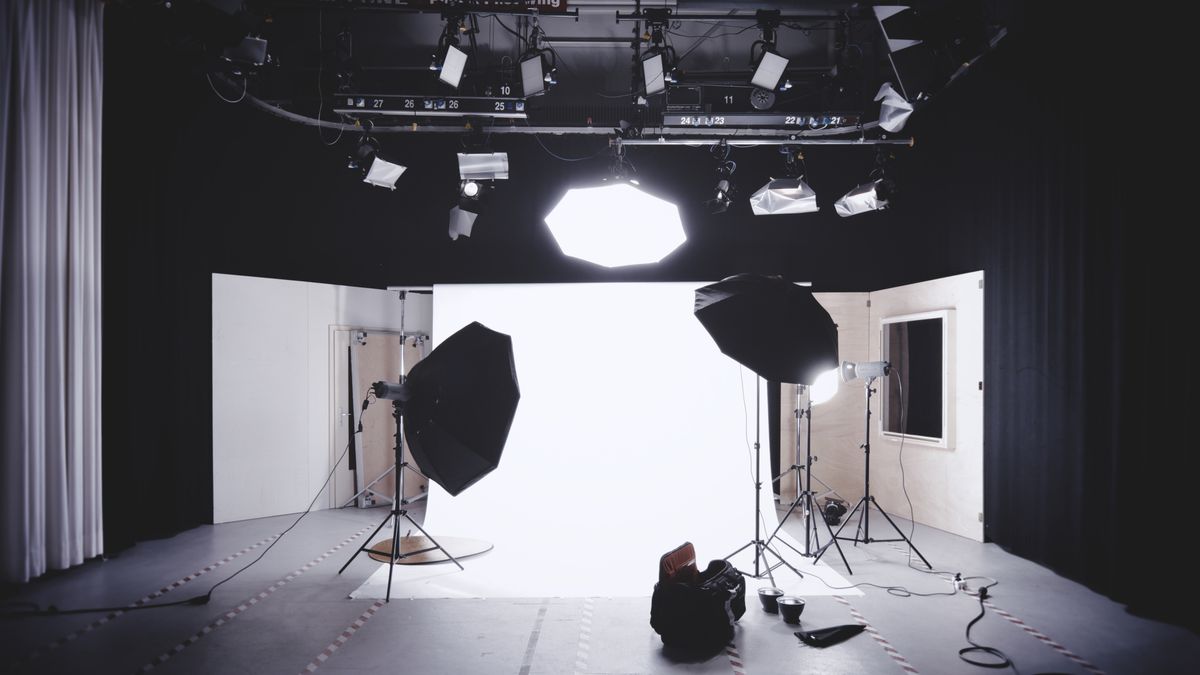
If you are renting a studio rather than booking a portrait, the traps move to the rate card. Honest rental pricing is easy to recognize because good studios publish it whole: Brooklyn rooms from $35 to $54 an hour with the lighting kit listed item by item; a Miami full-service studio at $110 an hour weekdays, $130 weekends, stating exactly what is included and pricing its extras in the open — paper backdrops $15, a fresh cyclorama repaint $75; a North Carolina studio at $125 for two hours and $395 for a full day, lighting and backdrops included. Against that baseline, the red flags name themselves:
| What you were quoted | What to check before you pay |
|---|---|
| A low hourly rate | Is lighting included, or rented on top? One studio guide puts it plainly: a $65 hourly rate with $150 of lighting added is not a $65 hourly rate |
| "Studio time" | Does the clock include your setup and breakdown? Most rentals run door-to-door, not first-shot-to-last |
| A cyc wall in the photos | Fresh paint is a paid extra almost everywhere — $50 to $75 is the normal, openly published range; a scuffed cyc billed as pristine is a quality flag |
| Backdrops | Paper you stand on is consumed: seamless pulls commonly cost about $15 a color |
| A weekday-looking price | Weekend uplifts are standard — $10 an hour more in Brooklyn, $20 in Miami; a quote that never mentions days may be a weekday quote for your Saturday |
| No minimum mentioned | Two-hour minimums are common and legitimate — but they should be stated before, not discovered at checkout |
And the rental equivalents of the portrait traps: no written rental agreement at all; a damage deposit with no stated return timeline; insurance requirements revealed after booking; overtime billed in full hours at punitive rates without warning. A professional rental house answers every one of these from its standard terms, because it rents to professionals who ask.
Red flag 7: No business behind the brand
Finally, the quiet flags that predict all the others. No physical address, or an address that turns out to be a mailbox. No business name matching the name on the contract or the card charge. A portfolio that is all styled shoots and no complete client sessions. Reviews that cluster in two groups — ecstatic and furious — with nothing in between, which usually means the ecstatic ones were written at the sales desk. And the meta-flag: a studio whose name generates a long BBB complaint file describing exactly the experience you are being promised is an exception to. This site lists 769 studios — in a field that wide, there is never a reason to book the one with a documented pattern.

What a clean studio looks like
The contrast is not subtle. A legitimate studio — portrait or rental — publishes or provides its prices before money moves; states its deposit, retention and cancellation terms in writing without being asked twice; keeps your files for a stated period and says so in the contract; never needs your signature today; and treats "let me think about it" as a normal sentence spoken by a normal customer. Its sales appointment, if it has one, is a service — help choosing sizes for your actual walls — not a hostage negotiation.
Book that studio, even at a higher session fee. In this trade, the cheapest session is routinely the most expensive one a family ever sits for — and now you know the seven places the extra money hides.
Sources
- Better Business Bureau customer reviews, Mallory Portraits (Portsmouth, NH) — "won" a free session and 14-inch canvas; $2,000 spent after a high-pressure sales appointment; financing described as about $30 a month but closer to $100, with a credit-score impact.
- Better Business Bureau complaints, Rebecca Lynn Photography (Pasco, WA) — price sheet repeatedly requested and withheld before the session; cheapest option $1,500 revealed at the viewing for five app-delivered images; deletion of photographs threatened if no purchase was made on the call.
- Better Business Bureau complaints, Rebecca Rose Fine Portraits (Jacksonville, FL) — "won" free gift framing; nearly $2,000 in upselling; photographs withheld until about 75 percent of the upsell was paid; promised gift print never delivered.
- Better Business Bureau complaints, Sarah Prall Photography (North Hampton, MA) — free session and $1,000 gift promotion; $300 refundable deposit; prices first shown at the ordering appointment (wall art from $1,000, digital images $100 each); files said not to be kept, creating purchase-now pressure.
- Nula Studios, Brooklyn portrait studio rental guide — rooms $35–$54 an hour with lighting kits itemized; weekends $10 an hour more; seamless pulls $15; cyc repaint $50.
- Creative Canvas Studios, Miami studio rental guide — $110 an hour weekdays, $130 weekends, all-inclusive; published extras including backdrops $15 and cyclorama repaint $75.
- North Carolina Studio, studio rental cost guide — $125 for two hours, $395 full day, lighting included; the warning that an hourly rate plus separately rented lighting is not the rate it appears to be.
Photos: studio wide view — photo by Alexander Dummer, https://www.pexels.com/photo/134469/ ; empty studio — photo by Kunno Jayson, https://www.pexels.com/photo/6989087/ ; studio portrait — photo by Italo Melo, https://www.pexels.com/photo/2379004/
More guides
- How to Find a Wedding Photographer: The Complete, Honest GuidePhotographers › Wedding Photographers
- How Much Does a Wedding Photographer Cost? Packages DecodedPhotographers › Wedding Photographers
- 10 Questions to Ask a Wedding Photographer Before You BookPhotographers › Wedding Photographers
- Wedding Photography Styles Explained: Documentary, Editorial, Traditional, Fine ArtPhotographers › Wedding Photographers
- Hiring a Wedding Photographer in California: Venue Light, Permits, and Price LevelsPhotographers › Wedding Photographers
- All Guides & ArticlesBrowse the full guides library