Photographers › Wedding Photographers
Wedding Photography Across Kansas: Big-City Choice vs. Small-Town Reality
Kansas looks simple on a wedding-planning spreadsheet: pick a date, pick a venue, hire a photographer. Then you look at an actual map of the state. Kansas City and Wichita, its two real photography markets, sit about 200 miles and roughly three hours apart on the Kansas Turnpike. Between and beyond them lie Topeka, Lawrence, Manhattan, Salina, Hutchinson, Hays, Garden City, Dodge City, and hundreds of towns where the nearest full-time wedding photographer may be an hour away — or may be a Wichita studio that lists your town in its service area and thinks of your wedding as a road trip.
I managed a portrait studio, and the lesson that transfers directly to Kansas weddings is this: you are not hiring in one market. You are hiring in at least three — the Kansas City metro, Wichita, and everywhere else — and each runs on different prices, different waiting times, and different rules about travel. Book as if all Kansas were Kansas City and you will overpay for some things and be blindsided by others. Book as if it were all small-town and you will miss the depth the metros genuinely offer. This guide separates the three, with the numbers Kansas photographers actually publish.
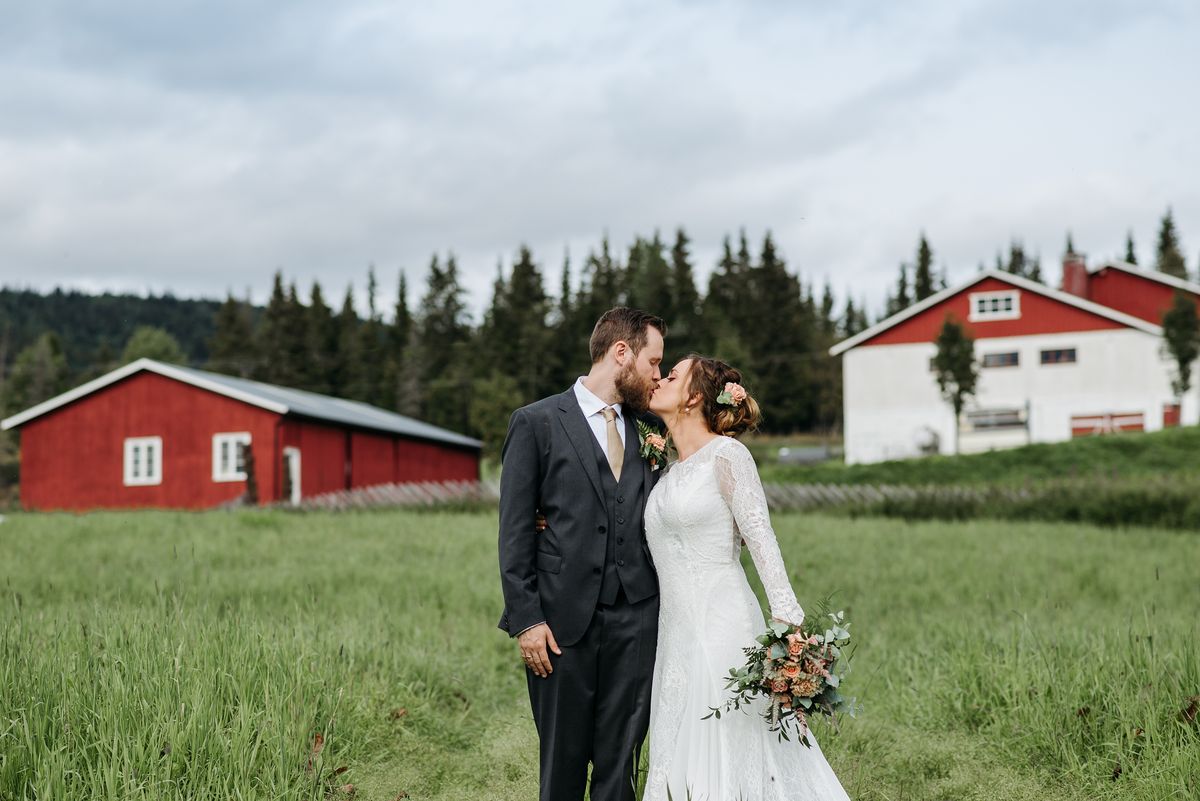
Market one: the Kansas City metro, which is really two states
The Kansas City market is the deepest in Kansas and it does not respect the state line. Many of the photographers who shoot weddings in Overland Park, Leawood, Olathe, Shawnee, and Kansas City, Kansas are based on the Missouri side, and Kansas-side couples are routinely advised to broaden their search to Kansas City, Missouri — the talent pool is one pool. That has three practical consequences.
First, choice is real. Full-day specialists, husband-and-wife teams, luxury fine-art studios, and budget shooters all compete in the same metro, and published starting prices show the spread: full-day coverage from established Kansas City teams starts around $3,100, with half-day coverage from about $2,000, and luxury studios above that. Second, the best metro photographers book out furthest — a Saturday in the prime months with a sought-after KC name is a plan-a-year-ahead conversation, not a plan-a-season one. Third, contracts cross a state line without anyone noticing: your photographer may be a Missouri business shooting a Kansas wedding, which is normal and fine, but it is one more reason the written contract — travel terms, delivery timeline, what happens if they are ill — matters more than the handshake.
Market two: Wichita, a full market at a slightly softer price
Wichita is a genuine photography market in its own right, not a satellite of Kansas City. One Wichita photographer who publishes his numbers openly says couples typically spend an average of $3,500 to $4,500 on their wedding and engagement package in Wichita, Kansas City, or the surrounding areas. Wichita studios' published starting points cluster a little below the metro's top end: wedding packages starting at $2,600, $3,100, and $3,400 are all on public price pages, with elopement and intimate-wedding collections from about $1,350. Marketplace listings for Wichita show starting prices running from a few hundred dollars for newer shooters up through $4,000 for fine-art work — a wide ladder, which is what a healthy mid-size market looks like.
The venue stock explains part of Wichita's photography character. Downtown, converted industrial spaces dominate the postcard: Brick & Mortar, on South Topeka Street, seats up to 300 in a main hall of exposed brick and barrel-vaulted ceilings, and reviewers single out its natural light; The Hudson, a 1920s building on South Commerce, holds up to 350 in its Gatsby Hall with an outdoor garden for ceremonies. Fifteen minutes out, the market flips to acreage: a 5-acre lake venue on Wichita's south side, a 20-acre vineyard at Colwich just west of the city, a 32-acre property at Sedgwick with a 5,200-square-foot reception hall, and a 60-acre barn venue at Newton, half an hour north. Wichita photographers work both idioms constantly — brick-and-windowlight downtown in the afternoon, sunset over pasture in the evening — and portfolios that show both are showing you the actual local job.
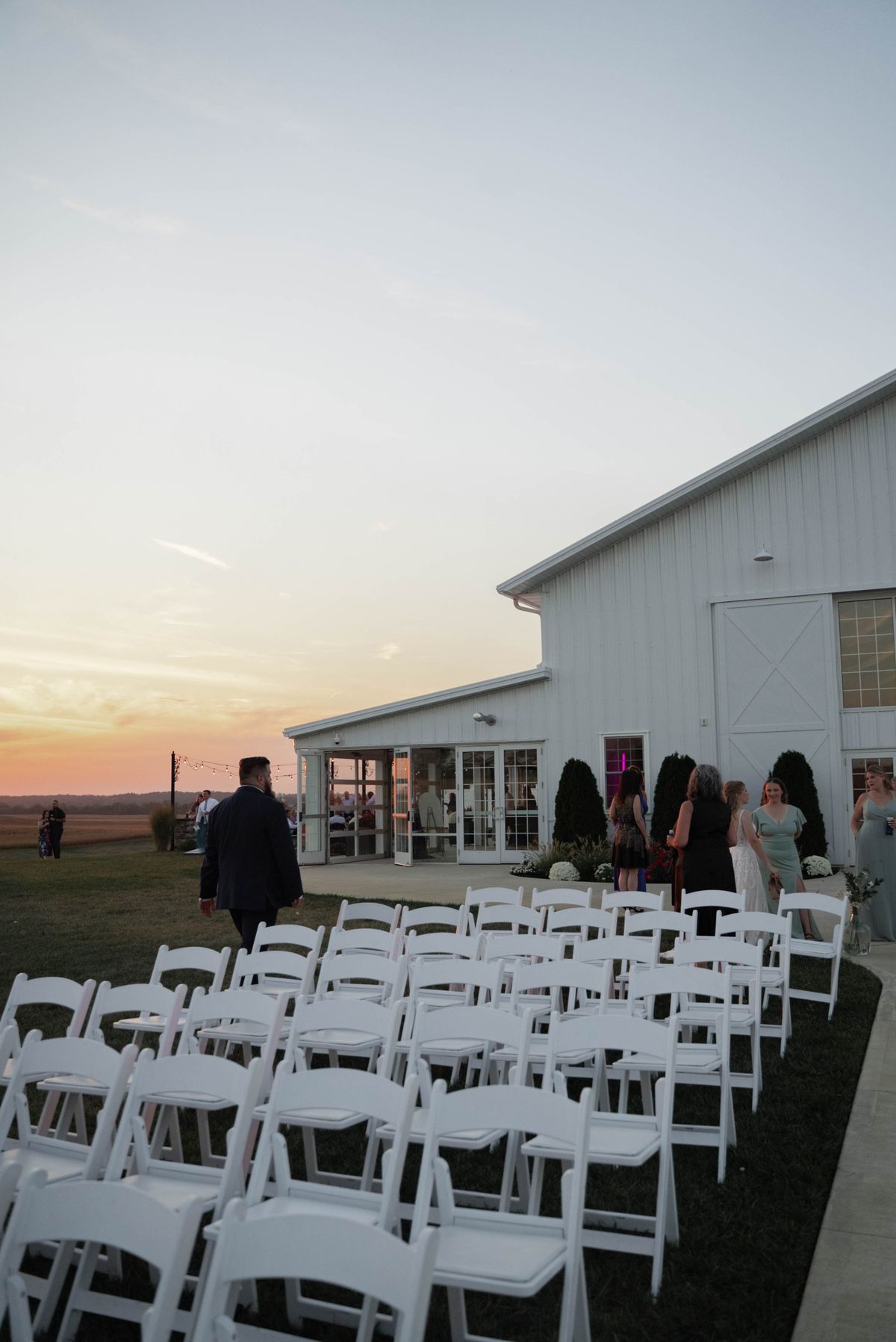
Market three: everywhere else, where the photographer travels
Now the small-town reality, and it is best shown rather than described. Search a major wedding marketplace for photographers in Anthony, in south-central Kansas, or Ulysses, out in Grant County, and the results that come back are overwhelmingly Wichita-based businesses — the same Wichita studios, with the same starting prices, presented as your local options. That is not a glitch. That is the market. In most of Kansas, "local photographer" means one of three things:
- A genuine local — a part-time or full-time shooter in your town or county. There are fewer of them, their books fill by word of mouth rather than advertising, and their prices are often the lowest you will find anywhere in the state. Their constraint is depth: one photographer, no studio behind them, no bench if something goes wrong.
- A regional traveler — a Wichita, Topeka, or Kansas City photographer for whom your wedding is a service-area booking. You get the metro portfolio and the metro professionalism; you also get the metro price plus travel, and a photographer who may be driving home two or three hours after your reception ends.
- A college-town photographer — Lawrence and Manhattan are partial exceptions to small-town scarcity, because university towns sustain creative communities out of proportion to their size. Manhattan also sits about 130 miles and two hours from Wichita, on the edge of the Flint Hills, which makes it a destination in itself rather than a suburb of anyone's market.
What the travel actually costs
Travel is where small-town budgets quietly break, so price it as its own line, not as a footnote. The distances are Kansas distances: Wichita to Kansas City is about 200 miles and three hours each way; Wichita to Manhattan about 130 miles and two hours; Wichita to Emporia, in the Flint Hills, about 85 miles. A photographer driving three hours home after a ten-hour wedding day is a safety issue as well as a fee issue, and reputable travelers price accordingly — expect some combination of a per-mile or flat travel fee, a hotel night for late finishes or early starts, and occasionally a minimum package size for distant dates. None of that is gouging; all of it should be in the quote before you sign, in writing, with the number filled in. The two questions that protect you: "What is the total travel charge to this venue, all-in?" and "Where do you sleep that night?" A photographer who has thought about the second question has done this drive before.
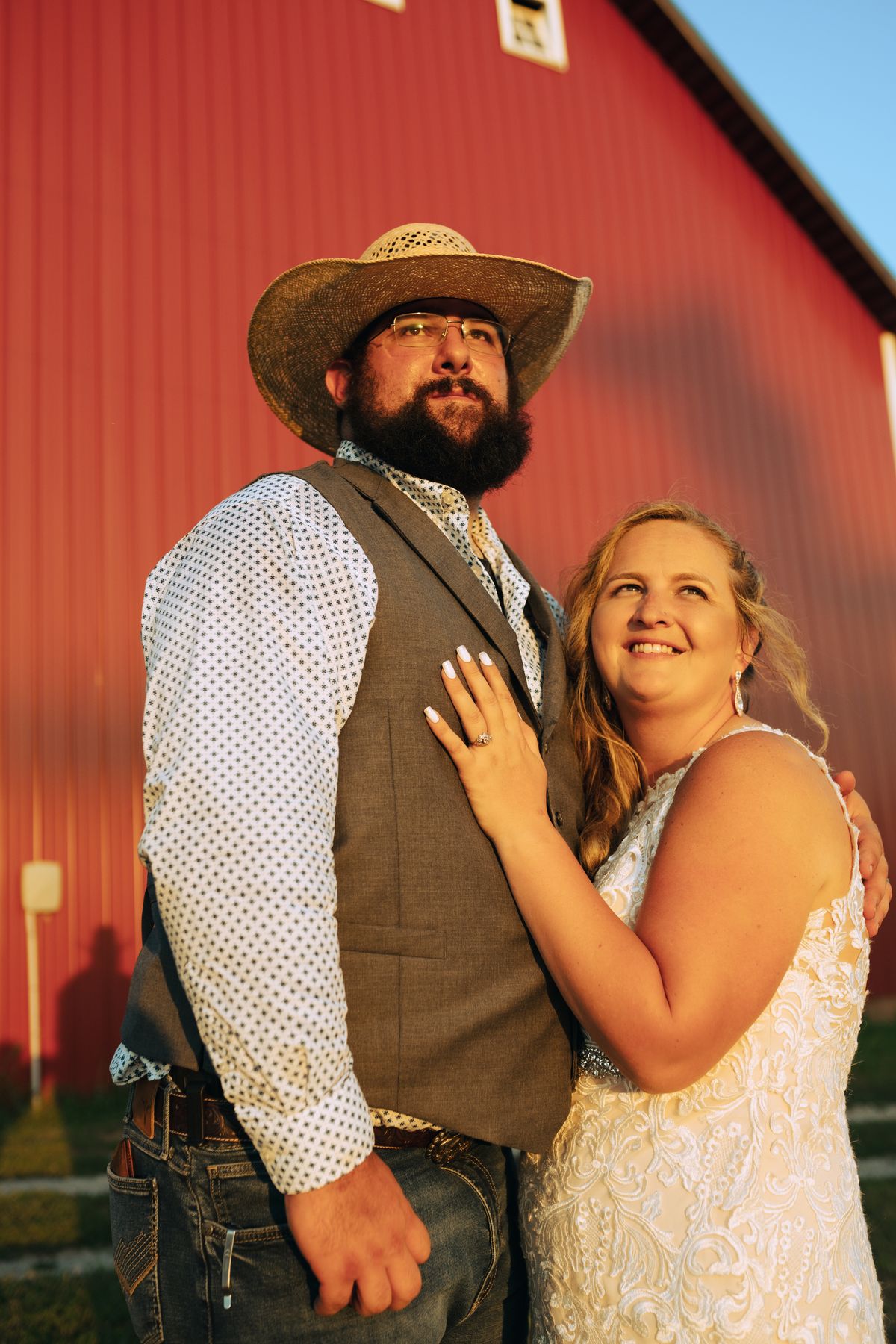
Seasons, weather, and the Kansas sky
Kansas gives photographers two gifts and two hazards. The gifts are light and land. The Flint Hills — the tallgrass prairie running through the state's center-east, along the scenic byway between Council Grove and Cassoday — are one of the last native tallgrass landscapes in the country, and in late spring and early summer the hills photograph green and enormous; by autumn they cure to gold. Wheat country gives a second, shorter window: golden fields in the weeks before the June harvest. A photographer who knows Kansas plans portraits around these, the way a coastal photographer plans around tides.
The hazards are the ones Kansans already know. Spring is storm season, and an outdoor ceremony in April or May needs a rain-and-worse plan that the photographer is part of, not a spectator to: where do portraits happen if the field is a lake, and does the venue have an interior — a barn hall, a brick room — that photographs well, not just adequately? Summer is heat: a July afternoon wedding in western Kansas is an endurance event for a wedding party in formal clothes, and experienced local photographers push portraits toward evening for comfort as much as for light. Winter dates, by contrast, are the state's open secret — demand drops, the best photographers in both metros have Saturdays free, and the low winter sun over bare prairie is genuinely beautiful. If your date is flexible and your venue is warm, winter is where the negotiating power is.
The same decision, made three ways
| Kansas City metro | Wichita | Small-town Kansas | |
|---|---|---|---|
| Typical spend | Full-day packages from ~$3,100; luxury above | Couples typically spend $3,500–$4,500 with established studios; packages from ~$2,600 | Local shooters often lowest in the state; metro travelers charge metro price plus travel |
| Choice | Deepest in the state; both sides of the state line | Full market: studios, teams, budget to fine-art | Thin locally; marketplaces mostly return Wichita-based travelers |
| Booking lead time | Prime Saturdays go a year+ out for top names | Book early for prime months; more slack than KC | Locals fill by word of mouth; travelers fill their home-market calendar first |
| Watch out for | Cross-state contracts; assuming Kansas-side only | Venue variety means checking both downtown and barn portfolios | Travel fees, hotel, drive-home fatigue, no backup bench |
This site lists 564 wedding photographers — enough that wherever in Kansas you start, you can build a shortlist. Just build it honestly: filter by who will actually stand in your venue's county, then compare.
Questions to ask, by market
In the metros: Is my date held only with a signed contract and retainer — and how many weddings do you shoot that weekend? Who is my second shooter, and are they named in the contract? What is the gallery delivery time in your busiest month, not your quietest?
For a small-town wedding: What is the all-in travel charge to my venue, and where do you stay that night? How many weddings have you shot in my county — can I see one full gallery from a venue like mine? If you are ill the week of the wedding, who exactly comes instead, and have I seen their work? For a solo local: what is your backup plan for gear failure, and where are my files backed up that night?
Everywhere in Kansas: Does the price include sales tax and travel, or are those added? (Get the answer in the quote, not at the final invoice.) What is your weather plan — specifically, where do we shoot portraits if it storms? What do you need from the venue: access time, a room to work from, a meal on a long day?
The verdict
Big-city choice and small-town reality are not rivals; they are a trade you should make with your eyes open. Kansas City buys you depth, specialization, and competition. Wichita buys you nearly the same professionalism a notch softer on price, with photographers who commute between brick halls and barn acreage as a matter of routine. Small-town Kansas buys you place — the Flint Hills, the wheat, the family farm, the barn your grandfather built — at the cost of logistics you have to manage yourself: travel priced in writing, a photographer who has slept somewhere sensible, and a backup plan with a name in it. Manage those three things, and the small-town wedding is not the compromise option. It is the one your photographs could not have been taken anywhere else.
Sources
- Vance Doeden Photography, Wichita — establishes that couples typically spend an average of $3,500–$4,500 on wedding and engagement packages in Wichita, Kansas City, or surrounding areas.
- Wedding Pioneer, Best Wedding Photographers in Kansas — establishes Kansas City full-day packages from $3,100 and half-day from $2,000, Wichita packages from $2,600 and $3,400, and that Kansas couples are advised to include Kansas City, Missouri photographers in their search.
- Cynthia Dalene Photography, Wichita — establishes full wedding packages starting at $3,100 and intimate weddings and elopements from $1,350.
- The Knot marketplace listings for Wichita, Anthony, and Ulysses, Kansas — establishes the wide spread of Wichita starting prices and that searches for small towns such as Anthony and Ulysses return predominantly Wichita-based photographers.
- Venue listings for Brick & Mortar and The Hudson (Wichita), Prairie Hill Vineyard (Colwich), Gooseberry Creek (Sedgwick), Hidden Lake (Wichita), and The Honey Barn (Newton) — establishes venue capacities, acreage, and settings: Brick & Mortar up to 300 guests, The Hudson up to 350, vineyard and barn properties of 5 to 60 acres around Wichita.
- Everyday Wanderer and Wichita on the Cheap road-trip guides — establishes Wichita to Kansas City at about 200 miles and 3 hours via I-35/Kansas Turnpike, Wichita to Manhattan at about 130 miles and 2 hours, and the Flint Hills Scenic Byway between Council Grove and Cassoday.
Photo credits: - Couple in a field with barns — photo by Pavel Danilyuk, https://www.pexels.com/photo/bride-and-groom-standing-on-a-grass-field-while-kissing-each-other-7178888/ - Couple outside a red barn — photo by Derek Randolph, https://www.pexels.com/photo/woman-and-man-in-shirt-and-vest-13266115/ - Sunset barn venue — photo by Taylor Thompson, https://www.pexels.com/photo/outdoor-sunset-wedding-venue-with-white-chairs-35870516/
More guides
- How to Find a Wedding Photographer: The Complete, Honest GuidePhotographers › Wedding Photographers
- How Much Does a Wedding Photographer Cost? Packages DecodedPhotographers › Wedding Photographers
- 10 Questions to Ask a Wedding Photographer Before You BookPhotographers › Wedding Photographers
- Wedding Photography Styles Explained: Documentary, Editorial, Traditional, Fine ArtPhotographers › Wedding Photographers
- Hiring a Wedding Photographer in California: Venue Light, Permits, and Price LevelsPhotographers › Wedding Photographers
- All Guides & ArticlesBrowse the full guides library