Photographers › Wedding Photographers
Wedding Photography Across New Jersey: Big-City Choice vs. Small-Town Reality
New Jersey is a small state with an outsized wedding economy, and it is really three photography markets wearing one name. In the northeast — Bergen, Essex, Hudson, and Morris counties — you are effectively shopping in New York City's market at a slight discount: deep benches of editorial and ballroom photographers, skyline-view venues in Jersey City and Hoboken, and prices that make Manhattan couples cross the river feeling clever. Along the Shore — Monmouth and Ocean counties down to Cape May — the market is seasonal, venue-driven, and ruled by summer Saturdays. And in the state's quieter corners — Hunterdon and Warren farm country, the Pine Barrens edge, the Delaware River towns, and the southern counties — a smaller field of photographers works at lower prices, with deeper local knowledge and thinner backup if anything goes wrong.
The audience for this guide is, on paper, small businesses needing images as much as couples: the venues, planners, and studios who book photographers repeatedly learn these market divisions the expensive way. Whoever you are, the mistake is the same — shopping statewide as if New Jersey were one market, then discovering that travel, permits, tax, and season redraw the quote.
What New Jersey actually costs
Start statewide. Working New Jersey photographers describe a consistent ladder: entry-level and limited-hour packages from about $2,000 to $3,500; established professionals in the $3,500 to $7,500 mid-range; and high-end photographers — especially those serving both New Jersey and New York City — at $8,000 to $12,000 and more. For a full day with an experienced professional, most New Jersey couples land between $4,000 and $8,000. One long-running North Jersey studio begins collections at $3,000 with most couples investing $4,500 to $8,000; a Shore-based studio starts packages at $1,800, reports most full-day weddings at $3,500 to $7,500, and puts premium ballroom weddings with full photo-and-video teams at $6,000 to $10,000.
Against the national anchor — The Knot's 2026 Real Weddings Study put the national average photographer spend at $3,000 — New Jersey is an expensive state to marry in, full stop. But where you marry inside it moves the number by thousands.
| Market | Typical picture | What drives it |
|---|---|---|
| North Jersey / NYC metro (Bergen, Essex, Hudson, Morris) | Established full-day $4,000–$8,000; NYC-crossing names $8,000–$12,000+ | Ballroom and estate venues, NYC-adjacent pricing, deep competition at the top |
| The Shore (Monmouth, Ocean, Cape May) | Full-day commonly $3,500–$7,500; Shore specialists starting from about $4,000–$6,300 | Summer Saturday scarcity, yacht-club and beach venues, tide-and-sunset timelines |
| Central and South Jersey towns | Entry and mid-range $2,000–$5,000 more common; Hunterdon-based photographers starting around $3,500 | Barns, vineyards, and historic inns; a smaller professional field; Philadelphia influence in the southwest |
| New York City import | NYC rates, often with travel included within about 50 miles | Covers much of North and Central Jersey — sometimes no saving over a top local name |
The North: depth, ballrooms, and the NYC shadow
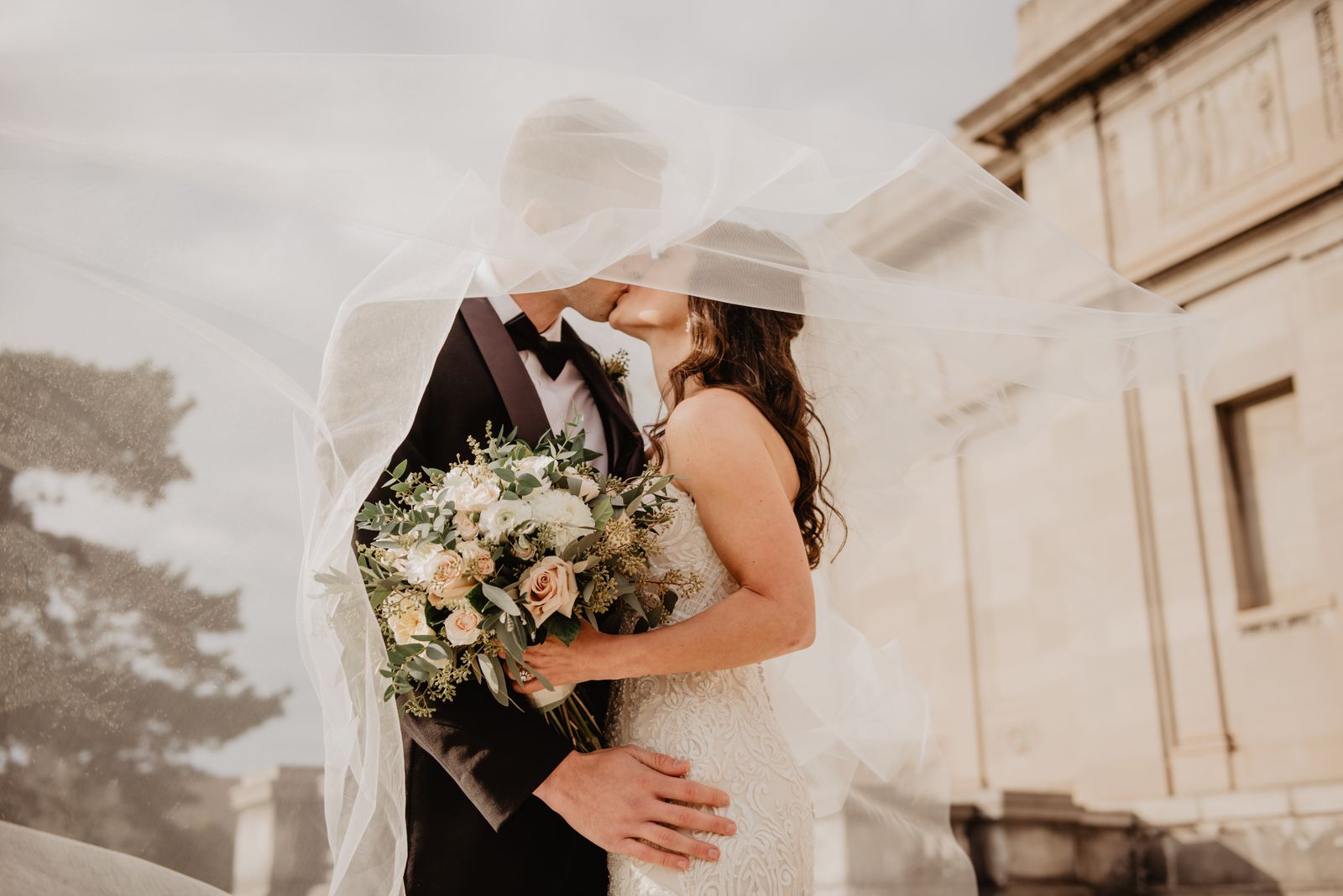
North Jersey's defining feature is the size of its celebrations. The classic Bergen and Essex County ballroom wedding — Nanina's in the Park in Belleville, The Legacy Castle in Pequannock, and their peers — runs large guest counts, a cocktail hour that is practically a second reception, and a timeline with no slack in it. Photographers who thrive here are logistics machines: they light a cavernous room evenly, organize a 24-person wedding party without shouting, and make formals happen in the gap the venue actually gives them, which is never the gap in the brochure.
That is what the premium buys, and it is why judging North Jersey photographers on quiet, sunlit portfolio images alone misleads. Ask for a full ballroom gallery: a dark reception, a sparkler exit, a ceremony in a room with mixed light. The bench is deep enough that you can demand this evidence — if one studio will not show it, three competitors will.
The NYC shadow cuts both ways. Many city photographers include travel within roughly 50 miles, which covers much of northern and central New Jersey, so a Manhattan name is sometimes genuinely available at no travel premium. But North Jersey's own top tier has converged toward city pricing, so do not assume the river is a discount coupon in either direction. Compare totals, not zip codes.
The Shore: a season, a tide chart, and a sunset
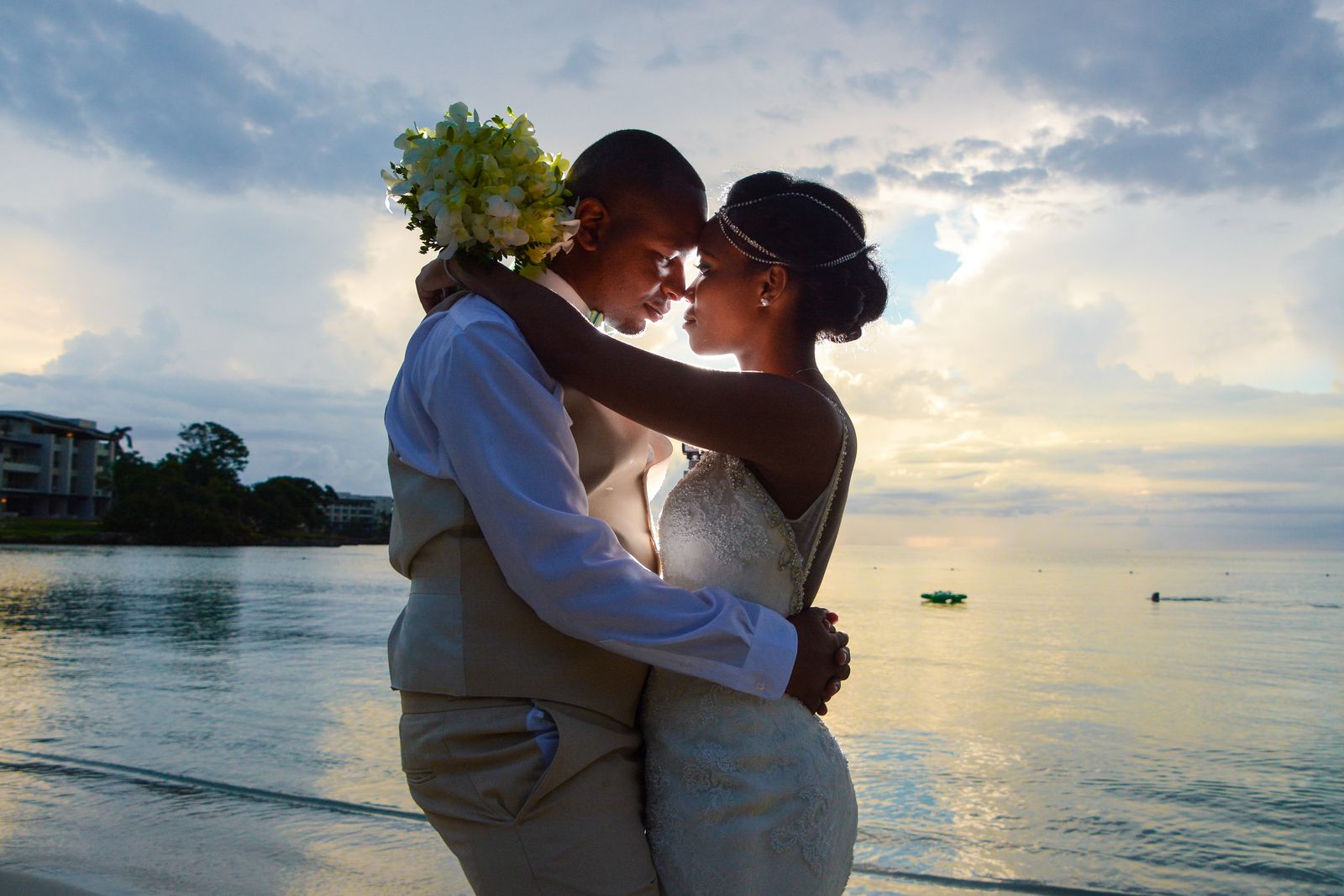
Shore weddings run mid-June through Labor Day at full intensity, and every good Shore photographer plans the day around two documents couples forget: the tide chart and the sunset time. Beach ceremonies at Point Pleasant, Long Beach Island, or Cape May are timed so portraits land at low tide — more sand, better footing, room to work — and within about ninety minutes of sunset. A photographer who has to be told this is not a Shore photographer, whatever their portfolio says.
Venues here are waterfront institutions — Clarks Landing and Crystal Point yacht clubs in Point Pleasant, Bonnet Island Estate further south — where the signature image is a dock or marina portrait at golden hour and the reception moves indoors as the light dies. The practical consequences: summer Saturdays book a year or more out and carry the year's highest prices; Friday and Sunday Shore weddings are where negotiating room lives; and September — locals' summer, warm water, thinner crowds, softer light — is the insider's month, though it now books nearly like August.
In the smaller Shore and South Jersey towns, the field thins. Cape May, a Victorian town at the state's tip, supports a handful of resident professionals whose entire practice is built around its porches, gaslights, and beaches. Book one and you get a photographer who knows which street is quiet at 5 p.m. and where the light falls on Washington Street Mall. The risk mirrors the benefit: if your first choice is taken, the local bench is short, and the next option may be an import from Atlantic County, Philadelphia, or the northern Shore — with travel priced accordingly.
Travel in a state that is short and slow
New Jersey is only about 150 miles top to bottom, which tempts everyone to treat travel as trivial. It is not, because the miles are slow: the Parkway on a summer Saturday, the Turnpike on any Friday, Route 287 at rush hour. A photographer driving from Verona to Cape May is making a three-hour trip each way in good conditions. Studios handle this differently — some cover the whole tri-state area with little or no travel fee, others charge beyond a radius — so the only safe move is to get the travel line in writing, itemized, including whether a wedding ending at 11 p.m. two hours from home triggers a hotel night. Pay it gladly if it does. A photographer facing a three-hour midnight drive home is a safety problem you helped create.
For businesses booking photographers repeatedly — venues building a preferred-vendor list, planners assembling a roster — this is the structural lesson: build the roster regionally. A North Jersey list and a Shore list that share no names will serve clients better than one statewide list whose members are always traveling.
Permits: gardens, parks, and one famous skyline
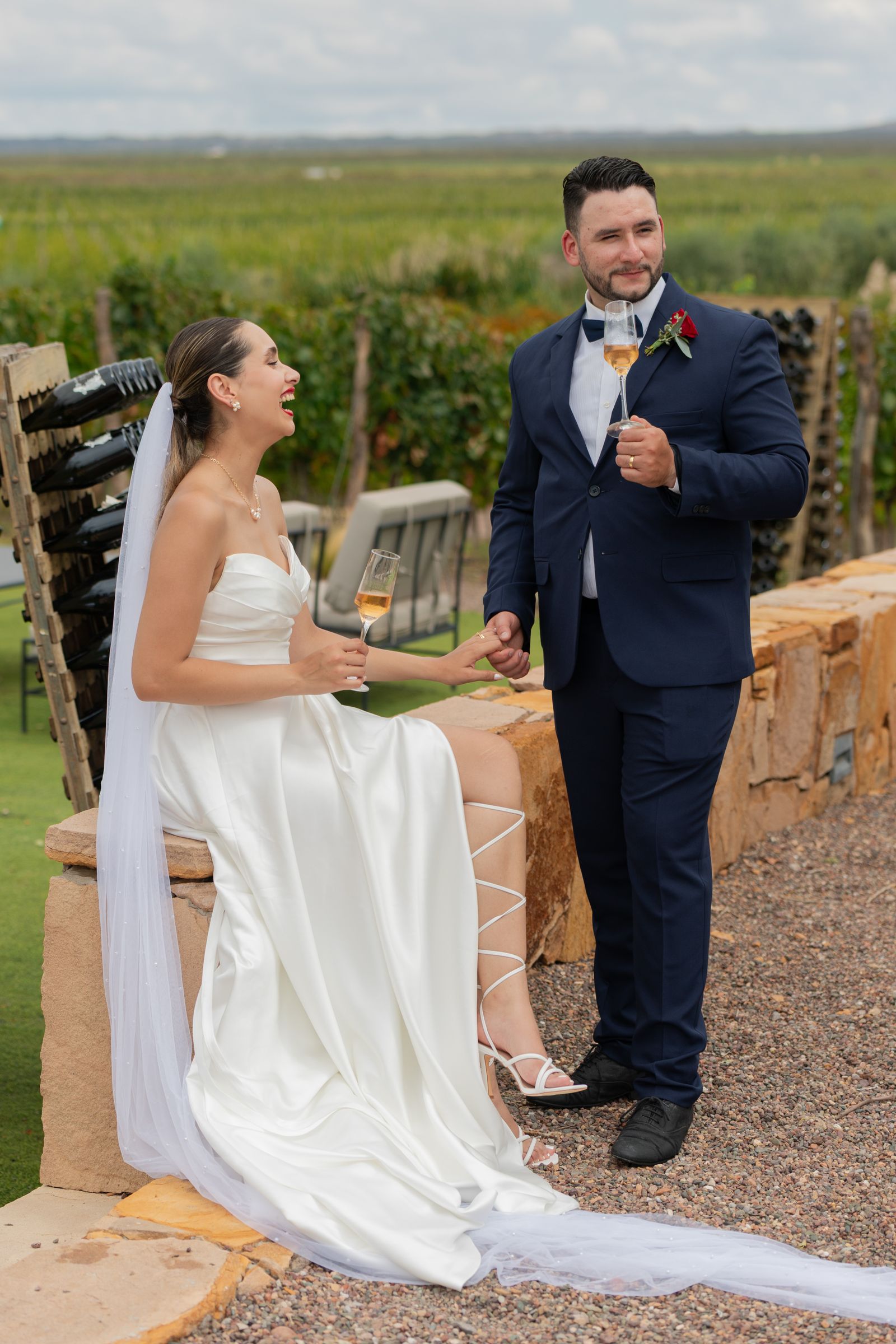
New Jersey's permit landscape is a patchwork of gardens and parks, each with its own fee, and wedding parties get stopped for lacking one often enough that local photographers quote the numbers from memory. Van Vleck House & Gardens in Montclair charges $300 for portrait sessions and $500 for wedding-party photography, capped at 25 people including the photography team. The New Jersey Botanical Garden charges $150 for New Jersey photographers and $200 for out-of-state. Laurelwood Arboretum charges $100 for wedding shoots. Branch Brook Park in Newark — the cherry-blossom park — requires a permit for wedding and ceremony photography starting at $150, while ordinary portrait sessions there need none.
State parks run on state rules. New Jersey's fee schedule sets commercial photography in state parks at $325 per day plus staff costs — with Liberty State Park in Jersey City, the skyline-view park, carved out as its own case: commercial photography there is $2,500 per day plus staff costs under its special-use permit system, and wedding ceremonies and receptions are not permitted in the park at all. Small, informal portrait sessions are treated far more lightly at many of these locations — several well-known gardens and parks require no permit for engagement or family sessions while requiring one for weddings — which is exactly why the question has to be asked location by location, in advance, with the answer in the contract. "We have shot there before" is not a permit.
The New Jersey tax and consumer-protection details
New Jersey's Division of Taxation has a publication just for this trade — ANJ-2, Professional Photographers & New Jersey Sales Tax — and its central line is delivery. Photographs sold as tangible property — prints, albums, frames, a USB drive — are taxable at the state's 6.625 percent rate, and when a taxable product is part of the sale, the related shooting and production charges become part of the taxable price even if they are listed separately on the invoice. A photograph transmitted solely by email or other electronic means, by contrast, is treated as intangible property and is not subject to the tax. On a $6,000 package, whether the album is inside the package or bought later, and whether delivery is purely electronic, moves the tax bill by hundreds of dollars. Neither structure is a trick; both are simply consequences of ANJ-2 that a good New Jersey photographer will explain without being asked.
Contracts carry unusual weight in this state for a second reason: the New Jersey Consumer Fraud Act. It is among the strongest consumer-protection statutes in the country, prohibiting unconscionable commercial practices, deception, and false promises in consumer sales — and a consumer who proves a violation can recover threefold damages plus attorney's fees. For couples and small businesses alike, the practical translation is not litigiousness; it is that New Jersey photographers' contracts tend to be specific — who shoots, what is delivered, when, what happens on cancellation — because the state's law rewards specificity and punishes vagueness. Read yours, and treat a photographer who resists putting delivery dates and substitution terms in writing as a genuine red flag, here more than in most states.
Choosing your market, then your photographer
Decide the market before the name. If your wedding is a North Jersey ballroom, shortlist ballroom photographers and judge them on dark-room galleries. If it is a Shore wedding, shortlist Shore specialists, ask how they build the day around tide and sunset, and consider September. If it is a small-town wedding in Hunterdon, the Pines, or the southern counties, book early — the local bench is short — and put travel, backup, and substitution terms in writing, because a one-photographer town has no bench to improvise from.
This site lists more than 560 wedding photographers. Filter them by your real New Jersey — north, Shore, or south — compare full galleries from venues like yours, get permits, travel, and the tax treatment of prints versus digital delivery settled in the contract, and the state's three markets stop being a trap and become what they should be: three different kinds of strength to choose from.
Sources
- Casey Fatchett Photography, New Jersey wedding photography pricing guide — entry level $2,000–$3,500, established mid-range $3,500–$7,500, high end $8,000–$12,000 and up, most full-day couples investing $4,000–$8,000, and NYC-based photographers commonly including travel within about 50 miles.
- Brian Delia Photography, Verona, New Jersey — collections beginning at $3,000, most couples investing $4,500–$8,000, statewide range described as $3,000–$10,000.
- Red Bank Studio, New Jersey — packages starting at $1,800, most full-day weddings $3,500–$7,500, premium ballroom photo-and-video teams $6,000–$10,000, and Shore portrait timing planned around low tide and the ninety minutes before sunset.
- The Knot 2026 Real Weddings Study — national average wedding photographer spend $3,000.
- New Jersey garden and park photography permit listings — Van Vleck House & Gardens $300 portrait and $500 wedding-party permits, New Jersey Botanical Garden $150 in-state and $200 out-of-state, Laurelwood Arboretum $100 for wedding shoots, Branch Brook Park wedding photography permits from $150.
- New Jersey State Park Service fee schedule, N.J.A.C. 7:2-17.3, and Liberty State Park special-use permit guidelines — commercial photography $325 per day plus staff costs in state parks generally, $2,500 per day plus staff costs at Liberty State Park, where wedding ceremonies and receptions are not permitted.
- New Jersey Division of Taxation, Publication ANJ-2, Professional Photographers & New Jersey Sales Tax — prints, albums, and other tangible photographs taxable at 6.625 percent with related production charges included in the taxable price, while photographs transmitted solely electronically are treated as nontaxable intangible property.
- New Jersey Consumer Fraud Act, N.J.S.A. 56:8-1 et seq. — prohibition of unconscionable commercial practices and deception in consumer sales, with threefold damages and attorney's fees for a successful consumer claim.
Photo credits: wedding couple formal portrait — photo by Emma Bauso, https://www.pexels.com/photo/2253870/ ; vineyard toast — photo by Lilen Diaz, https://www.pexels.com/photo/joyful-wedding-couple-toasting-in-mendoza-vineyard-31531920/ ; wedding couple at golden hour — photo by Giuseppe Messina, https://www.pexels.com/photo/a-couple-having-a-beach-wedding-4364780/
More guides
- How to Find a Wedding Photographer: The Complete, Honest GuidePhotographers › Wedding Photographers
- How Much Does a Wedding Photographer Cost? Packages DecodedPhotographers › Wedding Photographers
- 10 Questions to Ask a Wedding Photographer Before You BookPhotographers › Wedding Photographers
- Wedding Photography Styles Explained: Documentary, Editorial, Traditional, Fine ArtPhotographers › Wedding Photographers
- Hiring a Wedding Photographer in California: Venue Light, Permits, and Price LevelsPhotographers › Wedding Photographers
- All Guides & ArticlesBrowse the full guides library