Photographers › Wedding Photographers
Wedding Photography Across Oregon: Big-City Choice vs. Small-Town Reality
Oregon divides itself, helpfully and ruthlessly, along the Cascade crest. West of it: Portland, the Willamette Valley and the coast — green, populated, and wet for much of the year. East of it: Bend, Redmond and the high desert — sunny, fast-growing, and a three-hour drive from the metro bench over mountain passes that have their own opinions in winter. A wedding photographer who is perfect for a Portland garden wedding in June may be an expensive, weather-beaten gamble for a Bend ranch wedding in October, and the reverse is equally true.
When I managed a portrait studio, Oregon bookings were the ones where we asked about the venue before we asked about the couple's taste. This guide follows that order: what Portland's deep bench really offers, what Bend and Oregon's small towns offer instead, what each costs in published prices, and how the state's defining facts — no sales tax, a long wet season in the west, and permit country in the Gorge and the national parks — should shape the hire. This site lists 564 wedding photographers. Oregon's share of them is concentrated in exactly the places its people are, which is the whole problem and the whole opportunity.
Portland: the deepest bench, priced in layers
Portland is a genuine big-city market for wedding photography: hundreds of working photographers, every style from documentary to editorial, photo-and-film teams, and second shooters available as a standard line item rather than a favor. The published price layers, checked against photographers' own pages in November 2026, look like this:
| Portland layer | Published eight-hour (or full-day) price | Notes |
|---|---|---|
| Value / newer professionals | $2,000–$3,000 | Published packages include 8 hours from $2,500 and $2,975, the latter with an engagement session or second-photographer hours |
| Established mid-market | $3,800–$6,400 | Collections at $3,800, $4,600 and $5,400 from one Portland studio; 6 hours at $4,800 and 8 hours at $6,400 from a photo-and-film team |
| Signature / luxury | $9,500+ | A published Portland starting price of $9,500 including engagement session, signature album and an after-wedding session |
For national context, The Knot's 2026 Real Weddings Study put average photographer spend at $3,000 for couples married in 2025, with the West at $2,900; Zola's 2026 index puts it higher, at $4,400, with most couples spending $3,500–$5,300. Portland's published packages straddle both figures, which tells you the metro market is competitive rather than inflated: you can buy a competent eight hours under the national average, and you can spend three times it without leaving the city limits.
What the depth buys, beyond choice, is resilience. A Portland studio can field a second photographer for a 200-guest ballroom, an associate if the lead is ill, and a gallery delivered on a stated schedule — one Bend-and-Portland photographer publishes typical delivery at four to six weeks, stretching to six to eight in peak season, which is the honest shape of an Oregon summer queue. In a market this deep, your job is discrimination, not discovery: full galleries, in your venue's light, in your month.
Bend and Central Oregon: a destination market that grew its own bench
Bend is the Oregon story of the decade: a small city that became a destination wedding market — ranches, resorts, high-desert venues with Cascade views — and grew a local photography bench to match. Bend-based photographers publish full collections in the same $2,500–$5,000 band as Portland's mid-market (one Bend photographer's collections run $2,500 for four hours to $3,500 for eight), which surprises couples expecting a small-town discount. There mostly is not one, because Bend's couples are often Portland and California couples who brought their budgets with them.
What Bend's bench sells is high-desert fluency: hard, bright light at altitude, venues where the ceremony faces the mountains and the sun drops behind them on a schedule a coastal photographer will misjudge once, and summer evenings that cool fast enough to change what a reception looks like by 9 p.m. The small-market cautions still apply — thinner backup benches than Portland, second shooters sometimes imported from the valley — but Bend is no longer a market where importing is the default. Importing a Portland photographer to Bend means paying for six hours of driving or a night's lodging, over passes that are a genuine consideration for winter dates. Price that honestly, in the quote, before comparing it against a local.
The coast, the Gorge and the small towns: scarce, local, weather-first
West of Portland the bench thins fast. The Oregon Coast — Cannon Beach, Newport, Bandon and the small towns between — has local photographers in most communities, at prices generally at or below Portland's value layer, but the shortlist in any one town may be three names long. The Columbia River Gorge and Hood River have their own specialists; a Portland-and-Hood-River photographer publishes packages starting at $2,000 for six hours and $2,500 for eight, which shows how the Gorge functions as Portland's scenic annex — close enough that metro photographers work it weekly and price it as home turf. Wine country in the northern Willamette Valley works the same way. Southern Oregon — Ashland, Grants Pass, the Rogue Valley — and eastern Oregon's ranch country are true small markets: a local photographer or two, deep venue knowledge, and importing from Portland or Bend as the fallback, at real travel cost.
In these markets the professional tactics are the ones that work in any scarce market, sharpened by Oregon weather:
- Book the person, then fix the date. Where the bench is three names, their calendars are the market.
- Judge wet-weather work, not just golden hour. On the coast and in the valley, a photographer whose portfolio is all dry sunsets has shown you their best six days of the year. Ask for a full gallery shot in rain or coastal grey. The photographers who live there have them, and the work is often beautiful — soft, even, flattering light is the coast's default, not its failure mode.
- Paper the backup. A named replacement or a clear refund-and-release clause matters more where there is no studio behind the name.
The Oregon calendar: two states' worth of weather
Oregon's wedding season is really two seasons sharing a state line drawn by mountains. West of the Cascades, the reliable outdoor window runs roughly June through September; the rest of the year is the wet season, when Portland and the coast do not so much risk rain as schedule around it. That is not a reason to avoid an October valley wedding — the light is superb and the venues are quieter — but it is a reason to hire for it: covered ceremony space, a photographer with a real rain portfolio, and a timeline with slack. East of the Cascades, Bend's high desert flips the problem: summer brings the sun the valley lacks, plus wildfire-smoke risk in late summer, and winter brings genuine cold and pass conditions that affect any vendor — or guest — crossing from the west.
Sunset does its own work. A Portland summer evening runs long, which flatters late ceremonies; by December the day is short enough that a winter wedding's portraits belong in the early afternoon, and a photographer who shoots Oregon winters will build the timeline that way without being asked. Ask every candidate the same question — "show me a wedding from my month, in my part of the state" — and the calendar will sort your shortlist faster than any style debate.
Permits: Gorge, parks and Crater Lake
Oregon's scenic places come with paperwork, and the pattern to learn is that the permit, where one is needed, belongs to the event, and its conditions bind your photographer too. Ceremonies and commercial shoots in Oregon's state parks, in the Columbia River Gorge's managed sites, and in Crater Lake National Park — one of the state's signature elopement locations — operate under permit or special-use arrangements that vary by site, group size and setup. The professional habit, rather than any single fee, is what to buy: a photographer who works the Gorge or Crater Lake regularly will raise the permit in the first conversation, tell you who files it and what it restricts — group size, ceremony footprint, where you may and may not wander for portraits — and will have a permitted backup location in mind. A photographer who has never heard the question is telling you they have not worked your location, whatever their portfolio says. Put the permit owner in the contract, by name, the way you would in any state where the scenery is publicly owned.
No sales tax: the cleanest invoice in the West
Oregon has no general sales tax — the Oregon Department of Revenue states it plainly — and that makes Oregon the simplest photography invoice on the West Coast. The package, the album, the prints, the USB drive: no tax line on any of it, and no delivery-format trap of the kind that changes the tax on an entire package in states that tax tangible goods. The quote is the price. Two cautions keep that simplicity honest. First, the comparison cuts the other way across the river: a Washington-based photographer serving a Portland-area wedding may add Washington sales tax, as at least one Seattle photographer's published pricing notes explicitly — so a cross-border quote is not directly comparable to an Oregon one until the tax line is settled. Second, lodging for imported photographers and guests is where Oregon weddings do meet taxes and fees, through local lodging taxes that vary by place. Neither is a trap. Both belong in the written quote, where a professional will already have put them.
How to hire, by market
In Portland, use the depth and distrust the discount end until it proves itself in full galleries: compare eight-hour packages on scope — second photographer, engagement session, album — because the published spread from $2,975 to $9,500 is mostly scope, not greed. In Bend, hire the local bench first and make any import justify its travel line against a Bend photographer's desert fluency. On the coast, in the Gorge and in the small towns, book the person early, judge the rain galleries, paper the backup, and settle the permit before the retainer.
Oregon's divide is not a flaw in its market. It is the market. Hire on the correct side of the Cascades, in the correct month, with the weather and the paperwork treated as part of the photography — because here, they are — and the photographs will look like the state actually does, which is the entire point of marrying in it.
Sources
- Wildwood Wedding Films, Wedding Photographer Cost in Oregon and Washington — Portland and Seattle published eight-hour packages from $2,975 to $9,500, checked November 2026; The Knot and Zola national figures; Oregon has no general sales tax.
- Cassandra Leonard Photography, Portland collections — wedding collections at $3,800, $4,600 and $5,400, and elopements from $2,900.
- Sightglass Photo + Films, Portland pricing — photo packages at $4,800 for six hours and $6,400 for eight hours, and combined photo-and-film collections.
- Reed Jacobson Photography, Portland and Hood River pricing — packages starting at $2,000 for six hours, $2,500 for eight hours and $3,500 for ten hours with a second shooter.
- Wild Pines Photography, Bend and Portland pricing — collections from $2,500 to $3,500 and published gallery delivery of four to six weeks, six to eight in peak season.
Photo credits
- Forest in filtered light — photo by Mick Haupt, https://www.pexels.com/photo/green-plants-and-trees-in-a-forest-5586120/
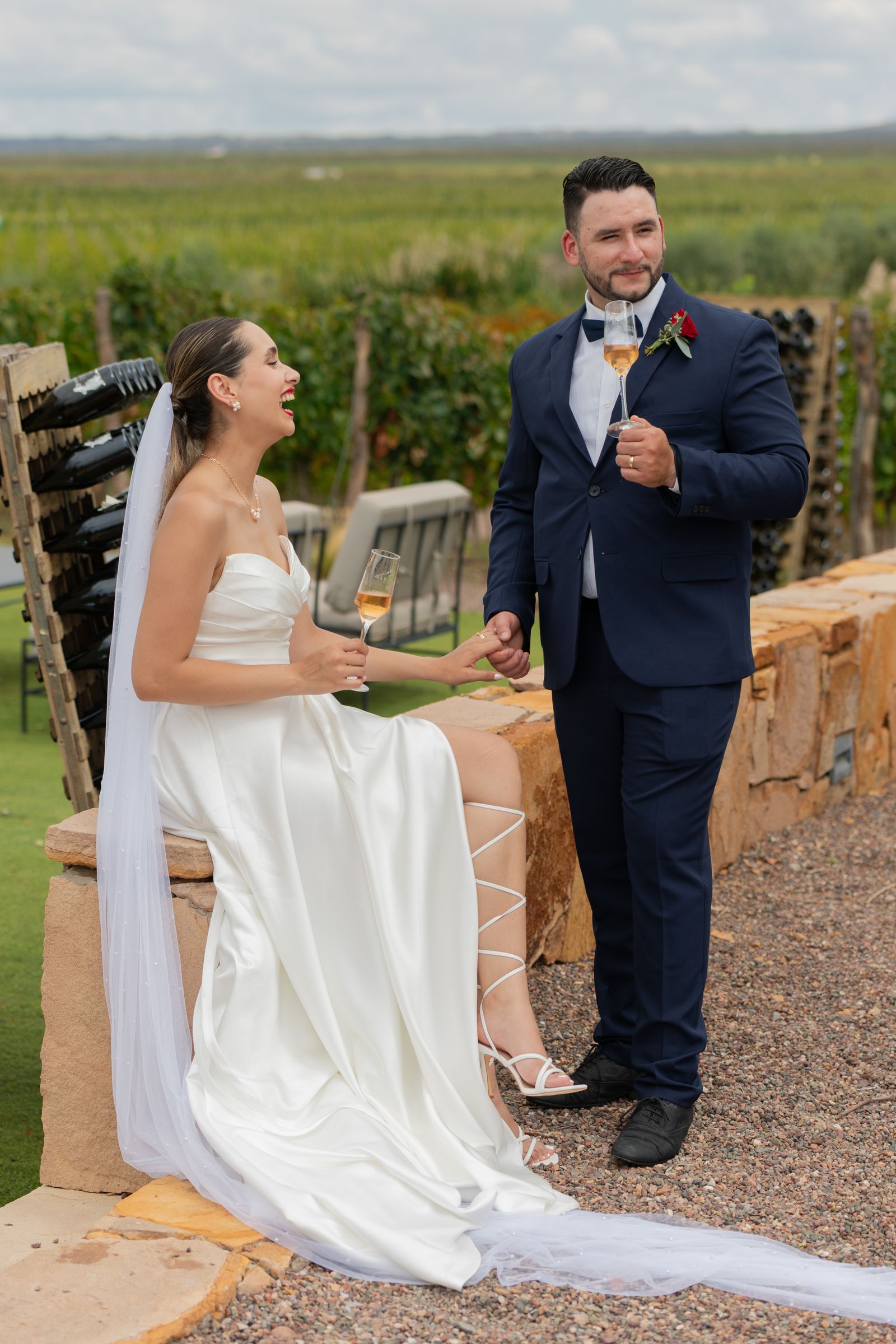
- Couple toasting in celebration — photo by Lilen Diaz, https://www.pexels.com/photo/joyful-wedding-couple-toasting-in-mendoza-vineyard-31531920/
- Couple by the water at sunset — photo by Giuseppe Messina, https://www.pexels.com/photo/a-couple-having-a-beach-wedding-4364780/
More guides
- How to Find a Wedding Photographer: The Complete, Honest GuidePhotographers › Wedding Photographers
- How Much Does a Wedding Photographer Cost? Packages DecodedPhotographers › Wedding Photographers
- 10 Questions to Ask a Wedding Photographer Before You BookPhotographers › Wedding Photographers
- Wedding Photography Styles Explained: Documentary, Editorial, Traditional, Fine ArtPhotographers › Wedding Photographers
- Hiring a Wedding Photographer in California: Venue Light, Permits, and Price LevelsPhotographers › Wedding Photographers
- All Guides & ArticlesBrowse the full guides library