Photographers › Wedding Photographers
Wedding Photography Across Washington: Big-City Choice vs. Small-Town Reality
Washington is two states sharing a name, divided by a mountain range that decides almost everything about a wedding: the weather, the light, the price of the photographer, and whether that photographer is driving home over a snowy pass at midnight. West of the Cascades, the Seattle–Tacoma–Bellevue metro holds one of the deepest, most expensive wedding-photography markets on the West Coast. East of the mountains, Spokane anchors a smaller, markedly cheaper market, and beyond it lie wine-country towns, wheat country, and venues where the nearest working wedding photographer may be the only working wedding photographer.
The tactics differ because the failure modes differ. In Seattle, couples fail by waiting too long and paying luxury prices for ordinary depth. In small-town Washington, couples fail by assuming a Seattle booking travels well — or by discovering in August that the one local photographer they wanted was booked the previous October. This guide covers both markets with Washington's own numbers, its unusual tax treatment of photography, and the logistics — ferries, passes, smoke, and rain — that no generic guide will warn you about.
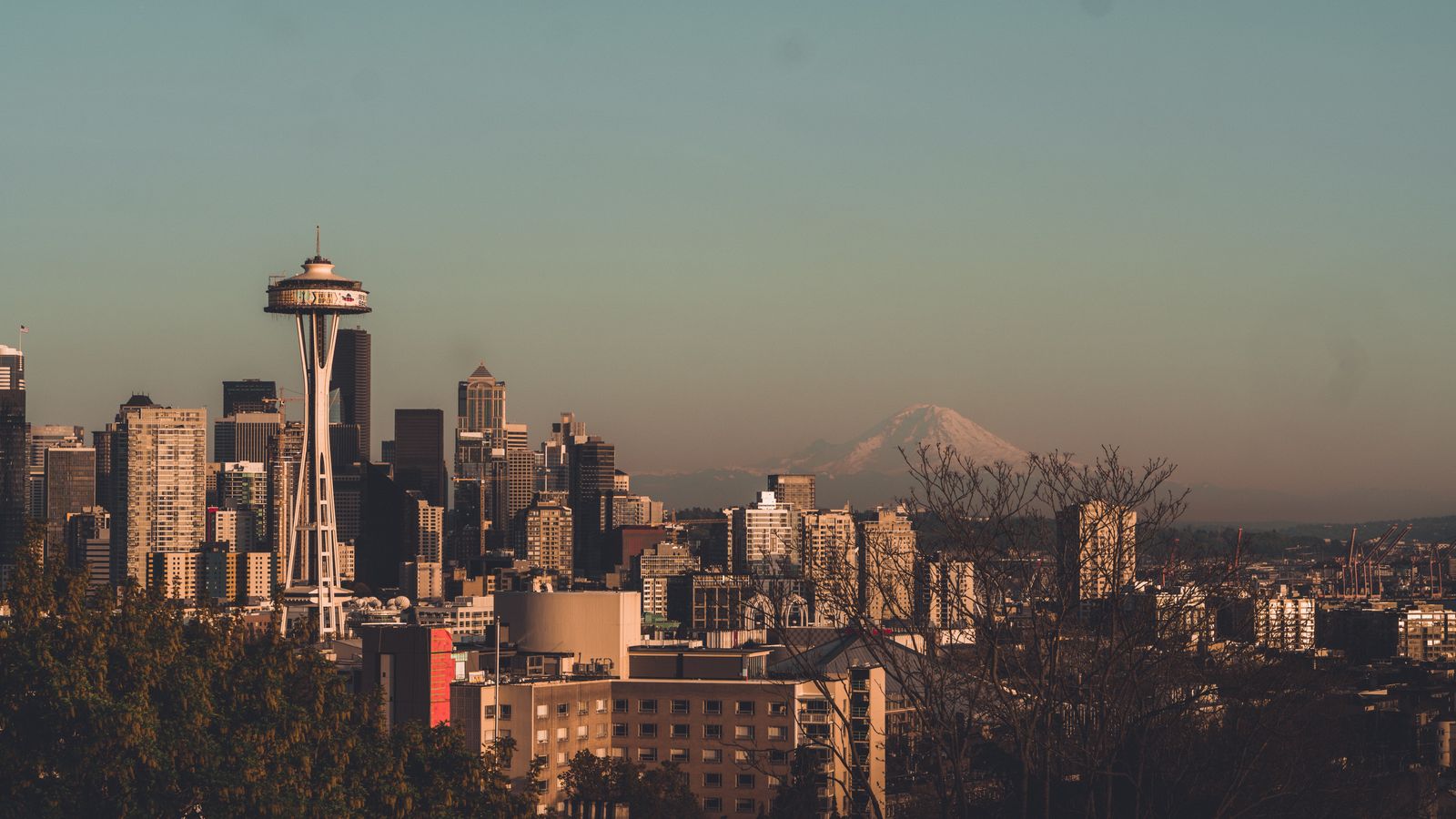
The divide, in prices
Seattle first, because Seattle sets the state's ceiling. Most couples in the Seattle market spend between $5,000 and $12,000 on a wedding photographer for a full day of coverage, with the wider market running from about $3,500 at the entry level to $25,000 and beyond at the luxury and editorial tier. Packages typically start at six hours and scale to ten or twelve. That is a genuine big-city market: hundreds of photographers, every style represented, second shooters and associate teams on tap, and a top tier whose work is flown around the country.
Cross the Cascades and the numbers fall off a cliff — in the good way. In the Spokane area, published 2026 pricing guides put the budget tier at $1,200 to $2,200, the mid-range where most couples land at $2,500 to $4,500, and the premium tier at $4,500 to $7,000 or more. Spokane photography is generally estimated at 20 to 40 percent less than Seattle for comparable quality, and a typical Spokane wedding overall runs around $28,000 for 100 guests. Marketplace starting prices around Spokane and the Inland Northwest run from $800 to about $3,800 — a spread that includes everyone from a talented newcomer in Moses Lake to established Spokane studios.
Between the two poles sit Washington's smaller markets, each with its own shape: Tacoma and Olympia price below Seattle but draw from its bench; Bellingham and the San Juan Islands form a destination pocket where Seattle photographers travel constantly; Yakima and Walla Walla wine country have a handful of local specialists — a Walla Walla photographer's starting price around $2,750 is typical — supplemented by Tri-Cities and Spokane imports; and the Olympic Peninsula, the Methow Valley, and the Palouse run on a mix of a few locals and photographers who genuinely love the drive.
| Seattle & the Puget Sound metro | Spokane & small-town Washington | |
|---|---|---|
| Typical spend | Most couples $5,000–$12,000 for full-day coverage; market range ~$3,500–$25,000+ | Most couples $2,500–$4,500 in Spokane; budget tier $1,200–$2,200, premium $4,500–$7,000+ |
| Choice | Hundreds of photographers, every style and tier | A real but smaller bench in Spokane; one to a few locals in most small towns |
| Second shooter & backup | Standard at mid-tier and up; studios carry associate benches | Ask explicitly; solo operators dominate outside the metros |
| Travel reality | Ferries to the islands, pass traffic to the mountains | Pass crossings in winter, 2–5 hour drives, wildfire smoke in late summer |
| Sales tax | Retail sales tax on photography, sourced to where photos are delivered — and the rate varies by city | Same state rule, lower local rates; an eastern-Washington delivery address can mean a lower tax rate on the same package |
Weather is not a detail here; it is the market
West-side rain. The Puget Sound wedding season runs May through September because October through April is the gray season — not constant downpour, but persistent low cloud, early darkness, and rain often enough that every west-side photographer builds a wet-weather plan as a matter of course. The professional tell is in the portfolio: a Seattle photographer whose galleries are all golden-hour sunshine has either been lucky or selective. Ask to see a full gallery shot in the rain, under a venue's covered terrace, in a conservatory, in a barn lit by string lights. The good ones have several and are proud of them, because flat gray light, handled well, is flattering — and handled badly, it is a wedding album that looks like a security camera.
East-side sun and smoke. Eastern Washington sells the opposite product: high-desert light, vineyards in Walla Walla and the Yakima Valley, wheat gold in the Palouse, and summer evenings that stay warm and dry. The east-side risks are heat — July and August afternoons in the Tri-Cities and Yakima routinely push past 95 degrees, which moves portraits to the evening — and wildfire smoke, which in bad August and September weeks can roll over both sides of the Cascades, turning the sky orange and the air unbreathable. A Washington contract in fire season needs a smoke clause: what happens if air quality makes an outdoor ceremony unsafe, who decides, and what rescheduling or relocation terms apply. Photographers who work the east side every summer will raise this themselves.
The passes. Snoqualmie, Stevens, and White Pass are the state's wedding infrastructure in winter and shoulder season, and they close, chain up, and crawl. A Seattle photographer booked for a Leavenworth or Methow winter wedding is a logistics plan — arrival the day before, a hotel night, a vehicle that can cross — not a day trip. Price it and contract it that way, and be wary of any quote that treats a January pass crossing as a commute.
The ferries. San Juan Islands weddings — Orcas, San Juan, Lopez — run on Washington State Ferries from Anacortes, with vehicle reservations that sell out on summer weekends. Your photographer's car is part of that system. The professional arrangement is explicit: the photographer books an early ferry, carries gear that fits a walk-on backup plan, and does not leave the island on the last sailing if the reception runs long. Ask island-experienced photographers how they handle it; their answer will be a paragraph, not a shrug, because they have missed a boat before and reorganized their whole practice around never doing it again.
Washington taxes photography like a product, mostly
Washington's tax treatment of photography is specific enough that the Department of Revenue publishes a dedicated photography tax guide, and couples feel it as a line on the final invoice. The core rules:
- Retail sales tax applies to photography sold to consumers. Photographers making retail sales must collect retail sales tax on their total charges unless an exemption applies. On a $6,000 Seattle package, that is several hundred dollars — ask whether quoted prices include tax or add it, before you compare two photographers whose quoting habits differ.
- The rate follows delivery, not the wedding. Sales of photographs are sourced to the location where the customer receives the photos — the electronic file counts. A gallery received at a Seattle address is taxed at Seattle's combined rate; the same photographer's gallery delivered to a customer at a lower-rate eastern Washington address carries that lower rate. Rates vary around the state because local taxes stack on the state rate, which is one more reason the tax line belongs in the contract, not in a surprise email.
- Licensing is different from selling. Granting rights to use a photograph — a license or royalty arrangement — is not a retail sale and is not subject to retail sales tax, though the photographer's income from it is taxed under the state's business and occupation (B&O) tax in the royalties classification. This is mostly a commercial-photography distinction, but it explains why some Washington photographers structure deliverables as licensed files, and why their invoices look different from a print-selling studio's.
- The B&O tax is the photographer's problem, priced in. Washington has no income tax; instead its B&O tax falls on gross receipts under classifications including Retailing and Service and Other Activities. You will never see it itemized, but it is one of the quiet reasons Washington rates sit where they do.
Permits and places with rules
Washington's signature portrait locations come with paperwork. Weddings and commercial shoots in Mount Rainier and Olympic National Parks run through each park's special-use and commercial permitting systems, with applications due well ahead — mountain venues also have brutally short seasons, since Rainier's Paradise area is snowbound much of the year. Washington State Parks requires permits for commercial photography and for events that exceed normal use, and popular state-park venues like Deception Pass book their group facilities far ahead. Seattle's own parks require permits for professional photography sessions in many locations. The pattern matches the rest of this guide: the photographer who works a location regularly treats the permit as routine admin, and the one who does not may discover the requirement from a ranger. Put permit responsibility — who files, who pays, what the backup location is — in the contract.
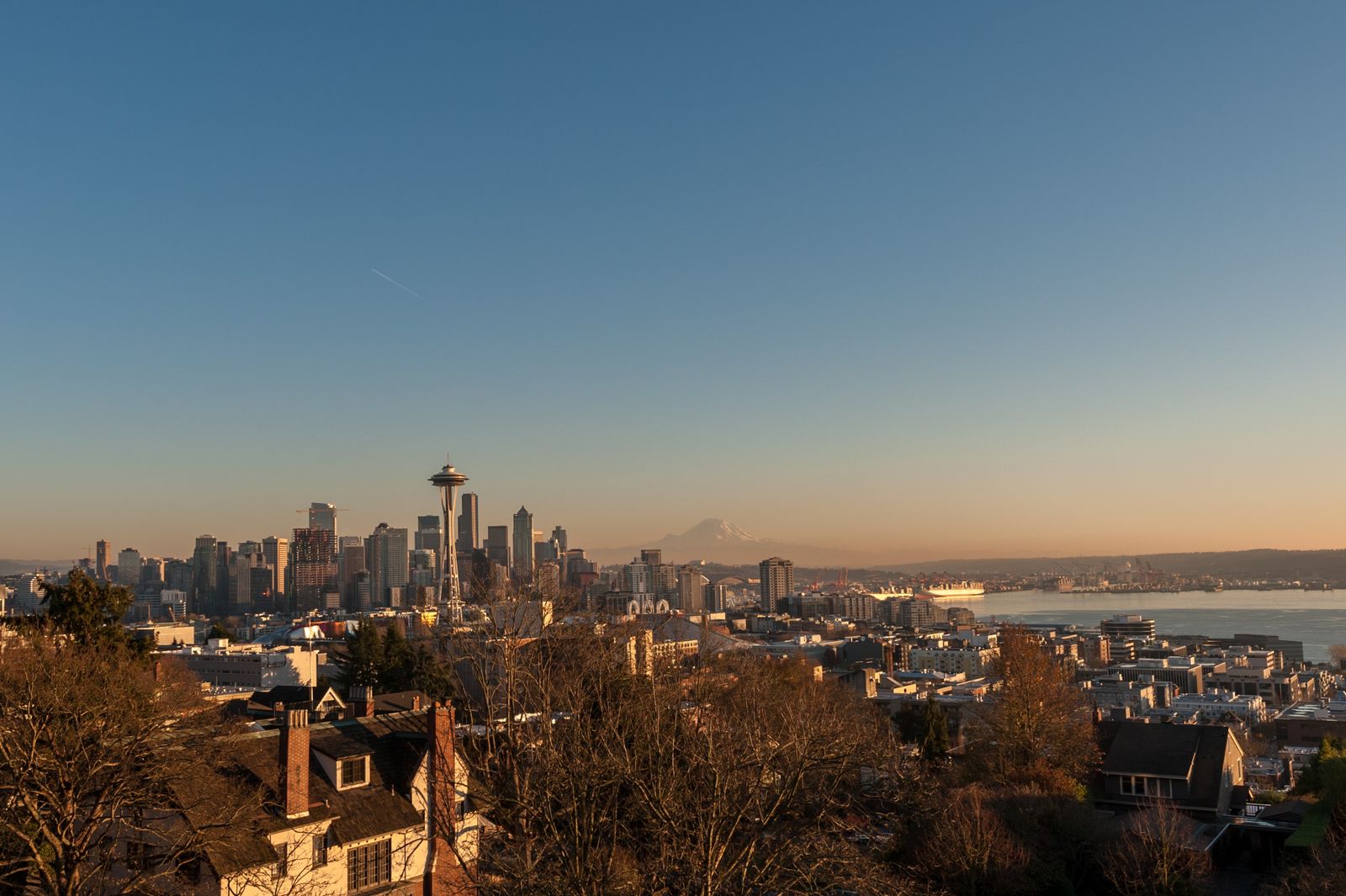
Small-town tactics that work in Washington
Book the local before you import. In Walla Walla, the Methow, the Palouse, or the Peninsula, a local photographer at $2,500 with no travel, deep venue knowledge, and a reputation to protect in a town where everyone talks is frequently a better hire than a $6,000 Seattle name plus $800 of travel — and always a simpler one. Check the local's full galleries first, in your venue's conditions, and only import if the work genuinely is not there.
If you import, contract the geography. Ferry reservations, pass conditions, hotel nights, smoke plans: each belongs in writing with a number attached. Washington travel fees are legitimate and normal; what you are buying with them is the photographer arriving rested, early, and equipped — not a story about traffic on I-90.
Use Spokane as the eastern bench. Couples marrying in the Tri-Cities, Coeur d'Alene-adjacent venues, or the northern tier often find Spokane's mid-range — $2,500 to $4,500 for experienced full-day coverage — is the sweet spot of the entire state: real choice, real backup depth, prices 20 to 40 percent under Seattle's, and photographers who already drive to Walla Walla, Sandpoint, and the lakes as routine work.
Interrogate the backup plan harder than the portfolio. Outside the metros, a solo photographer's illness plan may be a colleague, a spouse with a camera, or nothing. All three exist in Washington's small markets. The contract should name the arrangement — substitute of comparable quality, referral plus refund, or full refund — because "we'll figure it out" is not an arrangement.
Take the off-season seriously on the west side. A November-to-March Puget Sound wedding, built around a beautiful indoor venue and a photographer who excels in low light, can buy Seattle's top tier at something closer to its mid-tier price, with calendars wide open. On the east side, winter means cold, bright days and empty wine country — and photographers with time to negotiate.
Finding them
This site lists 564 wedding photographers, and Washington's share of them maps the state honestly: a deep, expensive bench in the Seattle metro, a strong mid-priced market in Spokane, specialists scattered through wine country and the islands, and thin coverage in the rural east and the Peninsula's far reaches. Start with full galleries shot in your side of the mountains, in your season's weather. Confirm the tax treatment and the travel plan as numbers in the contract. And in Washington more than most states, ask the logistical question out loud — how exactly do you get to my venue, and what happens if the ferry, the pass, or the smoke says no? The photographers worth hiring have answered it before, in detail, because Washington has asked it of them before.
Sources
- TM Inspired, Seattle wedding photographer cost guide — establishes that most Seattle couples spend $5,000–$12,000 for full-day coverage, with a wider market range of about $3,500 to $25,000 or more.
- NW Stolen Images, Spokane wedding photographer cost guide (2026) — establishes Spokane tiers of $1,200–$2,200 (budget), $2,500–$4,500 (mid-range), and $4,500–$7,000 or more (premium), and that Spokane runs roughly 20–40 percent below Seattle for comparable quality.
- The Knot, Spokane wedding photographer listings — establishes marketplace starting prices around Spokane and the Inland Northwest from $800 to about $3,800, including Walla Walla starting prices near $2,750.
- Washington State Department of Revenue, Photography Tax Guide — establishes that retail photography sales are subject to retail sales tax on total charges, that sales of photographs are sourced to where the customer receives the photo (including electronic files), that rates vary by location, that licensing/royalties are not retail sales, and the B&O tax classifications for photography businesses.
- WeddingBot, Spokane average wedding cost data — establishes a typical Spokane wedding at about $28,000 for 100 guests, with photography in the $2,200–$6,500 range by tier.
Photographs
- Seattle skyline with Mount Rainier — photo by Chait Goli, https://www.pexels.com/photo/1796730/
- Seattle waterfront at sunset — photo by Sergei A, https://www.pexels.com/photo/2539374/
More guides
- How to Find a Wedding Photographer: The Complete, Honest GuidePhotographers › Wedding Photographers
- How Much Does a Wedding Photographer Cost? Packages DecodedPhotographers › Wedding Photographers
- 10 Questions to Ask a Wedding Photographer Before You BookPhotographers › Wedding Photographers
- Wedding Photography Styles Explained: Documentary, Editorial, Traditional, Fine ArtPhotographers › Wedding Photographers
- Hiring a Wedding Photographer in California: Venue Light, Permits, and Price LevelsPhotographers › Wedding Photographers
- All Guides & ArticlesBrowse the full guides library