Photographers › Wedding Photographers
Wedding Photography in Arizona: Permits, Prices and Local Know-How
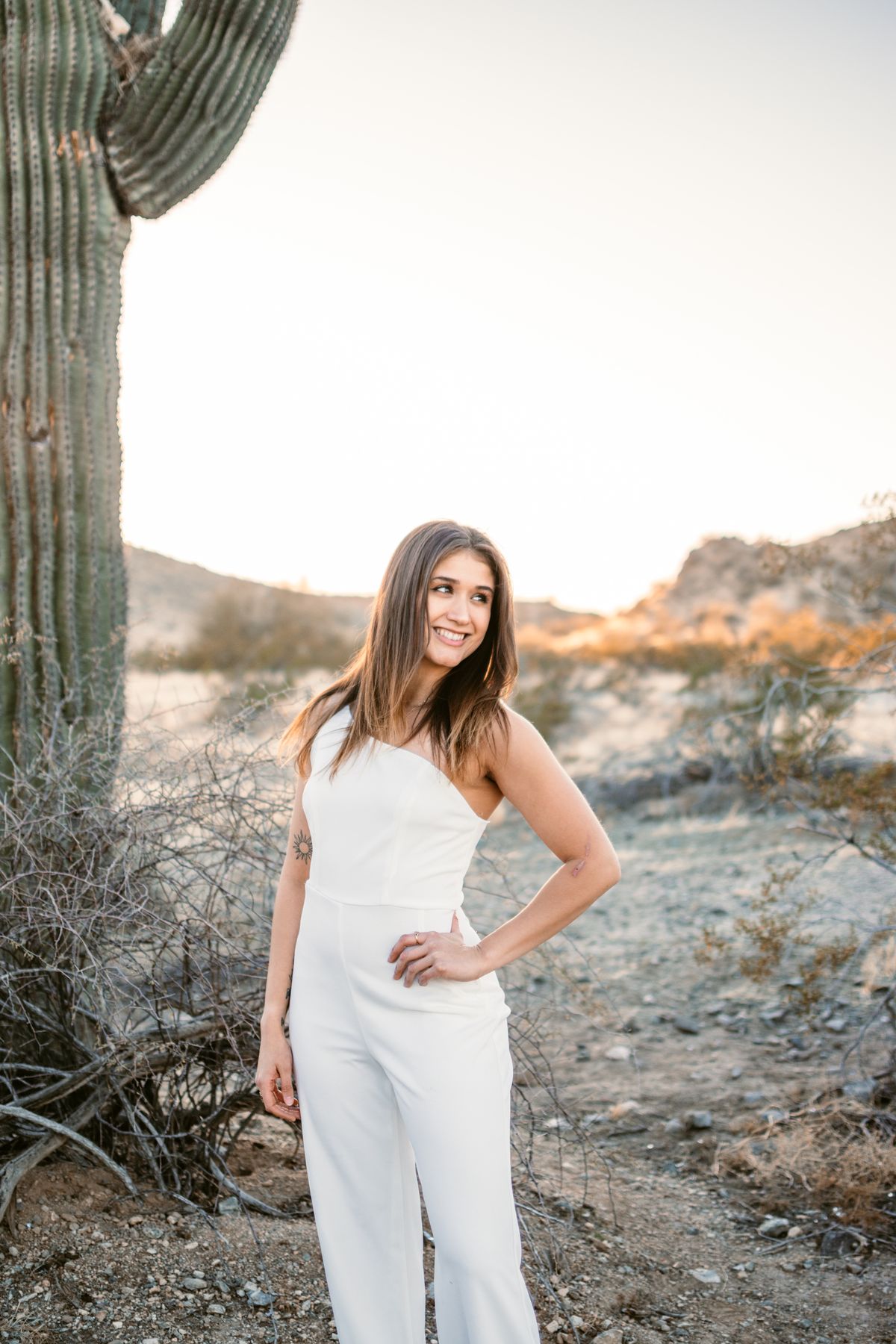
Arizona sells a particular wedding photograph: a couple in formal clothes against red rock or a stand of saguaros, in light so warm it looks filtered. That photograph is real, and this state delivers it more reliably than almost anywhere in America. What the photograph doesn't show is the machinery behind it — a permit regime that treats a paid portrait session as a commercial use of public land, a summer that can make an outdoor ceremony a medical question, a monsoon season with official dates, and a clock that never changes for daylight saving. I managed a portrait studio and booked weddings for years. This is the Arizona version of the advice, which is different from the national version in ways that cost money when you learn them late.
What Arizona costs
The national anchor: The Knot's 2026 Real Weddings Study put average spending on a wedding photographer at $3,000 for couples married in 2025. Arizona's markets spread widely around that anchor, because the state contains both a big, competitive metro and two of the country's most in-demand destination backdrops.
| Market | Typical range | The local reality |
|---|---|---|
| Phoenix and Scottsdale | $3,500–$6,500 | A deep, competitive metro market. Established studios sit in the middle of this band; the Scottsdale resort corridor prices at the top of it |
| Tucson | $2,500–$5,000 | A step below Phoenix for comparable experience — the state's value market, with strong desert venues |
| Sedona | $5,000–$9,000+ | Destination pricing. Red-rock venues book far ahead, many photographers travel in, and permit and parking logistics are part of the quote |
| Flagstaff and the high country | $3,000–$5,500 | A smaller market; Phoenix photographers often travel up, and travel fees are normal |
As everywhere, compare whole packages — hours, a second photographer, delivery format, an album — rather than "starting at" prices, which buy fewer hours and no album. And note the Arizona wrinkle in the table: in Sedona you are not only paying for the photographer. You are paying for their knowledge of which trailhead, which permit, and which hour — and on a Saturday in October, that knowledge is the scarce part.
The permit layer: Arizona means it
Arizona's public-land managers are unusually explicit about one rule: the moment a photographer is paid, a portrait session on public land is commercial photography, and commercial photography needs permission in advance.
Arizona State Parks — which include Lost Dutchman in the Superstitions, Red Rock State Park in Sedona, Catalina near Tucson, and Slide Rock in Oak Creek Canyon — handle commercial photography under a special-use framework (Arizona Administrative Code R12-8-125). Expect to apply about 30 days ahead, to provide a certificate of insurance naming the state, with liability cover of around $1 million, and to pay a special-use fee that can run up to about $300 a day depending on the park and the scale of the production. A wedding ceremony itself is a separate event booking; the photography permit does not replace it.
State Trust Land is the trap for the unwary. Much of the open desert that looks like nobody's land — including ground photographers love around the edges of Phoenix and Tucson — is State Trust Land. A recreational permit does not authorize commercial work on it. Commercial photography there requires its own permission from the Arizona State Land Department, and "we didn't know" is not a defense a ranger has to accept.
National forest land around Sedona — the red-rock country administered by the Coconino National Forest's Red Rock Ranger District — requires a permit for commercial filming and photography, and the trailhead parking runs on the Red Rock Pass system. Separately, your venue may sit in the city of Sedona, in Yavapai or Coconino county, or on forest land, and each layer has its own rules. This is the single strongest argument for hiring a photographer who already works Sedona: the permit map is in their head.
City parks and preserves add a local tier. Phoenix's desert preserves and Scottsdale's McDowell Sonoran Preserve regulate commercial activity, and Scottsdale's preserve rules are protective of the desert itself — staying on trail is a condition, not a suggestion. Saguaros, remember, are protected plants under Arizona law; nobody poses by climbing, leaning props against, or clearing ground around one, whatever a mood board suggests.
Who files? Put it in the contract, with a name next to it. Established Arizona photographers usually research and file the permits and pass fees through at cost. An unpermitted session stopped mid-shoot is, at most studios, not a refund situation.
Heat: the Arizona scheduling fact
Phoenix is one of the hottest big cities in America, and its summer is not a metaphor. Afternoon temperatures in June, July and August routinely exceed 110 degrees. At those temperatures an outdoor ceremony is not merely uncomfortable: elderly guests, children, and anyone in formal wool are at genuine risk, makeup and flowers wilt on a timetable of their own, and camera batteries and photographers both degrade.
Arizona photographers who work summers build the day backwards from that fact:
- Ceremony after sunset, or indoors. Summer weddings move the ceremony to early evening or into air conditioning, with portraits in the last light rather than the first heat.
- Shade is a location feature. A venue with real shade — ramadas, courtyards, mature trees — is worth more in July than a venue with a view and none.
- Water and time. Professional timelines add water stops and indoor breaks as scheduled items, not improvisations. Ask to see a summer timeline from any photographer you interview; the good ones produce one immediately.
- The "winter" season is the high season. October through April is Arizona's prime wedding weather, which inverts the national calendar: those dates book earliest, price highest, and offer the least negotiating room. A June date in Phoenix, by contrast, is where the discounts live — priced, fairly, for the heat.
Monsoon, dust, and the official season
The National Weather Service dates Arizona's monsoon season from June 15 to September 30. For weddings, the season means a predictable daily pattern in July and August — building afternoon thunderstorms, spectacular skies, sudden wind and dust, and lightning that ends outdoor work until it passes — rather than all-day rain. A haboob, the wall of dust that occasionally rolls across the Phoenix metro, will shut down an outdoor reception's photography and test everyone's sense of humor.
None of this makes a monsoon-season wedding a mistake; the storm light is some of the most dramatic of the year, and the rain usually passes. It makes the contract specific: a weather plan, an indoor or covered fallback for portraits, and a rescheduling clause that contemplates a stormed-out session. Photographers who work the season carry it as standard language. Ask.
The clock that never changes
Arizona — outside the Navajo Nation in the state's northeast — does not observe daylight saving time. Two consequences catch couples out. First, sunset times: in mid-December the sun sets in Phoenix at about 5:20 p.m., so a 4 p.m. winter ceremony is a portrait session in the dark unless you do a first look in the early afternoon. At the summer solstice, sunset is around 7:40 p.m., which is the entire basis of the summer evening-ceremony strategy. Second, your out-of-state guests' phones and your photographer's timeline software will handle the time zone correctly only if everyone remembers that Phoenix is on Mountain Standard Time all year — the state effectively joins the Pacific time zone in summer and leaves it in winter. Print the timeline in local time and say so.
Venues change the brief
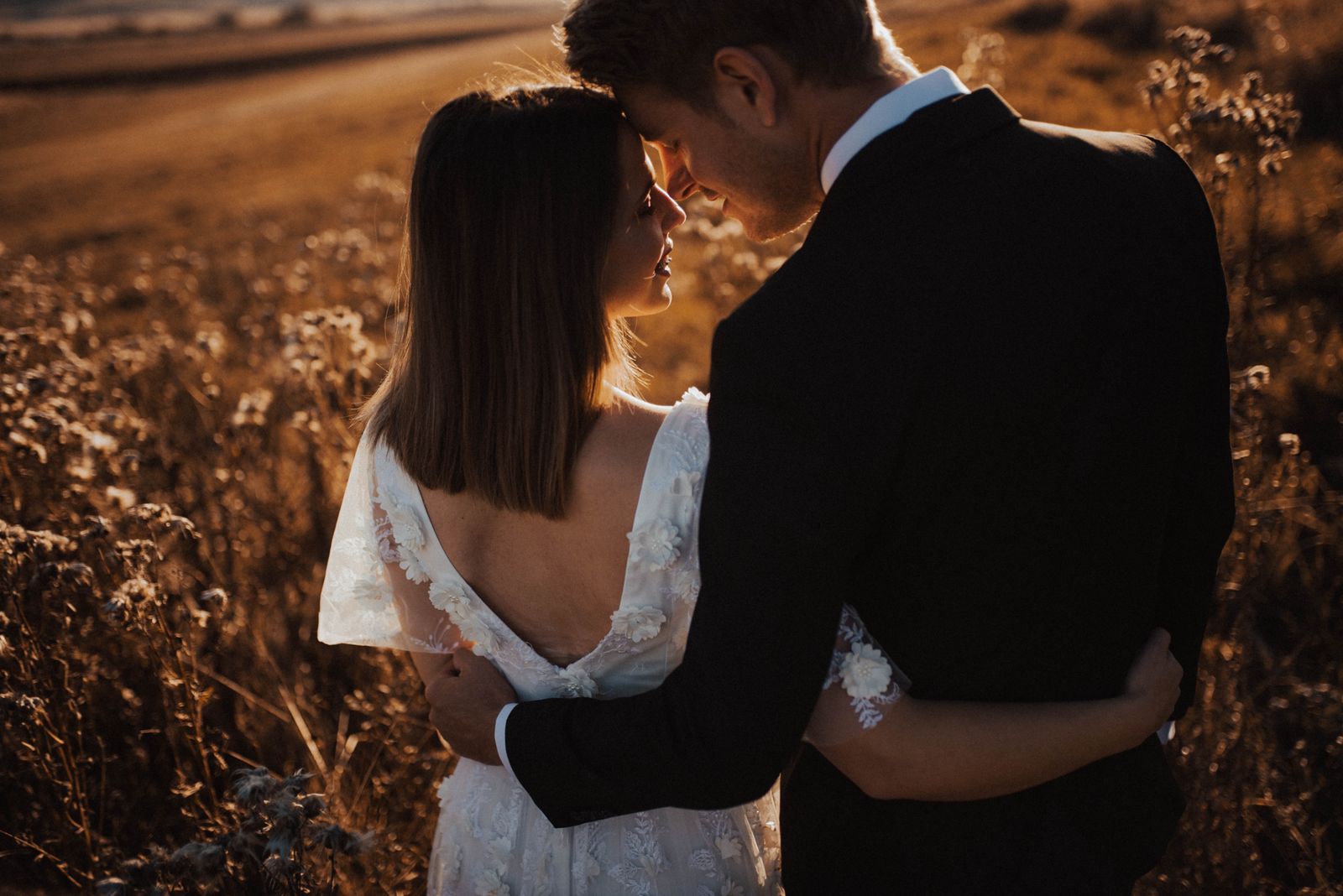
- Desert and preserve settings (Scottsdale, Paradise Valley, the Tucson foothills): the saguaro-and-sunset portrait is the deliverable; the work is permits, trails, and timing. Judge photographers on desert galleries shot at your venue's hour.
- Sedona red rock: the backdrop overwhelms weak composition. Look for couples placed against the rock with intention, not pasted in front of it, and confirm the photographer's permit experience in the Red Rock district.
- Resorts and golf clubs: manicured green against desert is its own look, with venue rules about carts, course access, and where a photographer may stand during play. Resort-experienced photographers know the etiquette that keeps you welcome.
- High country (Flagstaff, Prescott, Payson): pine forest, cooler air, and summer monsoon storms that arrive faster and colder. It is the state's escape valve in July — and its photographers book out for exactly that reason.
- Historic and adobe venues (Tucson's older properties, mission-style settings): low, warm interiors that test a photographer's flash craft. Ask to see reception work, in the dark, not just golden-hour portraits.
Tax, retainers, and delivery — Arizona edition
Arizona taxes business through its transaction privilege tax, and the practical point for couples is narrow: photography time itself is a service, but prints, albums and other physical products are a retail sale, and tax on a package that bundles them is a legitimate line on an Arizona invoice, not an invention. If the tax line surprises you, ask the photographer to show the split between services and products — studios that work here do this routinely.
Expect a signed contract and a retainer to hold the date — half is a common structure in this market — with the balance due before the wedding, and the retainer generally non-refundable. Get the gallery delivery window in writing; six to twelve weeks is the honest range in the October-to-April high season. Confirm the person you met is the person who shoots, the backup plan if they are ill, and whether a second photographer is included — worth it above roughly a hundred guests or any day split across two locations.
How to look
This site lists more than 560 wedding photographers. Use the directory as a map: narrow to Arizona, then to your market — Phoenix depth does not make a photographer a Sedona hand — and then do the verification that matters here. Two complete galleries, one of them in your season. A contract that names permits and assigns them. A summer timeline, if your date is anywhere near one. A straight answer on tax, retainer, and delivery.
Do that, and you get the photograph Arizona promises — red rock, saguaros, impossible light — with the machinery behind it handled by someone who knows exactly which desert they are standing in.
Sources
- The Knot, 2026 Real Weddings Study — average wedding photographer spend of $3,000 for couples married in 2025.
- Arizona State Parks and Trails, special use permits; Arizona Administrative Code R12-8-125 — commercial photography in state parks, advance application, insurance and fee framework.
- Arizona State Land Department — commercial use of State Trust Land requires department permission; a recreational permit does not cover commercial photography.
- USDA Forest Service, Coconino National Forest, Red Rock Ranger District — commercial filming and photography permits and the Red Rock Pass trailhead system around Sedona.
- National Weather Service — Arizona monsoon season dates, June 15 to September 30, and Phoenix summer temperature and sunset norms.
- Arizona Department of Revenue — transaction privilege tax treatment of retail sales of tangible products such as prints and albums.
- Photographs: desert cactus portrait — photo by Ryan Leeper, https://www.pexels.com/photo/11432629/ ; wedding couple portrait — photo by Sandro Crepulja, https://www.pexels.com/photo/3361200/ ; reception lights — photo by Jonathan Borba, https://www.pexels.com/photo/9714791/
More guides
- How to Find a Wedding Photographer: The Complete, Honest GuidePhotographers › Wedding Photographers
- How Much Does a Wedding Photographer Cost? Packages DecodedPhotographers › Wedding Photographers
- 10 Questions to Ask a Wedding Photographer Before You BookPhotographers › Wedding Photographers
- Wedding Photography Styles Explained: Documentary, Editorial, Traditional, Fine ArtPhotographers › Wedding Photographers
- Hiring a Wedding Photographer in California: Venue Light, Permits, and Price LevelsPhotographers › Wedding Photographers
- All Guides & ArticlesBrowse the full guides library