Photographers › Wedding Photographers
Wedding Photography in Michigan: Permits, Prices and Local Know-How
Michigan weddings fail photographically in ways that have nothing to do with talent. A photographer drives three hours up I-75 and discovers the venue is another ninety minutes beyond the Mackinac Bridge. A couple books Sleeping Bear Dunes portraits without the permit conversation. A January wedding in Grand Rapids is timed like a June one, and the portraits happen in the dark, in a wind that is coming off a frozen lake with opinions. I book photographers for events for a living, and the Michigan jobs that go well are the ones where somebody — ideally the photographer — treated the state itself as part of the brief.
This guide is that treatment: what wedding photography actually costs in Michigan, where the permit rules bite, how the seasons and the lakes change the plan, and the state tax quirk that decides whether your package arrives with a 6 percent surprise attached.
What Michigan costs
Start with the statewide anchor: Zola's marketplace data puts typical Michigan spending on wedding photography at around $2,900 for a 100-guest celebration, against an average total wedding budget of about $32,500 statewide. Working photographers' own published guidance spreads wider, because "average" hides the tiers: beginners at roughly $1,500 to $3,000, most experienced Michigan photographers between $3,000 and $5,000, and luxury work at $5,000 to $10,000 and beyond. A Michigan vendor cost guide puts the average photographer range at $2,500 to $5,500. Full-day coverage from established photographers commonly lands between $4,000 and $8,000.
Where you marry moves the number as much as who you hire:
| Michigan market | What to expect | Why |
|---|---|---|
| Metro Detroit & Ann Arbor | The deepest market; starting prices from about $1,200 for intimate coverage, fuller collections from $1,800–$2,500, established names well above | Competition at every tier; vendor guides note metro Detroit prices run higher on demand |
| Grand Rapids & West Michigan | Broad mid-market; published collections from about $950 for intimate coverage to $1,950+ for full days with two photographers | A strong local bench keeps mid-tier pricing honest |
| Traverse City & the Leelanau Peninsula | The priciest corner of the state — Zola's data puts Traverse City at the top, roughly 17% above the cheapest markets | Destination demand: vineyards, bays, and a short peak season everyone wants |
| Northern Michigan & the Upper Peninsula | Mid-range fees plus real travel costs | Distance is the line item — see below |
Two reading rules for these numbers. First, compare full collections — hours, a second photographer, the engagement session, delivery format, album — because a $1,200 starting price and a $4,500 collection are usually different products wearing the same label. Second, in Michigan's destination pockets, the photographer's fee is not the whole cost of the photographer. Ferries, lodging, and a second night because the last ferry left before the last dance are also the cost of the photographer.
The permit layer: dunes, lakeshores, and state land
Michigan's most wanted wedding backdrops are public land, and public land has a permit office.
Sleeping Bear Dunes National Lakeshore is the headline case. Weddings there require a Wedding Special Use Permit from the National Park Service: ceremonies may be scheduled up to a year ahead, receptions are not permitted in the park, permits are not issued for federal holiday weekends, and the fees are a $50 nonrefundable application fee plus a $50 cost-recovery fee after approval. For photography itself, the park's current guidance under the EXPLORE Act is more forgiving than couples expect: in most cases no permit or fee is required for still photography involving eight or fewer people, in public areas, with hand-carried equipment only, no exclusive use of a site, and no impact on park resources or other visitors — and photography attached to an already-permitted wedding needs no separate photography permit. Step outside those conditions — a larger group, gear that amounts to a production, a spot you want held — and you are back in permit territory, with location and cost-recovery fees.
Pictured Rocks National Lakeshore, in the Upper Peninsula, runs weddings on a tighter leash: ceremonies are limited to Sand Point Beach and Miners Beach, in daylight, capped at 40 attendees and 10 chairs, inside a two-hour window that includes setup and cleanup, with a $100 application fee and applications opening only 60 days before the date. That two-month window is a planning fact, not a detail: you cannot fully lock a Pictured Rocks ceremony a year out, and your photographer's contract should acknowledge the permit timeline rather than pretend it away.
Michigan state parks and other DNR-managed land require a permit application for weddings, submitted to the specific park at least 60 days ahead. Rules and fees are park-by-park, which means the only honest advice is procedural: name the exact location, contact that park's office, and get the requirement in writing before deposits harden.
The professional question, as always, is whose job is this? Good Michigan photographers who work the lakeshores carry the permit knowledge with the cameras and will tell you which of your locations needs what. Put it in the contract anyway: who applies, who pays the fees (they are normally passed through at cost), and what happens to the timeline if a permit constrains the portrait plan.
Mackinac Island is its own country
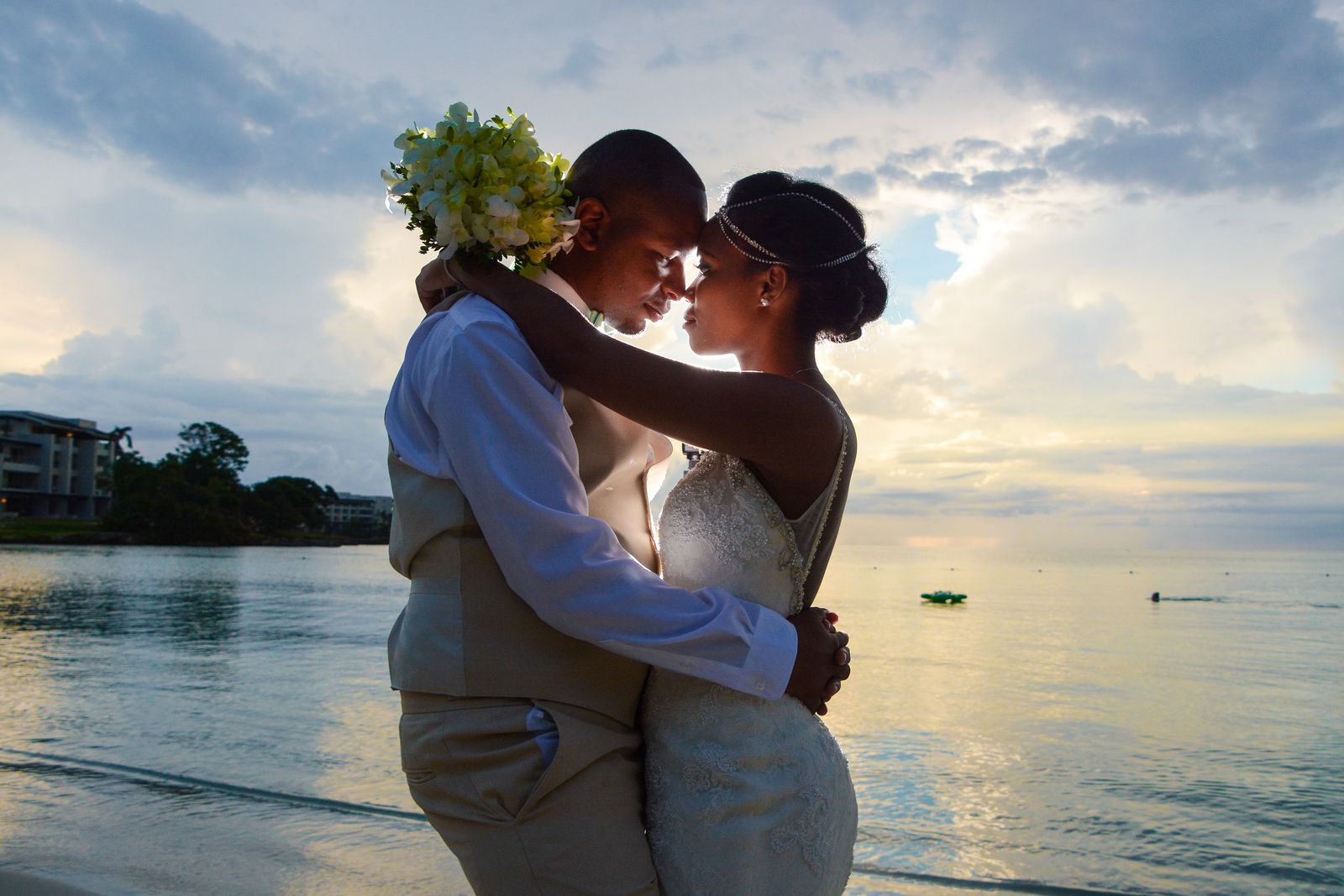
Every state has a destination market; Michigan's has no cars. Mackinac Island bans motor vehicles, so a wedding day there moves by foot, bicycle, and horse-drawn carriage — including your photographer and every case they own. That single fact reorganises the booking:
- Logistics are the fee. Ferry schedules set arrival and departure; gear travels by carriage; a photographer who cannot stay late because of the last ferry is a timeline problem you solve at booking, not at 9 p.m. Most island weddings budget the photographer's lodging, because the island effectively requires it.
- Events are coordinated locally, and public-space ceremonies need prior authorisation from the island's own authorities — another permit conversation, separate from any state or federal one.
- The look is the payoff: Victorian streetscapes, the Grand Hotel's grounds and porch, harbour light, and a day that moves at carriage speed. Photographers who work the island regularly price the friction in and shoot it beautifully. Photographers who don't, discover it in real time.
The same logic, diluted, applies across the Straits. Upper Peninsula weddings — Pictured Rocks, Tahquamenon Falls, Marquette's shoreline — are destination weddings even for Michiganders. A Detroit photographer shooting in the U.P. is travelling 300-plus miles and a bridge crossing; expect travel and lodging in the quote, and prefer, where you can, photographers whose portfolios already contain the U.P. in weather.
Season and light: the Michigan calendar
Summer is peak, and shorter than it feels. June through September carries the state's wedding year, with the lakeshore and wine-country dates — Traverse City and Leelanau Saturdays above all — booking a year or more ahead. Lake Michigan moderates the west coast's heat but delivers the state's signature risk: a shoreline forecast that changes by the hour. A local photographer builds portrait plans with an indoor or sheltered fallback as a matter of routine.
Autumn is the insider season inland — vineyard colour in Leelanau and Old Mission, forest colour everywhere in October — and a gamble up north, where the U.P.'s colour peaks earlier and its weather turns earlier still.
Winter is a different profession. Sunset in Michigan in mid-December falls before 5:15 p.m. even in the south of the state and earlier in the U.P., so a 3 p.m. ceremony means portraits in darkness unless you plan a first look in early afternoon. Snow is not a risk but an expectation, lake-effect snow can close the very roads your photographer is driving, and the photographers who do beautiful Michigan winter work — candlelit barns, snow portraits with off-camera light — are specialists you should book on winter portfolios, not summer ones.
Spring is mud, black flies in the north country by late May, and the year's best empty-lakeshore light for couples who can take a weekday.
One statewide constant: the sun sets over the water on the Lake Michigan side and rises over it on the Lake Huron side. East-coast couples get dawn light on the lake; west-coast couples get the golden processional. A Michigan photographer will ask which shore you are on before they talk about ceremony times. If yours doesn't, that tells you how much of their work is actually done here.
The Michigan tax quirk: the album decides
Michigan's sales tax is a flat 6 percent statewide, with no local additions — simple, until photography touches it. The state's rule for photographers (Administrative Code R. 205.109, applying the Treasury's "incidental to service" test) draws the line like this: photographs delivered only digitally are not taxed, because no tangible property changes hands. But if a sitting or session fee is part of a package that includes tangible personal property — prints, an album — the total amount charged for the package is taxable, even if the parts are itemised separately on the invoice. A sitting fee charged as a genuinely separate transaction, with no requirement to buy products, is not taxable.
On a $5,000 package, the difference between "digital-only, album bought separately later" and "album bundled in" is $300 of tax — not a fortune, but real money, and entirely determined by how the purchase is structured. Two practical consequences: a tax line on a Michigan wedding package that includes an album is legitimate, not padding; and couples who want the album anyway can lawfully discuss structuring it as its own purchase. What you should not do is ask a photographer to misdescribe a bundled package as digital-only. The rule is mechanical; structure honestly within it.
Contracts, Michigan edition
The national checklist applies — retainer (commonly a substantial percentage to hold the date), delivery window in writing (four to six weeks is a published norm from working Michigan studios, longer in peak season), a named backup plan, and confirmation that the photographer you met is the photographer who comes. Michigan adds three clauses worth insisting on:
- A weather and force-majeure clause that contemplates Michigan weather specifically — lake-effect snow, lakeshore storms, ferry disruption — with rescheduling terms, because "act of God" arguments in February in the U.P. help nobody.
- Permit responsibility by name, for any public-land ceremony or portrait location, with fees itemised.
- Travel terms in miles and nights, not adjectives: the included radius, the per-mile or flat rate beyond it, and when lodging is charged — essential for island, lakeshore, and U.P. bookings.
How to look
This site lists 564 wedding photographers, and the honest way to use any directory in Michigan is geographically: shortlist by the region you are actually marrying in — metro Detroit, Grand Rapids, the Traverse City lakeshore, the U.P. — because regional fluency (permits, ferries, sunset sides, winter roads) is half of what you are buying. Then do the unglamorous verification: two full galleries, one of them in your season; a contract that names permits, delivery, and travel; and a tax line you can explain to yourself.
Choose that way, and Michigan stops being the risk in your wedding photographs and becomes what couples who marry here already know it is: the best light in the Midwest, on water, in a state that rewards the people who planned for it.
Sources
- Zola, wedding photographers in Michigan — Michigan couples typically spend around $2,900 on wedding photography for a 100-guest celebration, against an average statewide wedding budget of about $32,500; Traverse City is the priciest market, roughly 17% above the least expensive.
- CC King Entertainment, average cost of Michigan wedding vendors — Michigan wedding photographers average $2,500–$5,500, with metro Detroit vendors costing more on higher demand.
- Sol Luna Photography, average cost of a wedding photographer in Michigan — beginners at $1,500–$3,000, intermediate photographers at $3,000–$5,000, and luxury photographers at $5,000–$10,000 and above.
- Lauren Perrin Photography, how much a wedding photographer costs in Michigan — most Michigan couples spend between $4,000 and $8,000 for full-day coverage.
- ReBrand Marketing and Photos, Detroit wedding photographer cost and pricing guide — Detroit-area collections beginning at $1,200 for intimate coverage, with fuller coverage from about $1,800.
- Creative Capture Photography, Grand Rapids wedding collections — intimate collections from $950 and full-day collections from $1,950, with galleries delivered in four to six weeks.
- National Park Service, Sleeping Bear Dunes filming and still photography — photography involving eight or fewer people, in public areas, with hand-carried equipment and no exclusive use generally needs no permit, and photography attached to a permitted wedding needs no separate permit.
- National Park Service, Sleeping Bear Dunes weddings — a Wedding Special Use Permit is required, bookable up to a year ahead, with a $50 application fee and $50 cost-recovery fee; receptions are not permitted and no permits are issued for federal holiday weekends.
- National Park Service, Pictured Rocks weddings — ceremonies limited to Sand Point Beach and Miners Beach, daylight only, maximum 40 attendees and 10 chairs within two hours, $100 application fee, applications opening 60 days before the date.
- Michigan Administrative Code R. 205.109, photographers and photo processors — a session fee inside a package that includes tangible personal property is taxable on the total charge; a genuinely separate sitting fee is not.
- Commenda, 2026 Michigan sales tax guide — Michigan's sales tax is a flat 6% statewide with no local additions, and digital goods delivered electronically are not taxable.
- Photo by Giuseppe Messina, https://www.pexels.com/photo/a-couple-having-a-beach-wedding-4364780/
- Photo by Jonathan Borba, https://www.pexels.com/photo/9714791/
- Photo via Pexels, https://www.pexels.com/photo/169192/
More guides
- How to Find a Wedding Photographer: The Complete, Honest GuidePhotographers › Wedding Photographers
- How Much Does a Wedding Photographer Cost? Packages DecodedPhotographers › Wedding Photographers
- 10 Questions to Ask a Wedding Photographer Before You BookPhotographers › Wedding Photographers
- Wedding Photography Styles Explained: Documentary, Editorial, Traditional, Fine ArtPhotographers › Wedding Photographers
- Hiring a Wedding Photographer in California: Venue Light, Permits, and Price LevelsPhotographers › Wedding Photographers
- All Guides & ArticlesBrowse the full guides library