Photographers › Photographers Commercial & Industrial
What Good Photographers Commercial and Industrial Looks Like: The Standards Professionals Judge Each Other By
Commercial and industrial photographers are not judged by other professionals the way clients judge them. Clients look at the best twelve frames on a website and feel something. Professionals look at the same photographer's full delivery from an ordinary Tuesday — a factory floor in bad light, a product line against a deadline — and check things that never appear in a portfolio: whether the files are technically clean at full size, whether the colour is true, whether the paperwork would survive a lawyer, whether the site work would survive a safety audit. This site lists 5,719 photographers in commercial and industrial work, and the distance between the top and the middle of that list is mostly invisible in thumbnails.
That is good news for a first-time buyer, because almost every professional standard leaves evidence a non-expert can inspect. You cannot learn taste in an afternoon. You can learn to zoom in, to ask for the full gallery, to read a licence, and to spot the specific corners that get cut. Here is the checklist the insiders are actually running.
The portfolio test: consistency, relevance and proof of life
The first professional standard is boring: the work looks like that every time, not once. A portfolio is a greatest-hits album by definition, so professionals discount it and ask for a complete job — one full delivery, start to finish. What they are checking is the floor, not the ceiling: are the fortieth and eightieth frames exposed, focused and composed to the same standard as the hero shots? A photographer whose full gallery holds up is a professional; one whose portfolio is twelve frames deep is a hobbyist with excellent selection.
Second, relevance is specific. Industrial buyers judge whether the photographer has worked in environments like theirs — live production floors, cleanrooms, construction sites, warehouses — because each has its own light, access and safety logic. The American Society of Media Photographers' guidance to clients begins with matching the photographer's strengths and specialisms to the assignment rather than hiring a generalist and hoping. Named clients, repeat clients and work shown in its real published form — the brochure, the annual report, the trade ad — are the proof professionals trust, because they mean another company's art director already ran this audit and came back.
Third, professionals look for evidence the photographer directs a set: consistent lighting across a product range, people who look briefed rather than startled, machinery photographed with the access arranged rather than grabbed from a doorway. Control is the visible signature of commercial work.
The file test: what good looks like at 100 percent
Ask for full-resolution sample files — any confident commercial photographer will supply them — and judge four things, using the same benchmarks the industry's own delivery guidelines use.
Sharpness and honesty of resolution. Zoom to 100 percent on a detailed area. Professional delivery standards are explicit that files must not be artificially enlarged by interpolation: the pixel dimensions should be the camera's, honestly come by. A file that turns to watercolour at full size was either captured badly or padded to look bigger than it is.
Colour that is managed, not guessed. The UPDIG photographers' guidelines — the industry's shared delivery standard — put ICC colour management first: profiles embedded and preserved, monitors calibrated, files delivered in the colour space the use requires, typically a wide-gamut space like Adobe RGB for editing masters and sRGB for web and lab use. The client-visible symptoms of unmanaged colour are brand colours that drift between images, white products rendered grey or blue, and skin tones that vary across a set. Professionals consider colour consistency across a whole delivery a basic competence, and its absence the fastest tell of an amateur workflow.
Exposure and craft in the frame. Blown highlights on metal and glass, blocked shadows in dark machinery, horizons and verticals left casually crooked in architectural-industrial work: these are the faults peers notice first, because they are the ones that cannot be fixed in post.
Metadata present and correct. UPDIG's principles require delivered images to carry embedded IPTC and PLUS metadata — creator name, contact information, description and licensed uses. Open a sample file's properties. A professional's files identify their maker and their rights status; a corner-cutter's files are anonymous, which becomes your problem the first time a usage question arises.
Retouching you cannot find. Peers zoom into retouched areas looking for the work itself: skin that has been smoothed into plastic, edges with halos where an object was cut out, cloned patterns repeating in backgrounds, dust and sensor spots left behind on plain surfaces. The professional standard is invisible labour — temporary blemishes, distractions and defects removed, texture and detail intact — and it is judged at 100 percent, never at thumbnail size. If you can tell exactly what was done to an image, it was done too much or too carelessly, and professionals mark it down for both.
| Deliverable | The professional benchmark |
|---|---|
| Resolution | Native camera resolution, sized to output; 300 ppi at final size is the typical print specification; never interpolated up |
| Format | TIFF or maximum-quality JPEG, 8-bit per channel, for print delivery; layered/editable files by prior agreement |
| Colour | ICC profile embedded and preserved; Adobe RGB (or wider) editing masters; sRGB for web; CMYK conversion to the printer's specified profile for offset print |
| Metadata | IPTC/PLUS fields embedded: creator, contact, description, licensed uses |
| Retouching | Clean, invisible at 100%: dust, distractions and temporary blemishes removed; no plastic skin, no halo edges |
The process test: preparation, backups and behaviour on site
Professionals judge the shoot you will never see. The standards are procedural, and every one of them can be asked about in a first meeting.
Pre-production exists on paper. A shot list agreed in advance, a scout or at least a recce conversation, permits and access arranged, a call sheet for anything with people and moving parts. ASMP's client guidance is built around an assignment description defined before estimating — scope first, price second. A photographer who quotes a serious industrial job without asking what the images are for, where they will run and what the site rules are is telling you the preparation standard you will get.
Files are protected like the irreplaceable things they are. Dual-card recording in camera, same-day backup, and an archive that survives a single drive failure — UPDIG's principles include protecting images from accidental erasure or corruption as a core delivery standard, not an optional virtue. Ask the question directly: "If a card dies on my job, what happens?" The professional answers with a system; the amateur answers with reassurance.
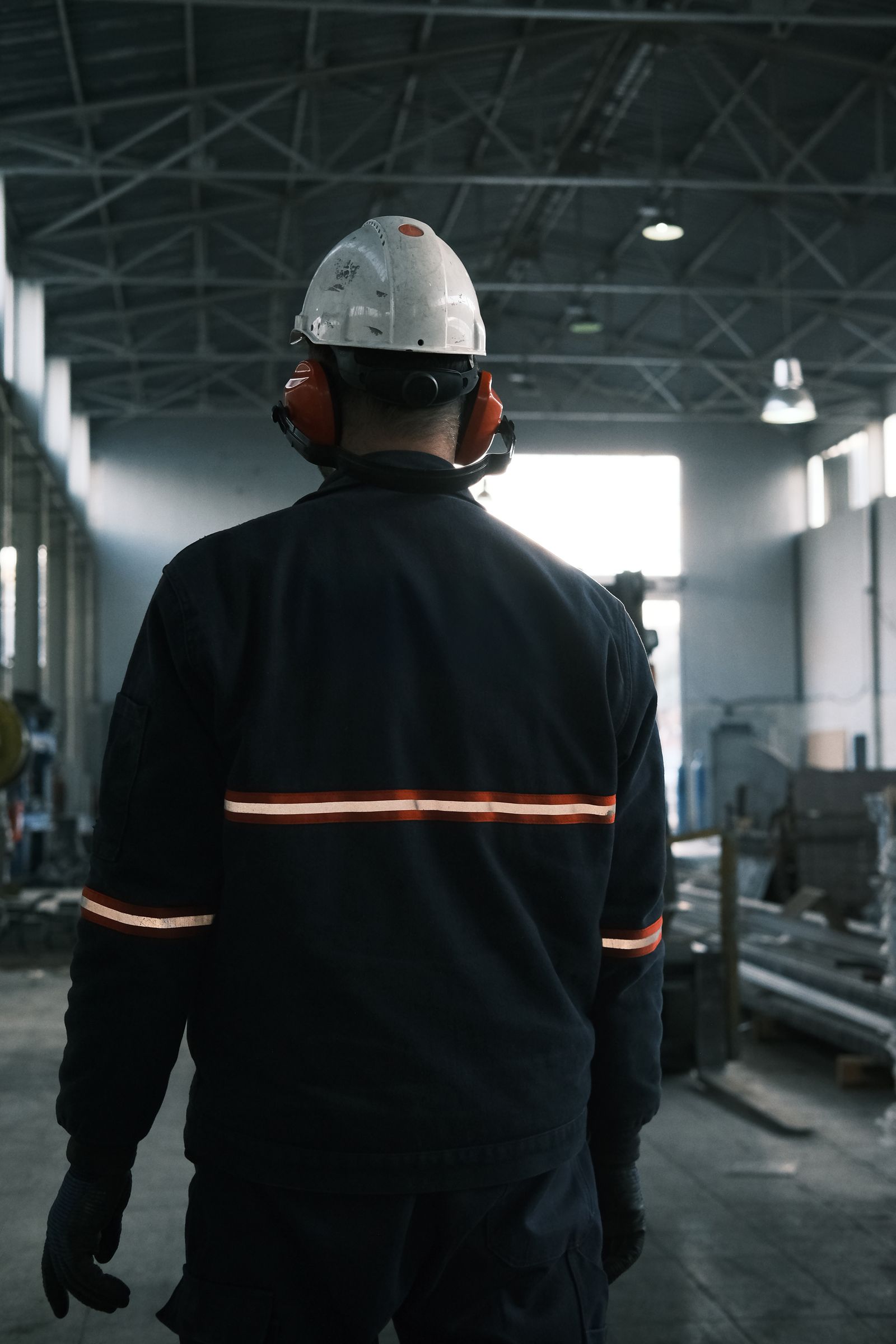
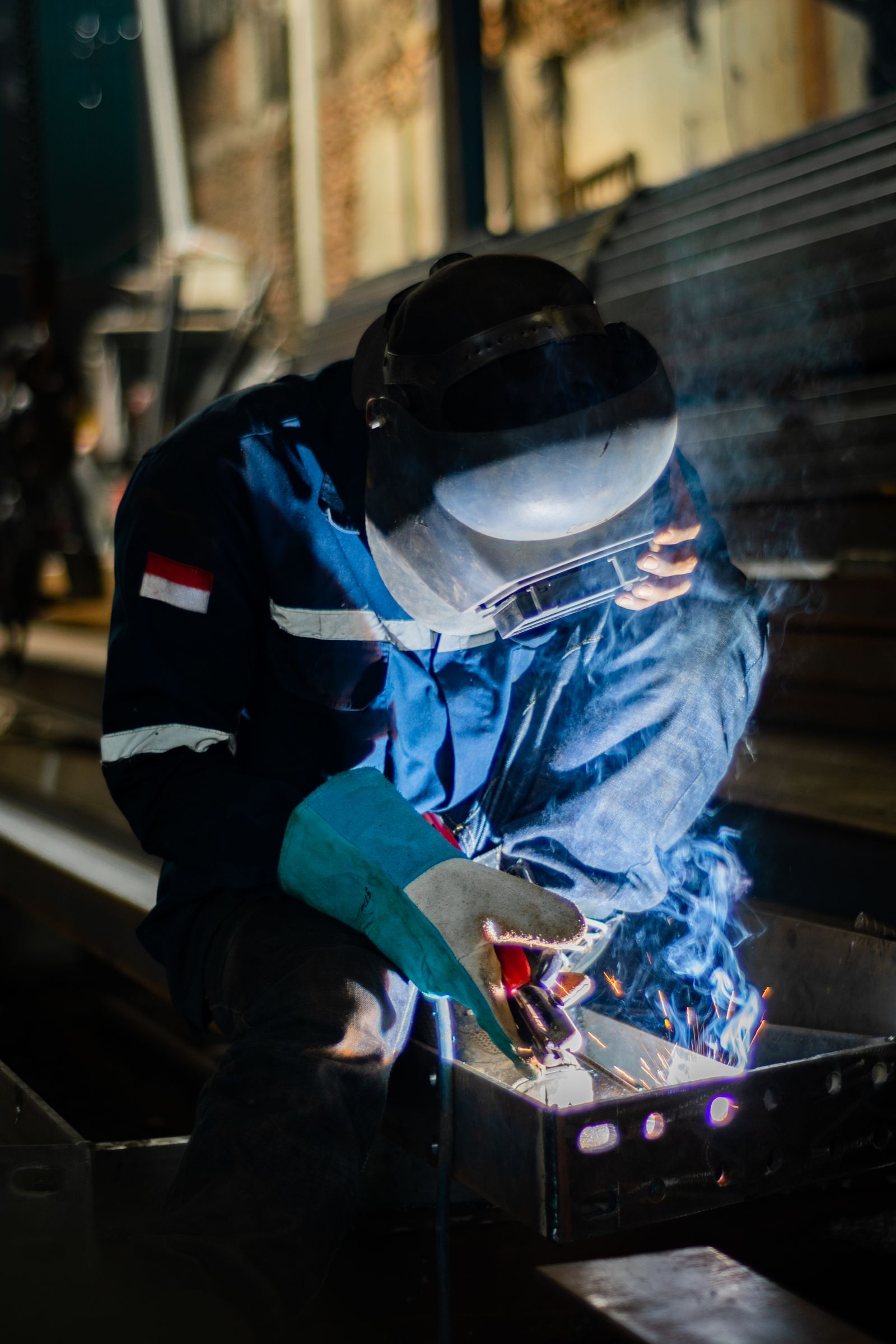
Industrial sites get industrial behaviour. On commercial and industrial work, peers judge compliance as part of the craft: PPE worn without being asked, site inductions completed, OSHA training credentials where the sector expects them, platform prequalifications (the ISNetworld/Avetta-style vetting large industrial clients require) in place, and a certificate of insurance available on request. A photographer who treats a plant's safety regime as an inconvenience will treat your deadlines the same way — and on a live site, their non-compliance becomes your liability and your shutdown.
The paper test: estimates, licences and releases
More professional judging happens over documents than over images. ASMP's business-practice standards describe the professional estimate as separating the components — creative fee, licensing fee and expenses itemized — because the structure itself is the honesty test: you can see what you are buying.
The licence is where professionals look hardest. In commercial work, photographs are licensed, not sold: the grant should specify the uses (which media, advertising or corporate or editorial), the duration, the territory, the size and placement where relevant, and whether the use is exclusive. ASMP's licensing guidance exists precisely because vague language fails both sides, and the PLUS standard terminology exists so that a licence means the same thing to everyone who reads it. The two red flags are mirror images: a licence so vague ("all rights, forever, for everything") that it signals the photographer does not know what their work is worth or what they are signing away — and paperwork so absent that you have no licence at all, only files and a hope. Model and property releases, obtained and filed, complete the professional pattern: images of people and premises that you can actually use.
The corner-cutting catalogue
Gathered from everything above, the tells that professionals spot in minutes:
- A portfolio of twelve perfect frames and no full job available to view.
- Files delivered small, over-compressed, stripped of metadata, or "high resolution" that dissolves at 100 percent.
- Colour that wanders across a set; brand colours nobody checked.
- No written estimate, or one lump sum with licensing nowhere mentioned — or "full buyout, all rights" offered cheap, unasked.
- No insurance certificate, no safety credentials, visible impatience with site rules.
- No backup system they can describe; no contract; no releases.
- Prices far below the market with no explanation of what is excluded — in commercial work, the missing line is usually the licence, the retouching or the second backup.
None of these require photographic talent to detect. They require only the willingness to look at the evidence professionals look at, most of which is sitting in a sample file's properties panel and a two-page estimate.
Judging like a professional, in one pass
Run the four tests in order. Portfolio: full job, relevant sector, named clients. Files: zoom in, check colour consistency, open the metadata. Process: shot list, backup system, safety and insurance in place. Paper: itemized estimate, a licence that names media, duration and territory, releases on file. A photographer who passes all four is not guaranteed to make you a masterpiece — but they are playing the same sport as the people whose work fills the annual reports and trade campaigns you admire, and in commercial and industrial photography, that professionalism is most of what "good" means. This site lists 5,719 of them; the standards above will sort the list faster than any thumbnail grid.
Sources
- UPDIG, Photographers Guidelines — digital images should carry ICC profile-based colour management with profiles embedded and preserved, be prepared at correct resolution and size for their output, embed IPTC and PLUS metadata including creator name, contact information and licensed uses, and be protected from accidental erasure or corruption.
- Periodical Publishers' Association, pic4press Version 4 — magazine delivery recommendations of 300 ppi, JPEG at maximum quality or TIFF as 8-bit-per-channel files, files not artificially enlarged by interpolation, and colour delivered with ICC profiles.
- American Society of Media Photographers, Professional Business Practices in Photography — image licences should define parties, permissions, constraints and conditions, specifying frequency, media, size and placement, duration and exclusivity; the PLUS Coalition standards provide common licensing terminology.
- American Society of Media Photographers, Working with an Assignment Photographer — clients should match a photographer's strengths and specialisms to the assignment and define the assignment's scope, licensing and rights before estimating; professional estimates separate photography fees, licensing fees and expenses.
- ImageCouture, File Delivery and Formats — working delivery practice by use: TIFF in Adobe RGB at full camera resolution for further editing, sRGB JPEG/WebP for web, CMYK at 300 ppi at final size for print, with profiles embedded.
Photo by Cemrecan Yurtman, https://www.pexels.com/photo/industrial-worker-in-safety-gear-at-factory-29988954/ Photo by ERFIN EKARANA, https://www.pexels.com/photo/welder-in-factory-26840744/ Photo by Mike van Schoonderwalt, https://www.pexels.com/photo/5503874/
More guides
- How to Find a Wedding Photographer: The Complete, Honest GuidePhotographers › Wedding Photographers
- How Much Does a Wedding Photographer Cost? Packages DecodedPhotographers › Wedding Photographers
- 10 Questions to Ask a Wedding Photographer Before You BookPhotographers › Wedding Photographers
- Wedding Photography Styles Explained: Documentary, Editorial, Traditional, Fine ArtPhotographers › Wedding Photographers
- Hiring a Wedding Photographer in California: Venue Light, Permits, and Price LevelsPhotographers › Wedding Photographers
- All Guides & ArticlesBrowse the full guides library